
The complete guide
Choosing a Brass Chamberstick Candle Holder, A Practical Buyer's Guide
The problem with most candle holders
Buy a candle holder on impulse and you usually end up with one of two disappointments. Either it is too light, so it tips the moment someone reaches across the table, or it is too tall and the flame sits right at eye level, which is lovely in photographs and annoying in real life when you are trying to talk to the person opposite.
A chamberstick solves both. It is deliberately low and deliberately broad. The whole design comes from a time when people carried a single candle up to bed, so it had to stay upright in a moving hand and catch wax before it hit the stairs. Those same qualities make it the quietly sensible choice for a modern table.
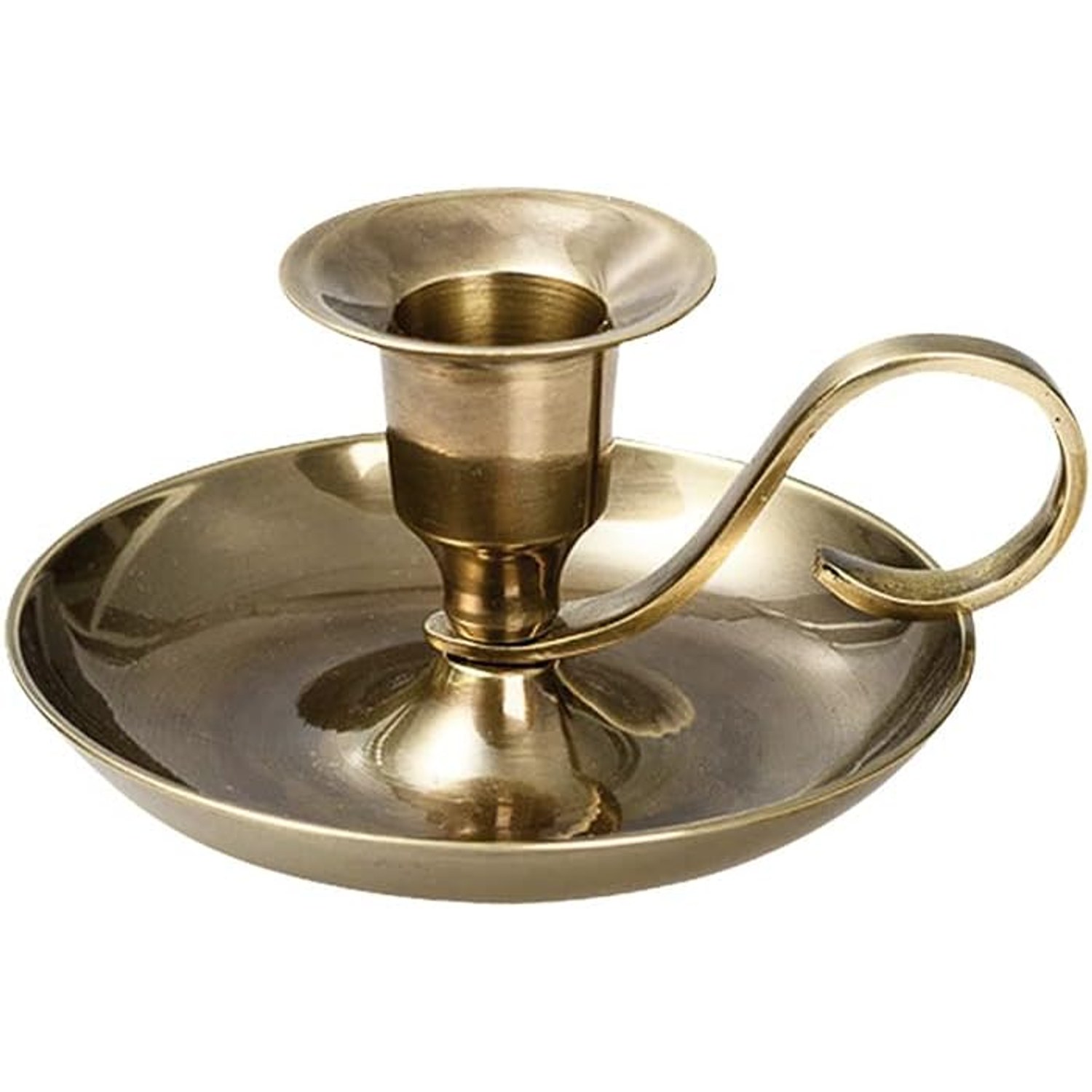
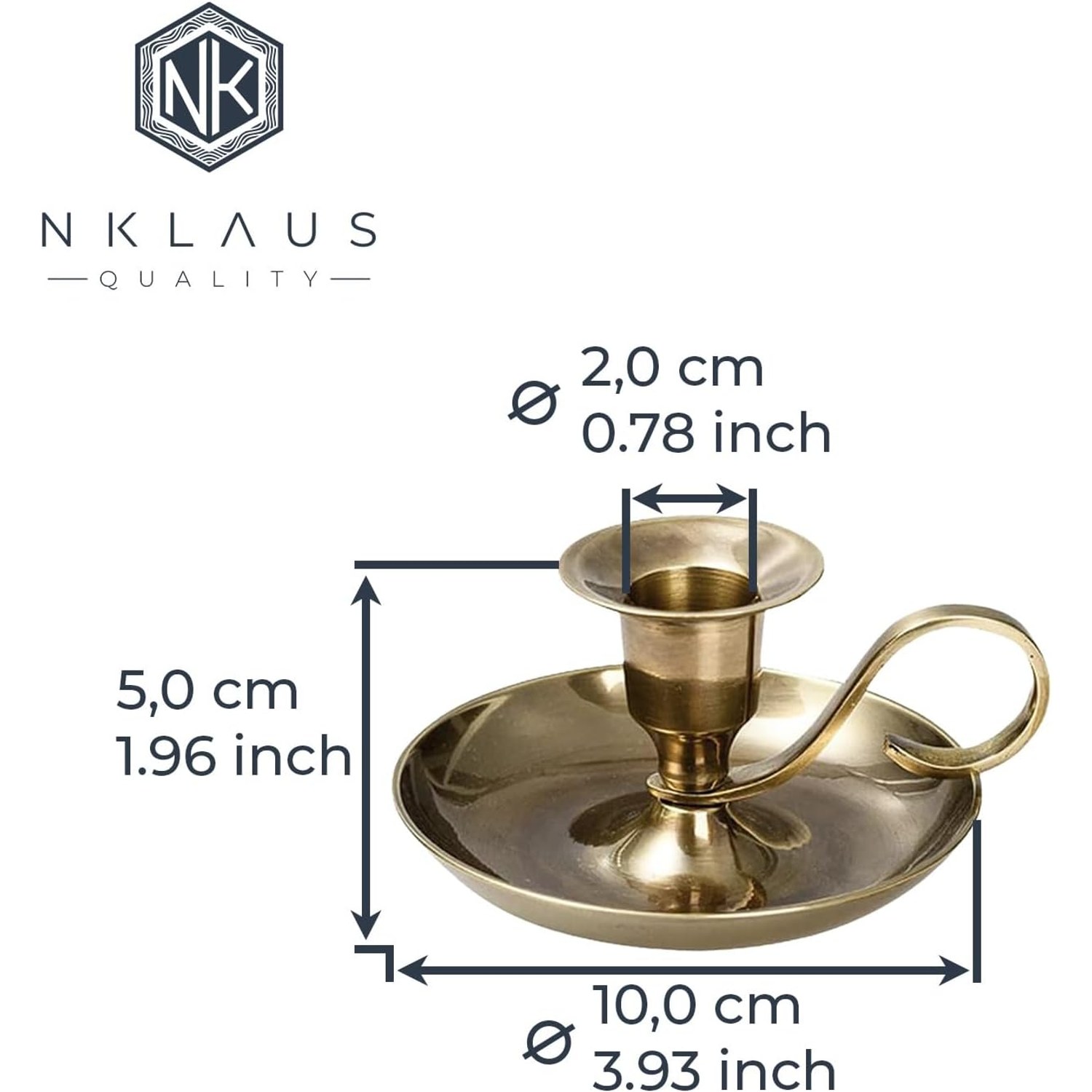
This one stands 5 cm high on a base 10 cm across, and it is made of brass with a gold-plated finish. That is the short version. The rest of this guide explains why those numbers matter and how to get the most out of them.
How a low candle holder actually changes a room
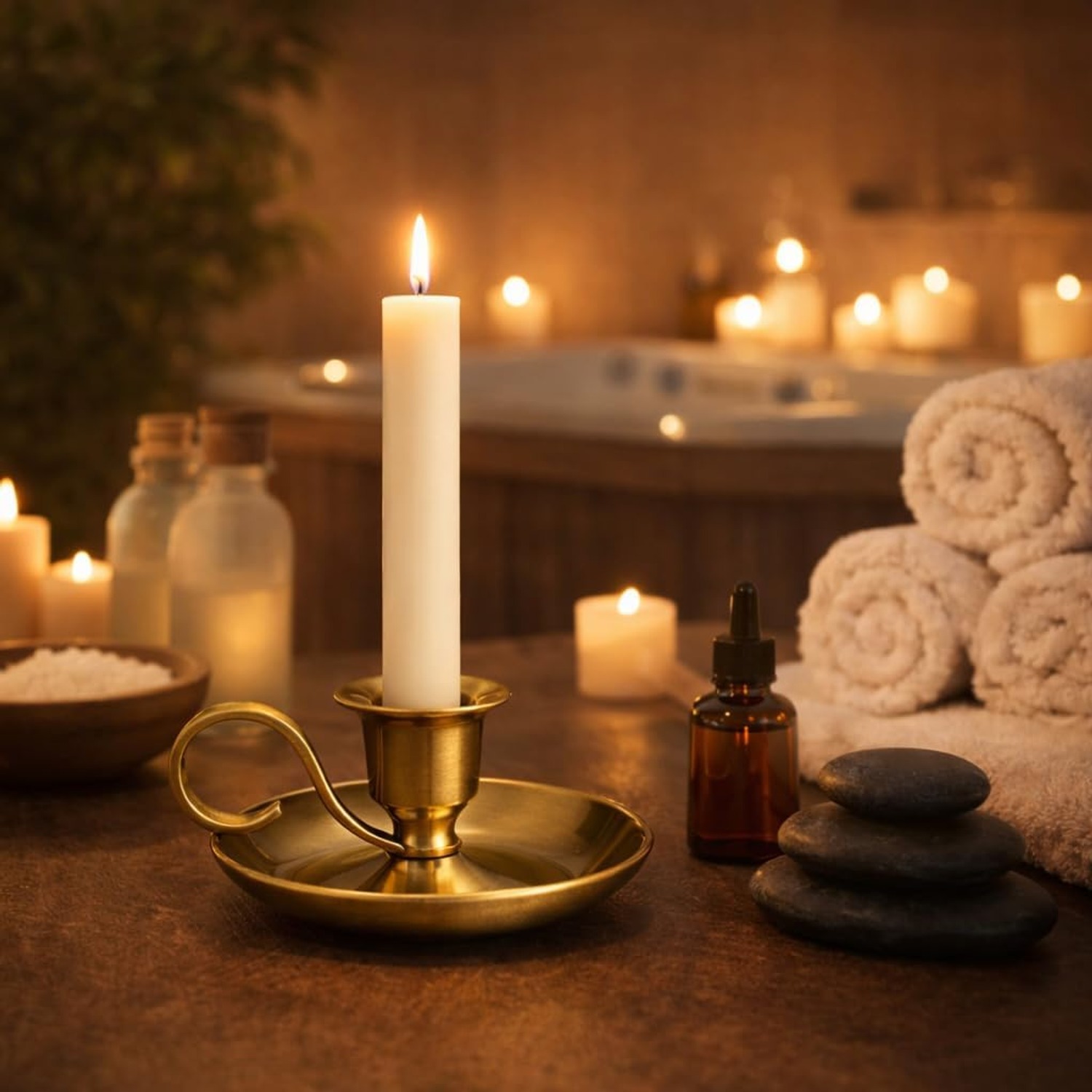
Light behaves differently depending on its height. Raise a flame and it throws shadows upward across faces, which can look dramatic or just unflattering, depending on the evening. Keep it low and the light pools outward across the surface instead. Plates, glasses, a wooden tabletop, a stack of books, all of it picks up a soft wash rather than a hard spotlight.
That is why a low holder is such a reliable choice for dinner. People can see each other. Nobody has to peer around a candlestick. The light feels like it belongs to the table rather than hovering over it.
Brass adds another layer. Its warm undertone reflects candlelight far more kindly than chrome or stainless steel, which tend to bounce back a cold, hard shine. A polished gold-plated surface takes a single small flame and multiplies it a little, giving you more glow from the same candle. It is a small thing you notice the moment you light one.
Sizing, and why 2 cm matters
The candle cup here is made for round tapers of roughly 2 cm in diameter. That might sound like an oddly specific detail to care about, but candle diameter is the number that decides whether your holder is useful or frustrating.
Candles of about 2 cm across are widely sold, from supermarkets to specialist candle makers, so refills are not hard to find. Check the diameter on the pack, since some dinner candles run a little wider. You can pick ivory for a formal table, deep green at Christmas, plain white for a bedside, and they will all fit.
If you buy a candle that turns out slightly narrow, do not panic. Candle tape, a dab of adhesive putty, or a few drops of melted wax from the candle itself will hold it firm. If a candle is noticeably wider than 2 cm, leave it. Forcing a candle into a cup that is too small stresses both the candle and the holder, and you lose stability at exactly the point you need it.
Who it suits
This piece earns its keep in a few different households.
If you host, a row of two or three low holders down the middle of the table gives even light without blocking sightlines. It is far friendlier than one big centrepiece that everyone has to lean around.
If you live in a small flat, a single brass piece does a lot of decorative work without taking up space. At 10 cm across it fits on a narrow shelf, a windowsill or the corner of a desk.
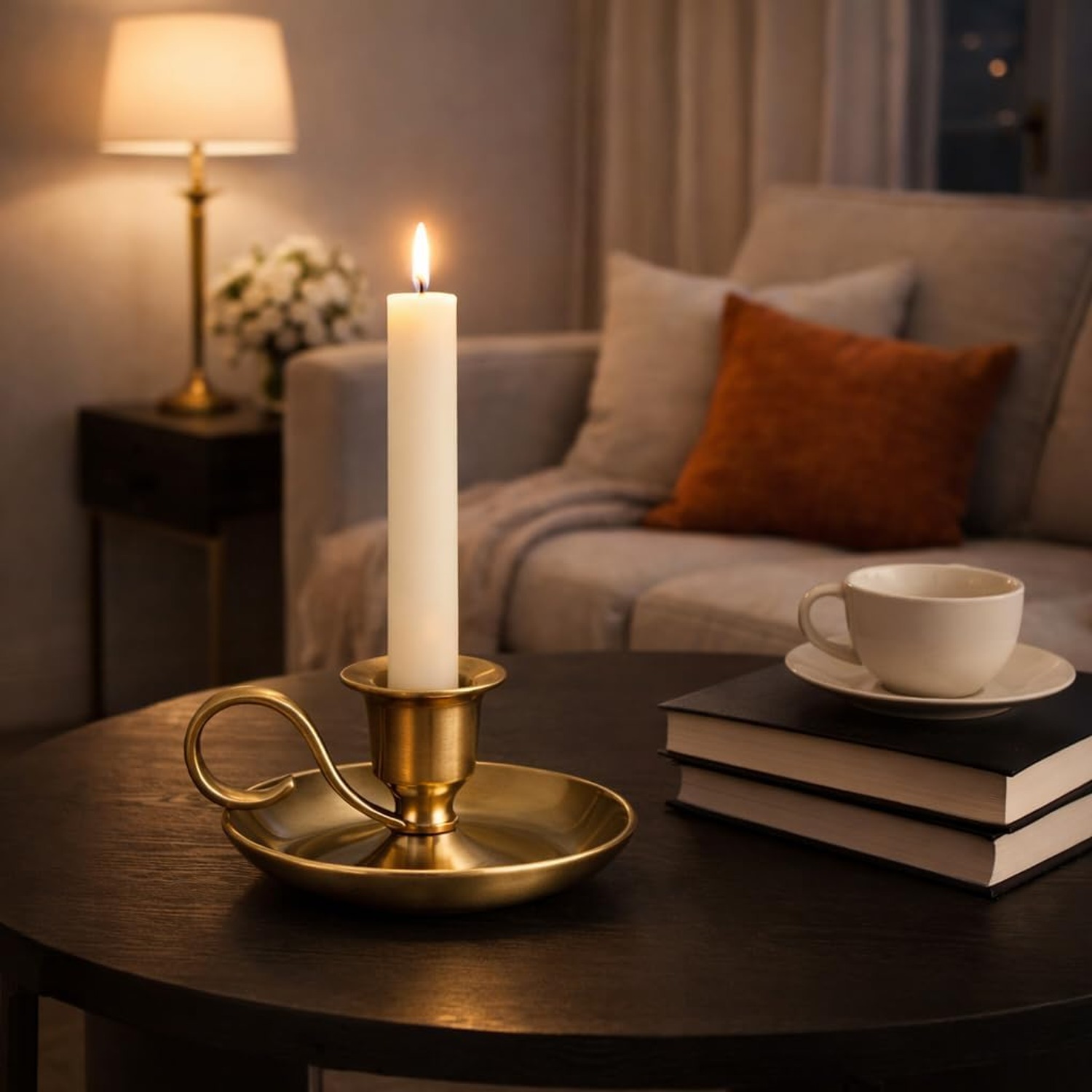
It makes a good bedside holder for an evening with a book. The wide base means you are not fumbling with something precarious in half-light. Just put it out before you fall asleep, always.
And if you are buying a present, a single brass object is one of the easier gifts going. It does not need to match anyone's existing colour scheme or taste in prints. It just sits there looking good.
How to choose between styles
When people compare candle holders, they usually weigh up four things.
Height comes first. Tall candlesticks make a statement on a mantel or a sideboard where nobody is sitting opposite them. Low chamberstick styles like this one are better anywhere people gather at eye level.
Material comes next. Brass is warm, and it ages into something with character. Iron is matt and rustic. Glass disappears into the background. Ceramic is the most fragile. For warmth with a bit of shine, brass is a good choice.
Base width is the one people forget. A base narrower than about 7 cm is asking for trouble on a busy table. At 10 cm, this one has a comfortable margin.
Finish is the last call. Polished gives you reflection and sparkle. Antiqued or brushed finishes hide fingerprints better but return less light. The maker lists this holder as polished, so expect it to catch the flame.
Styling it without overthinking
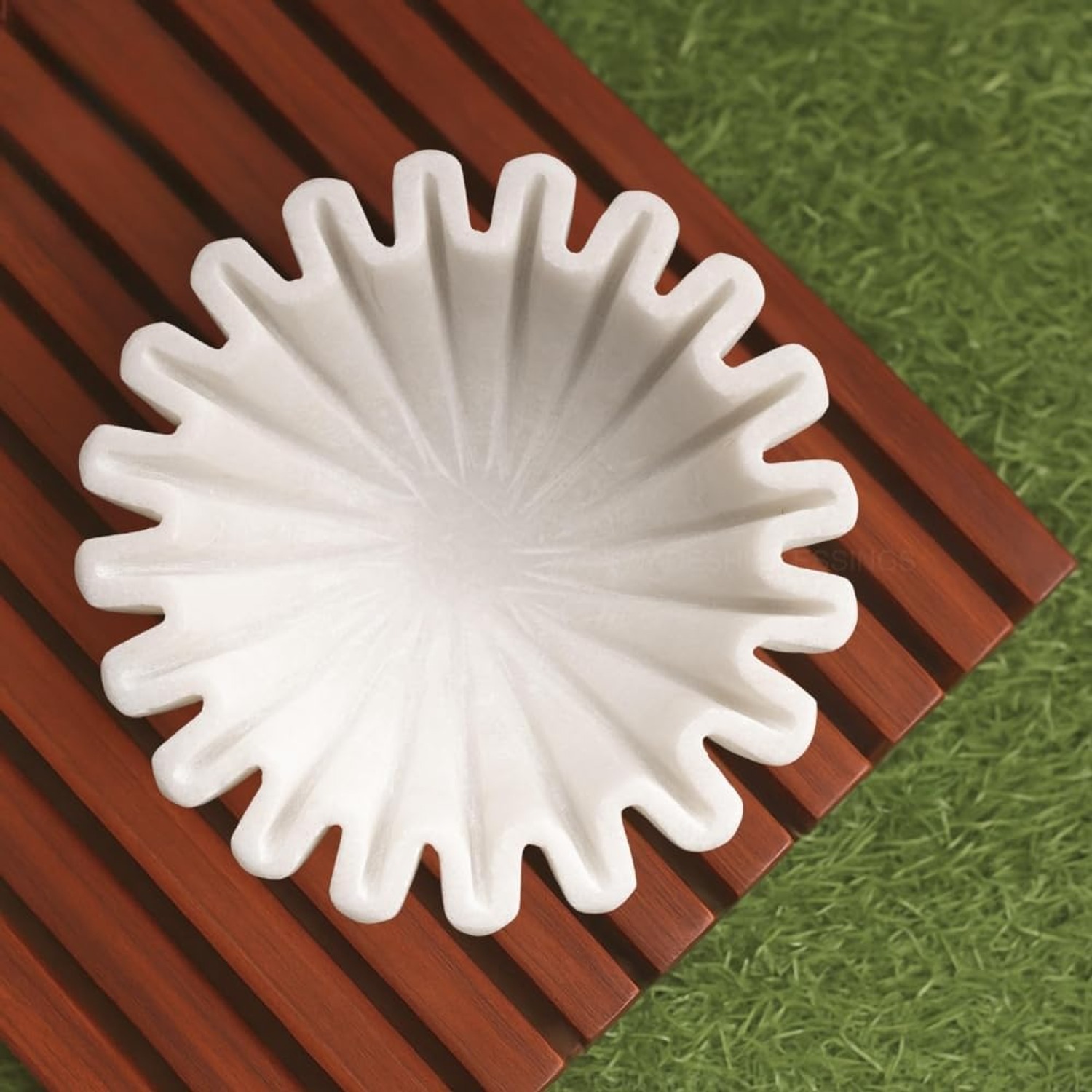
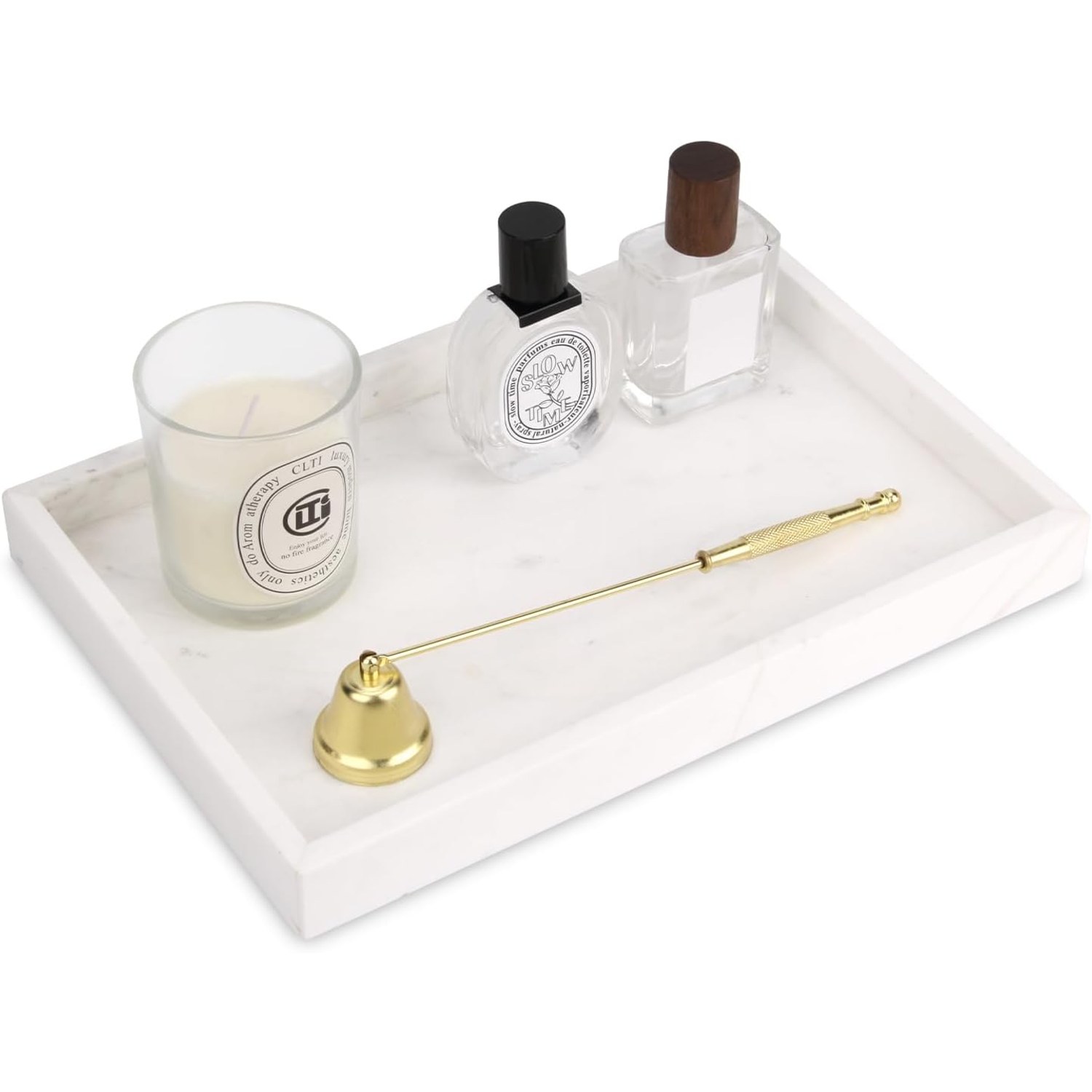
Brass likes contrast. Set it on white marble and the gold tone lifts. Set it on dark walnut and it glows against the grain. Set it on bare pale linen and it becomes the only thing with any shine in the frame, which is often exactly the effect you want.
Odd numbers tend to look more relaxed than even ones, so three holders at varying distances usually beats two placed symmetrically. Mixing heights helps too, if you have a taller candlestick already. One low holder beside one tall one reads as a considered grouping rather than a matched set.
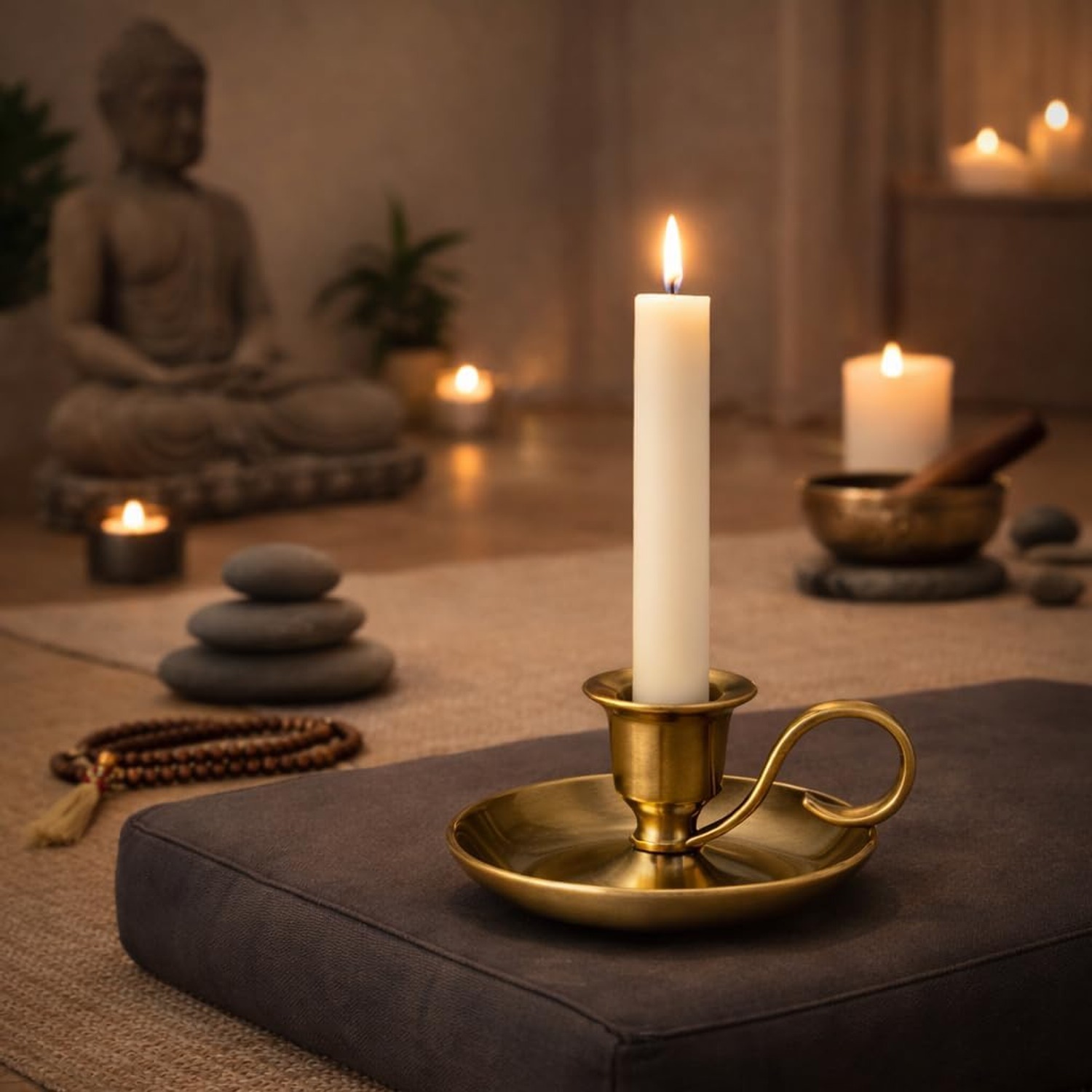
Unlit, it still works. A small gold object on a shelf next to books or a bowl is a finished look on its own. Not every decorative piece has to be doing a job to be worth having out.
Looking after it
The care routine is almost embarrassingly short.
Dust it regularly with a soft dry cloth. That alone keeps a polished surface looking right.
Remove wax only once it is completely cold and hard. Let it set, then ease it off with your fingers or something blunt and plastic. Metal scrapers and kitchen knives will leave marks on the plating that you cannot undo.
Skip the dishwasher entirely. Hot detergent cycles are rough on plated finishes. The same goes for scouring pads, bleach and strong chemical polishes.
Keep it dry. If it gets splashed, wipe it and dry it properly rather than leaving moisture sitting on the surface.
Over the years, brass naturally shifts tone and plating can soften with handling. Some owners polish it back; others let it develop its own look. Neither is wrong. It is one of the pleasures of owning real metal rather than a painted substitute.
A quick word on safety
None of this is complicated, but it is worth saying plainly. Never leave a burning candle unattended. Keep it clear of curtains, paper, loose fabric and anything that might blow into it. Metal holders warm up during a long burn, so set it on a surface that can take a little heat, and give it time to cool before you move it. Keep it out of reach of small children and curious pets.
Trim the candle wick to a few millimetres before lighting. A long wick means a big smoky flame and faster dripping. A short one burns cleaner and drips less onto that 10 cm base.
The short version
This is a small brass chamberstick with a gold-plated, polished finish. It stands 5 cm tall, sits on a 10 cm round base with a curled handle on one side, and takes round candles about 2 cm in diameter. It comes as a single piece and it is a tabletop item.
What that gives you in practice is low, warm candlelight that does not get in the way, on a base steady enough to survive a real dinner party. It looks good lit and it looks good sitting quietly on a shelf. It pairs naturally with marble, dark wood and plain textiles.
If you want candlelight that feels settled rather than showy, this is the shape to buy.