
The complete guide
How to Choose a 25 cm Ceramic Vase That Actually Suits Your Home
The problem with most vases
Most people buy a vase in a hurry. A bunch of flowers arrives, there is nothing suitable in the cupboard, and whatever is cheapest and nearest gets bought. Six months later there is a shelf of mismatched glass and a jug doing a job it was never meant to do.
The fix is to own one or two vases that genuinely suit your home, in a shape and size you will use again and again. That usually means something mid-height, something plain, and something in a colour that does not clash with the rest of the room. A light gold ceramic vase around 25 cm tall ticks all three.
This guide walks through how a piece like this works, who it suits, how to pick the right size, and how to look after it.
What this vase actually is
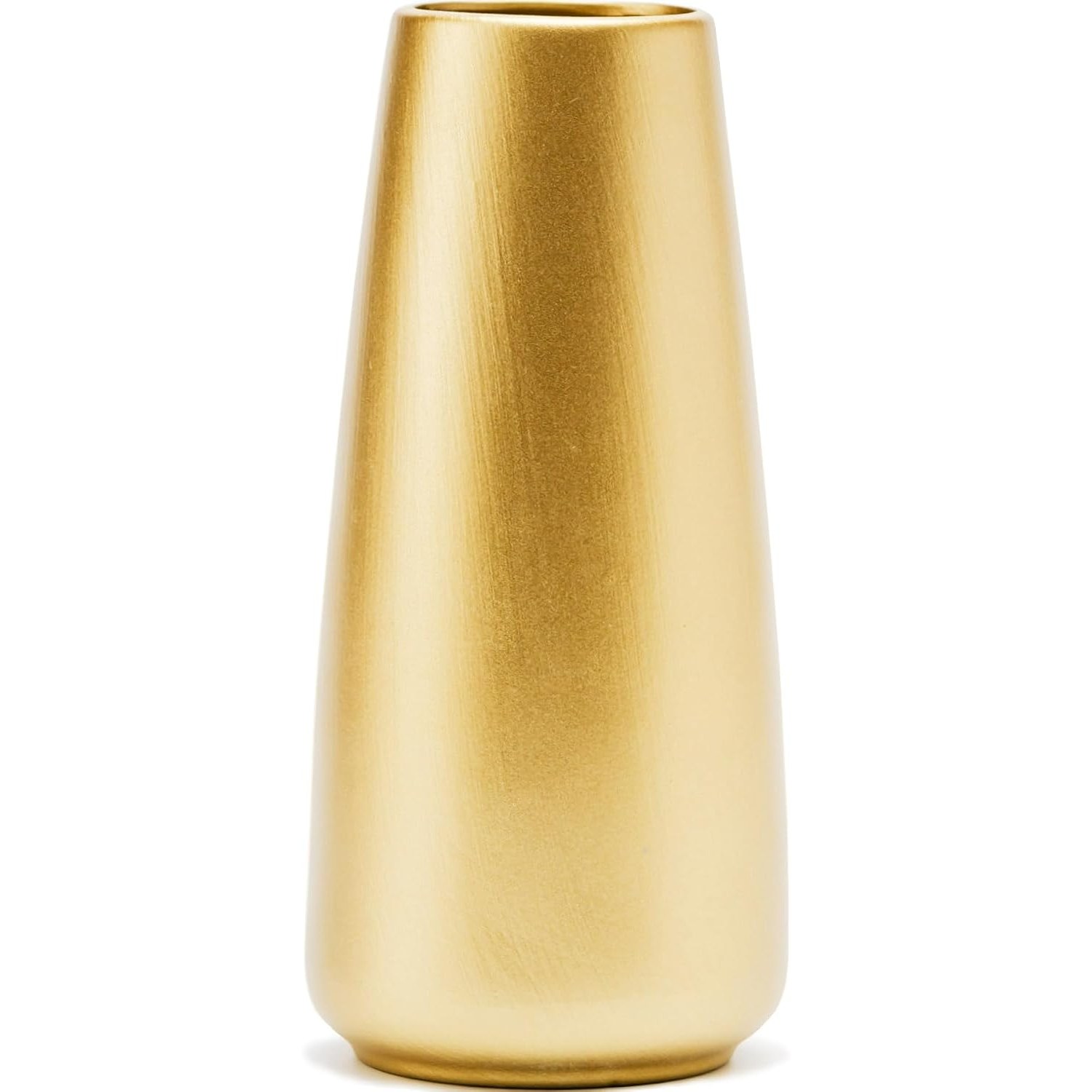
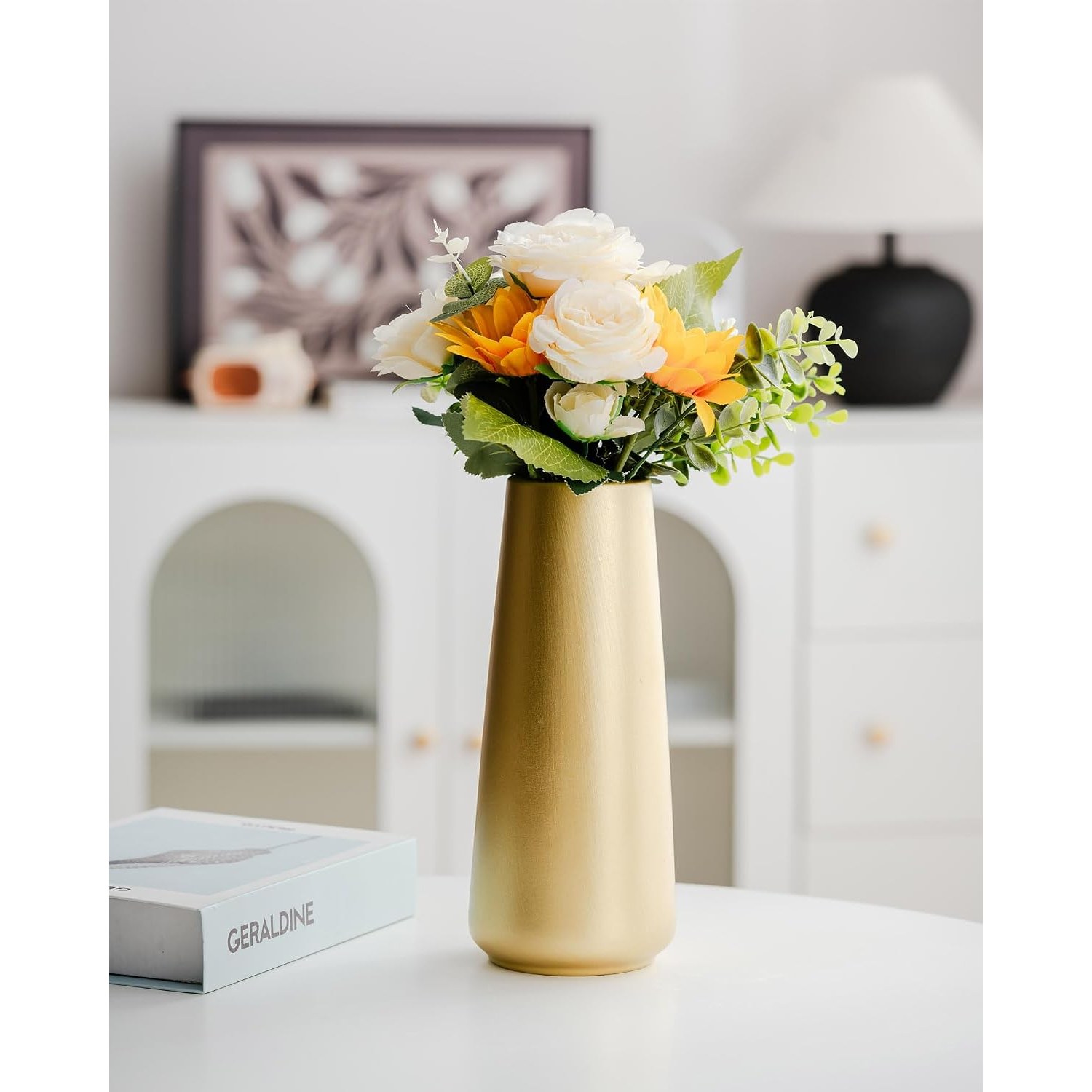
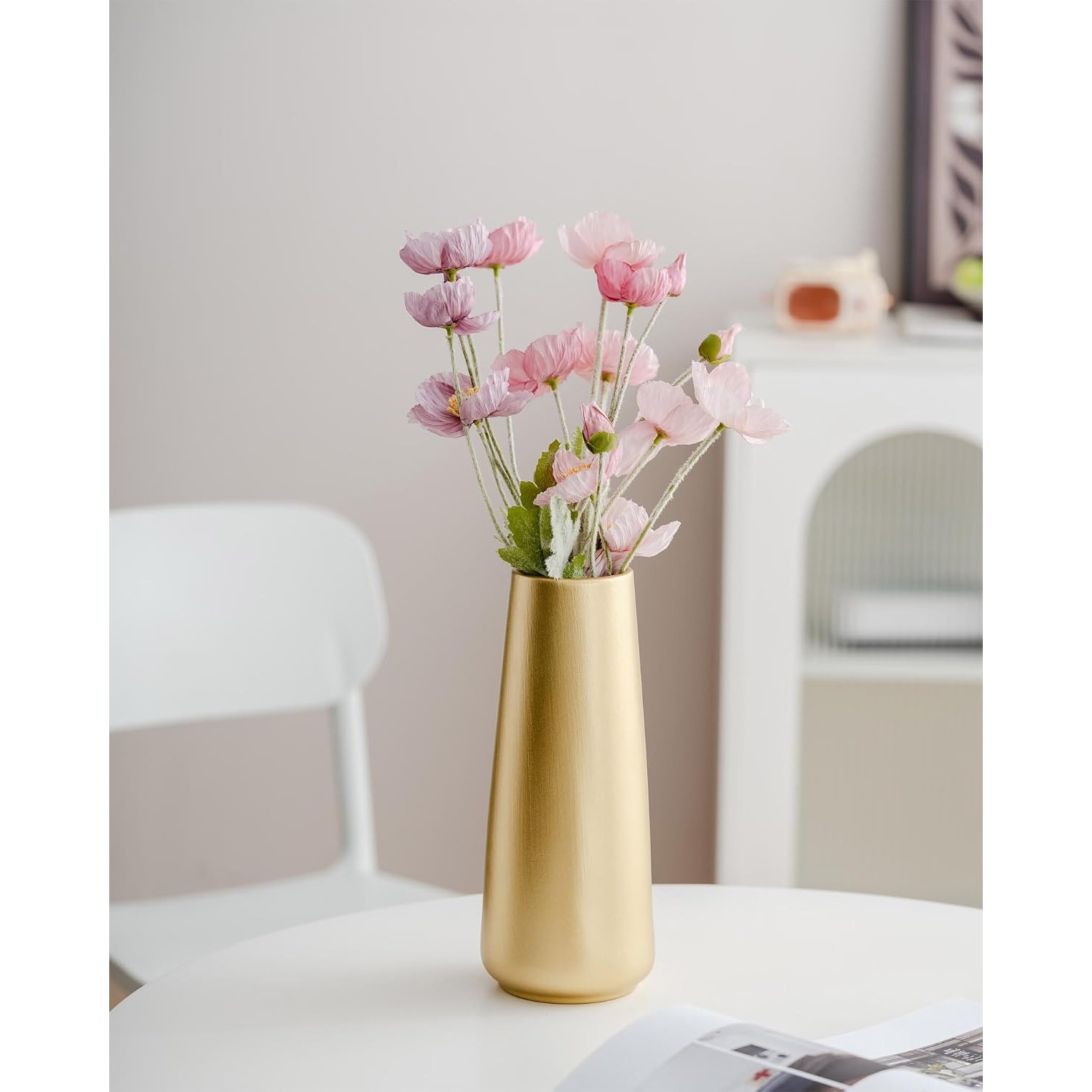
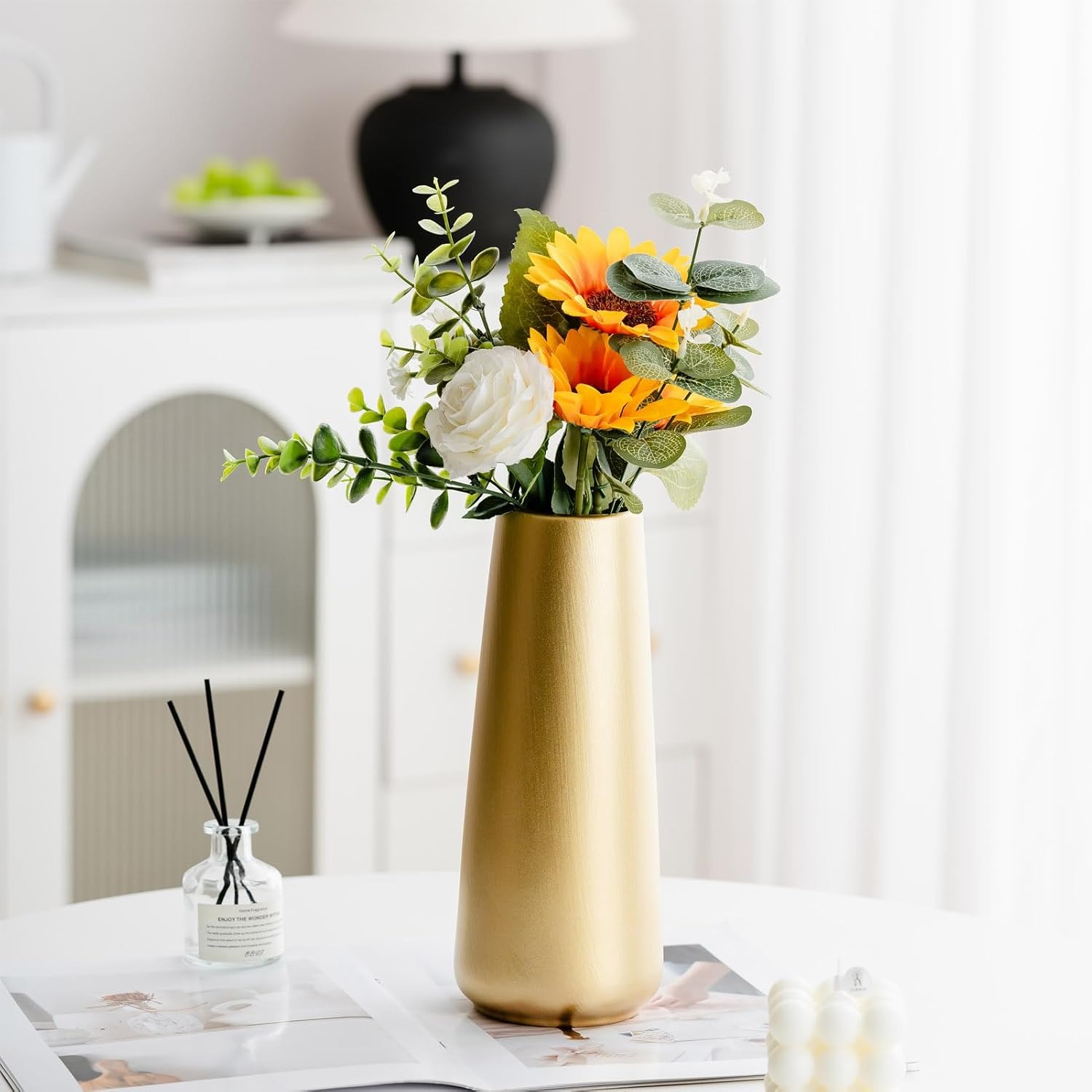
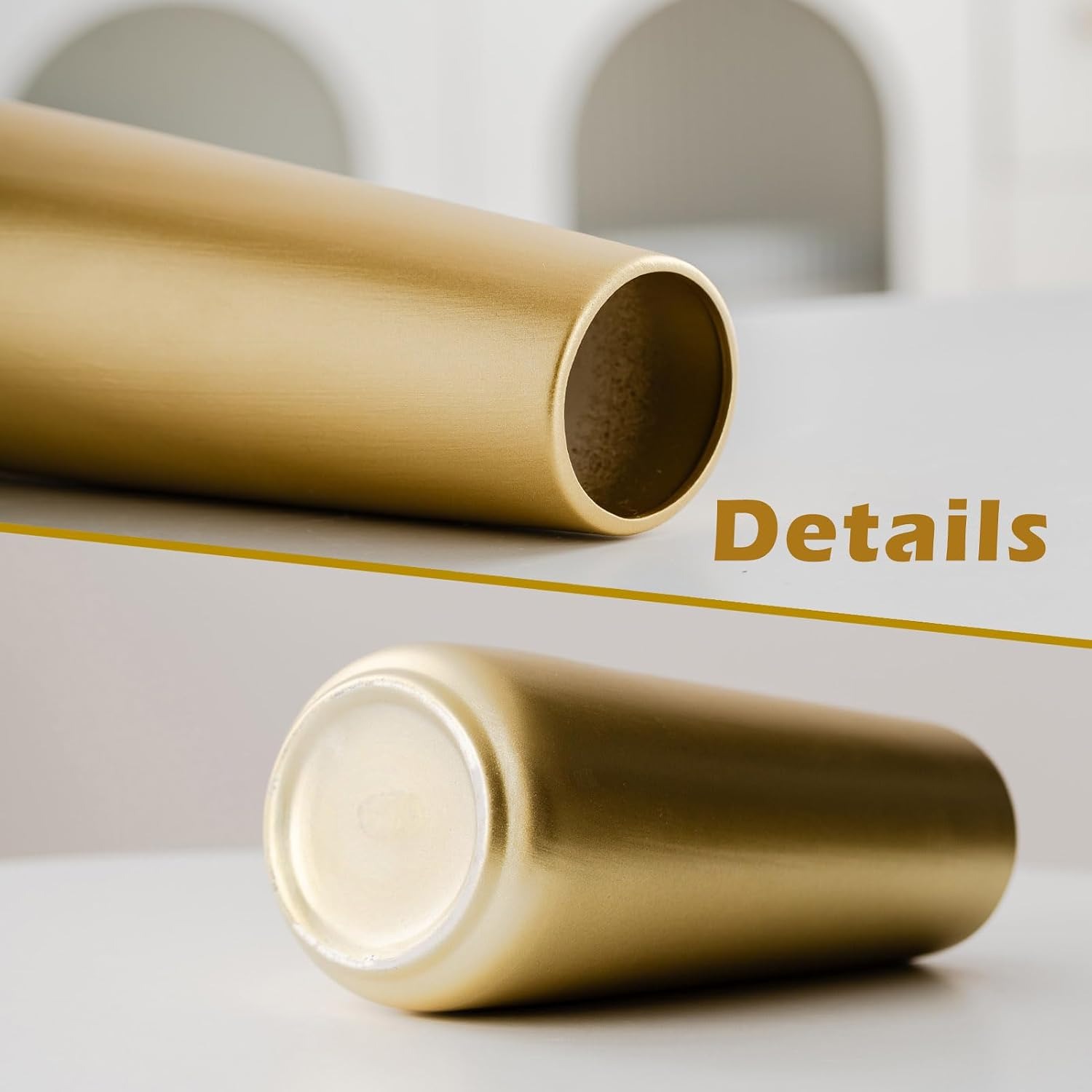
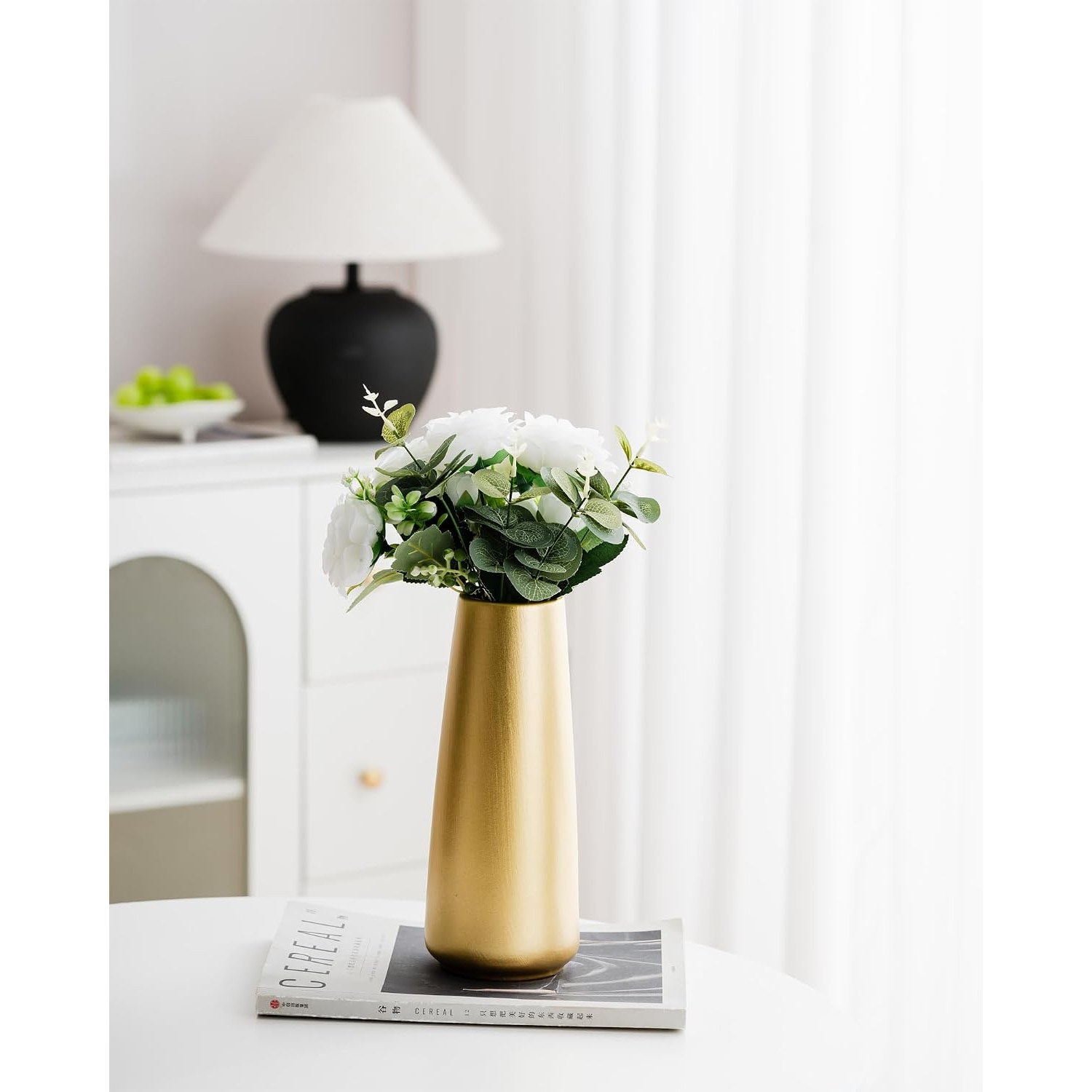
The vase here is made from ceramic porcelain with a frosted finish. It stands about 25.4 cm tall and measures roughly 10.7 cm across at its widest. It is round from above, tapers gently towards the rim, and has no handles or raised pattern. The colour is light gold.
Those two details, the frosted finish and the light gold, matter more than they sound. A high gloss metallic vase reflects every light source in the room and tends to look busy. A frosted surface softens reflections instead, so the vase reads as a warm shape rather than a mirror.
The tapered body is the other practical piece. The base is the widest part, at about 10.7 cm, which keeps the weight low. The narrower opening gathers stems together, so a few stems or a small bunch stand fairly upright with almost no arranging skill required.
How it works with different stems
Because it holds water, you have options.
Fresh cut flowers are the obvious one. Supermarket bouquets, garden roses, tulips, whatever is in season. At 25 cm tall, many shop-bought bunches need only a modest trim at the base before they sit at a good height, though a large bouquet may need splitting to fit the opening. Change the water every two or three days and trim a centimetre off the stems when you do, and you will get noticeably longer out of them.
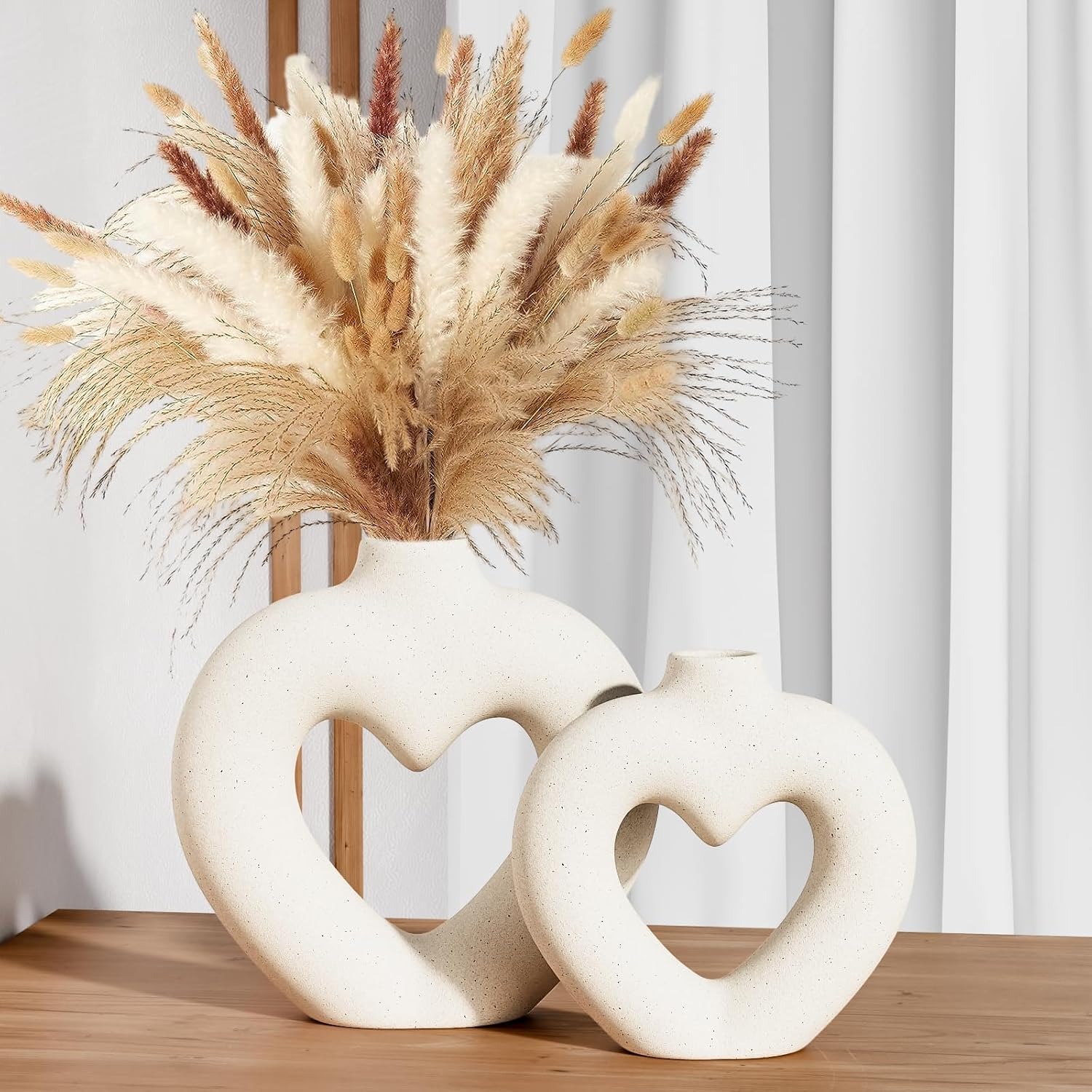
Dried stems are the low-effort choice. Pampas grass, bunny tails, dried wheat, preserved eucalyptus and bleached ruscus all suit a neutral ceramic body, and they need nothing from you once they are in place. If you want a display that lasts a season rather than a week, this is the route. A vase of this shape and height suits a few stems of pampas grass, because the wider base helps keep tall fluffy stems from toppling.
Faux stems have improved enormously, and a good set is hard to tell from the real thing at normal viewing distance. If your faux stems are very light, drop a handful of decorative pebbles or a little clean sand in the base so the vase does not go top heavy.
And then there is the empty option, which people forget. A plain ceramic vase in a warm metallic tone works as a standalone object on a shelf. Not every surface needs flowers on it.
Who it suits
This vase fits people who want their decor calm. If your home runs to pale wood, linen, stone, cream walls and a bit of brass, it will slot straight in. It also works against darker paint, where the light gold picks up warmth from lamps and reads richer.
It suits renters and anyone who moves often, because a neutral mid-size vase travels between rooms and between homes. A piece that looked right in a bedroom in one flat usually still works on a hall table in the next.
It suits gift buyers too. Choosing decor for someone else is risky when you do not know their palette. A frosted ceramic vase in a simple shape is a fairly low-risk homeware gift, and the maker suggests it for birthdays and parties.
It is less suited to anyone who wants a statement piece. This is not a vase that takes over a room. If you want bold colour or dramatic sculptural form, look elsewhere.
Getting the size right
Height is where most vase purchases go wrong, so measure before you buy.
For a dining table, you want the arrangement to sit below eye level when people are seated, or people end up talking around it. A 25 cm vase with stems rising another 15 to 20 cm above the rim lands right at the upper limit of comfortable. If your table is often used for proper sit-down meals, keep the stems short. If it is mostly decorative, let them go taller.
For open shelving, measure the gap between shelves and allow at least 5 cm of clear air above the tallest stem. Cramming a vase into a shelf that barely fits it makes the whole unit look overloaded.
For a console or hall table, a 25 cm vase works well alongside a lamp, since it sits below the lampshade and does not compete. On a mantelpiece, it is tall enough to be seen from across the room without obscuring a mirror or picture behind it.
Width matters too. A 10.7 cm base needs around 15 cm of clear surface to look settled rather than squeezed. On a very narrow shelf, check the depth before ordering.
Styling without overthinking it
Two rules cover most situations.
First, odd numbers of stems usually look better than even. Three, five or seven. It sounds like superstition but it works, because the eye finds asymmetry more natural than symmetry in organic shapes.
Second, vary heights when you group objects. A 25 cm vase next to a 12 cm bowl and a short stack of books makes a composition. Three items of identical height makes a row.
Beyond that, keep the palette tight. A plain home decor vase like this one works hardest when the things around it are also quiet. Save the colour for the flowers.
Looking after it
Ceramic care is simple, but frosted finishes need slightly more thought than glossy ones.
Hand wash with warm water and a little mild washing-up liquid. Dry with a soft cloth. Avoid the dishwasher, where heat, strong detergent and knocks against the rack all work against a matte surface over time. Skip abrasive scourers and bleach-based sprays entirely.
If water marks build up inside after fresh flowers, fill the vase with warm water and a splash of white vinegar, leave it for an hour, then rinse. A soft bottle brush gets into the base without scratching.
Store it upright, not on its side, and give it a bit of space in a cupboard rather than wedging it between heavier items. If you move it regularly, lift it with both hands around the body rather than by the neck. Most ceramic breakages happen during handling, not during use.
A small felt pad on the base protects wooden furniture from scuffing and gives the vase a little grip on polished surfaces.
The short version
This is a 25 cm light gold ceramic vase in frosted ceramic porcelain, plain, tapered and about 10.7 cm across at its widest. It holds water, so fresh, dried and faux stems are all fair game. It suits calm, neutral interiors and works on dining tables, shelves, consoles, mantelpieces and bathroom windowsills.
Measure your space before you order, keep stems a sensible height above the rim, hand wash it, and handle it with care. If you want one vase that handles most situations without demanding attention, this is the sort of piece to own.