
The complete guide
How To Choose An Oval Tablecloth That Actually Fits
The oval table problem
Oval dining tables are lovely to live with. They seat more people than a round table of the same footprint, they have no sharp corners to bruise a hip, and they make conversation easier because nobody is stuck at the end of a long rectangle.
Then you try to dress one.
Walk into most shops and the table linen is rectangular, with a few round options if you are lucky. Put a rectangular cloth on an oval table and the fabric has nowhere to go at the curved ends. It gathers, it folds, it hangs down in a lopsided way, and you spend the whole meal nudging it back into place. It never looks intentional.
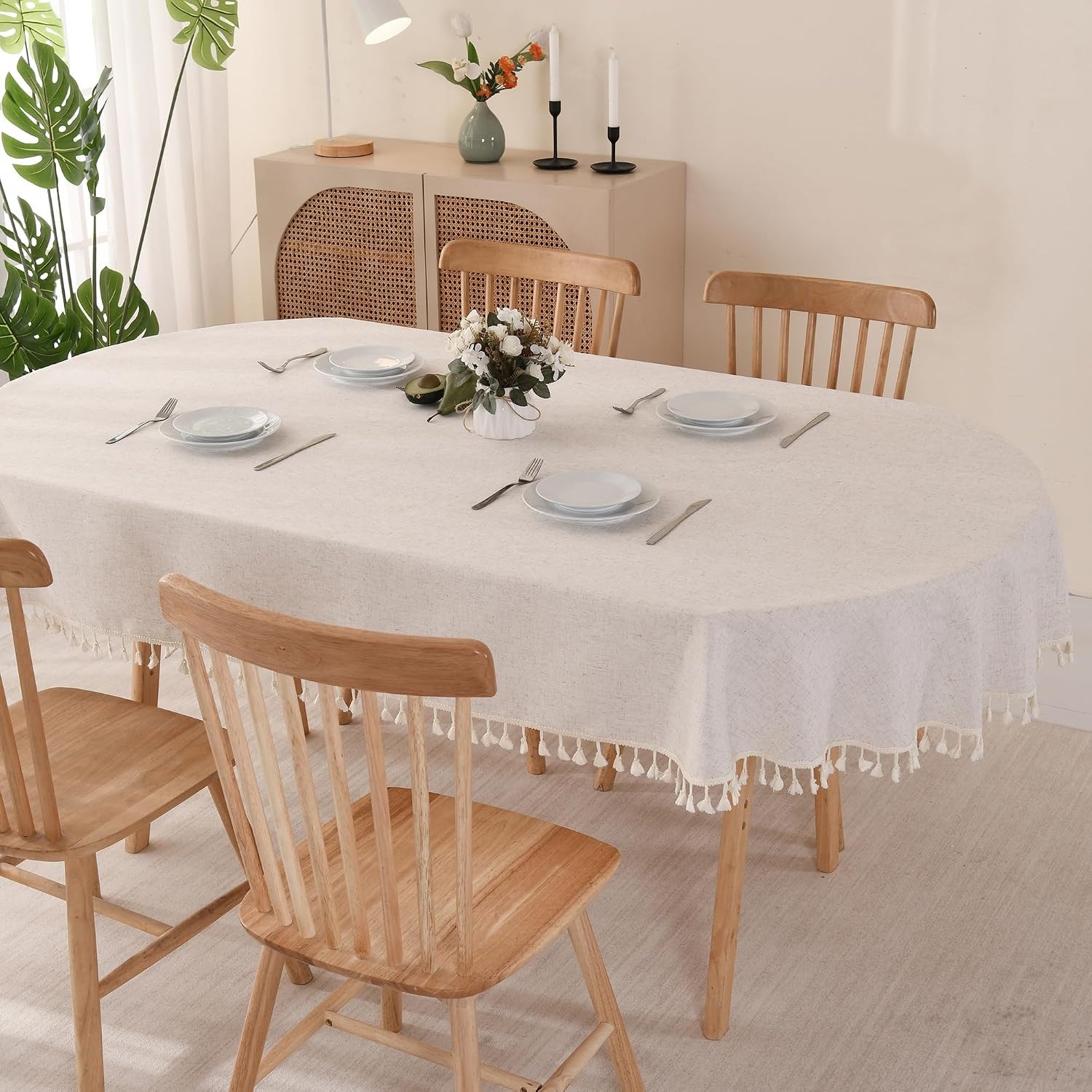
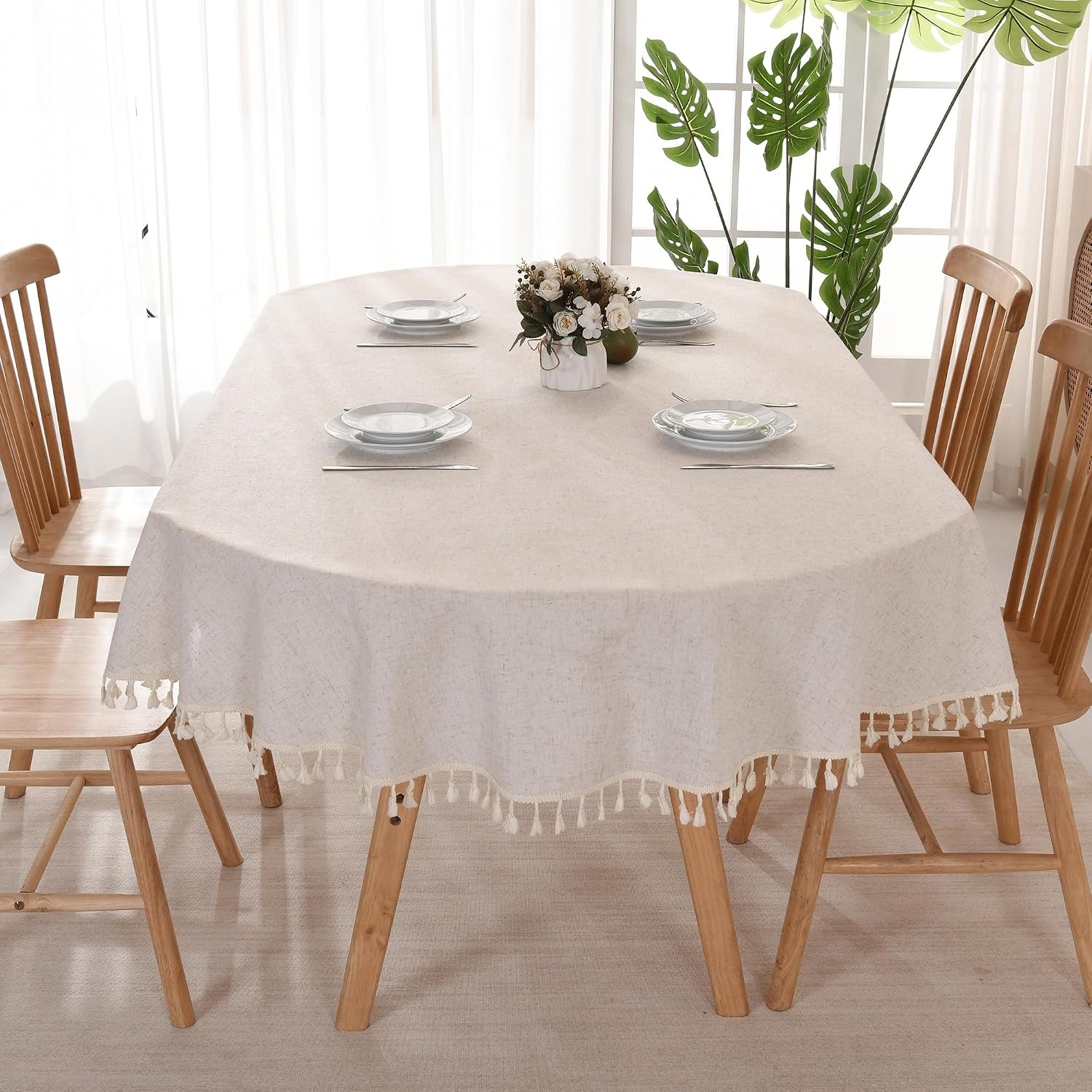
An oval cloth solves that by matching the shape of the table. The hem follows the same curve the tabletop does, so the drop stays even the whole way round. It sounds like a small thing. It is the difference between a table that looks set and a table that looks covered.
What this cloth is
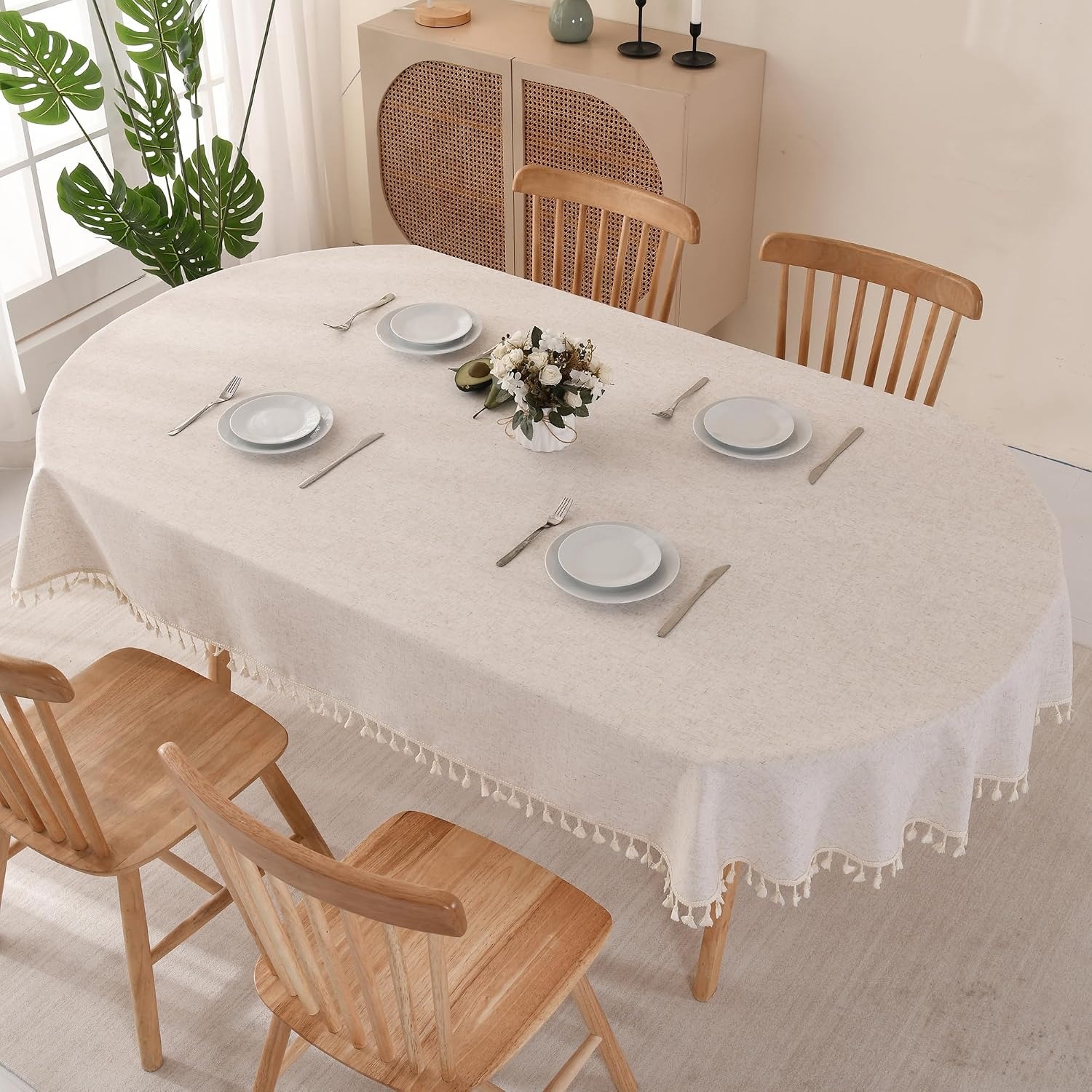
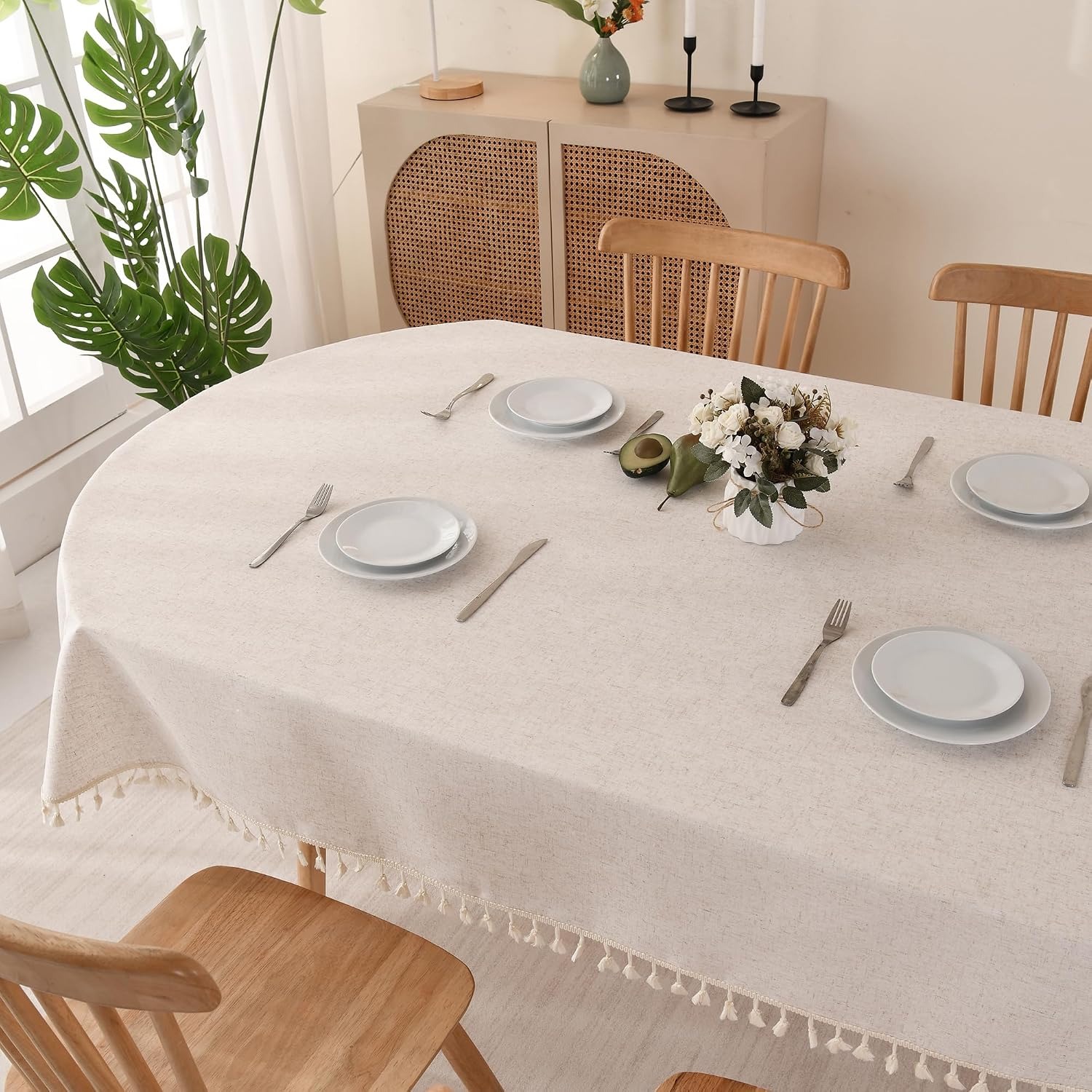
This is an oval cotton linen tablecloth in plain beige, measuring 140 x 220 cm. The maker sizes it for a 6 to 8 seater oval table. The edge is finished with a tassel trim.
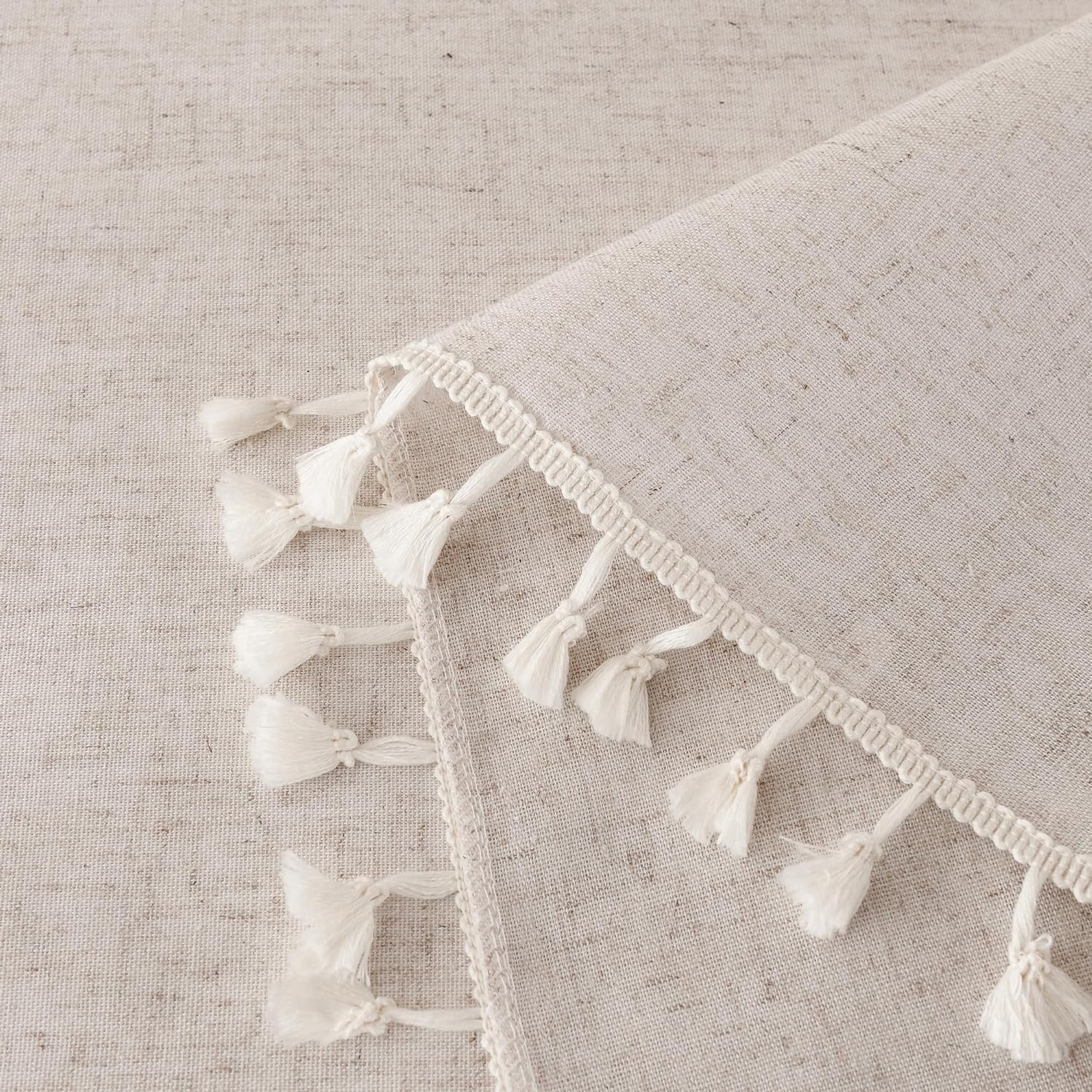
The fabric is a blend of cotton and linen. The maker says so but does not publish the percentages, so that is as specific as anyone can honestly be. It is a blend and not pure linen. The maker describes it as soft, and up close the weave shows a fine natural fleck.
It is machine washable, which is the single most useful fact about any tablecloth that lives on a table where people actually eat.
Getting the size right
This is where most tablecloth purchases go wrong, so it is worth two minutes with a tape measure.
Measure your tabletop at its longest point and at its widest point. Write both numbers down. Then decide how much drop you want hanging over the edge.
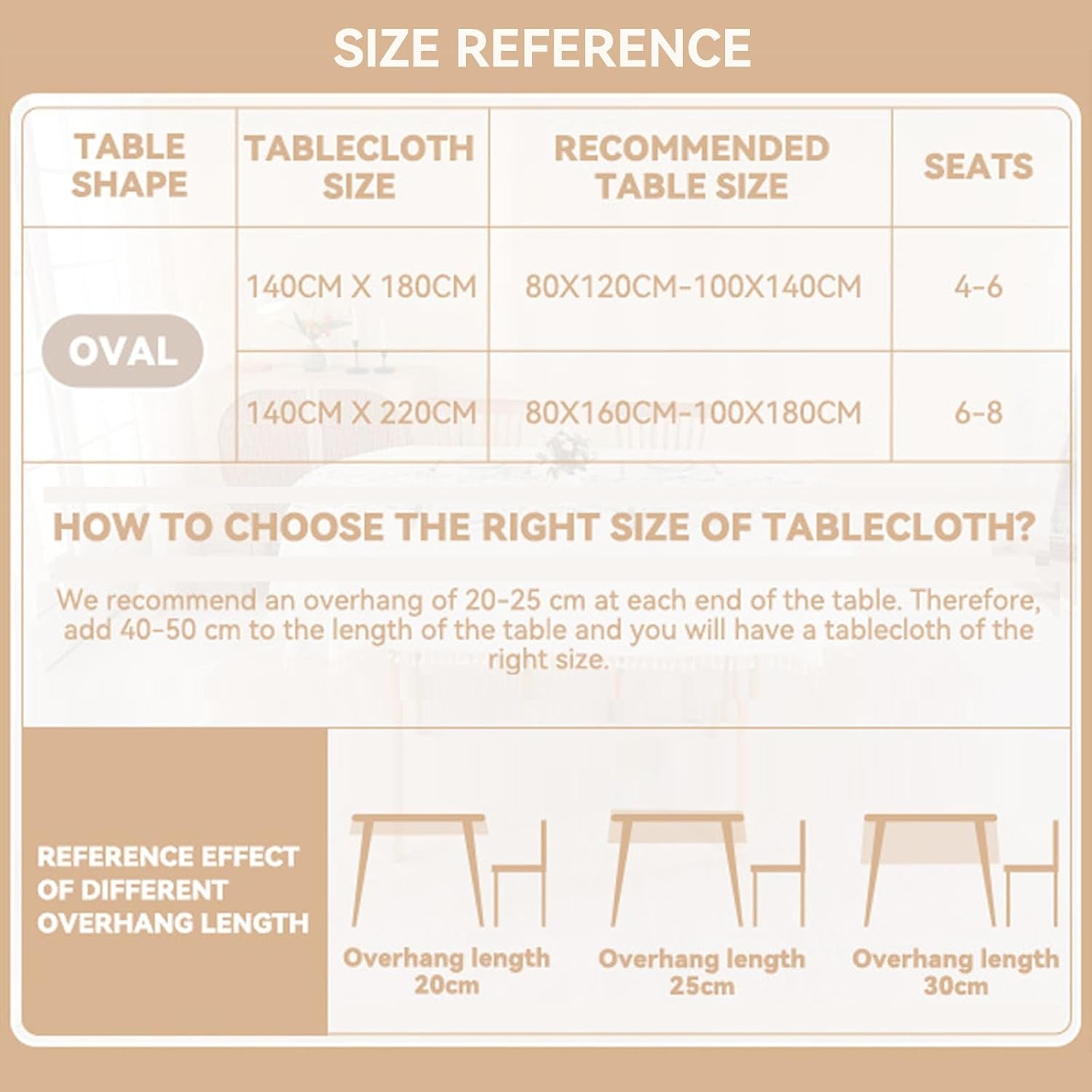
A drop of 15 to 20 cm is the everyday choice. It looks neat, it clears laps, and the cloth does not end up in anyone's way. A drop of 25 to 30 cm is more formal and more dramatic, the kind of thing you see on a dressed table at a wedding. Much more than that and the fabric starts pooling on chairs.
The maths is simple. Add twice your chosen drop to each of your tabletop measurements. If your oval table is 100 cm wide and 180 cm long and you want a 20 cm drop, you are looking for a cloth around 140 x 220 cm. That is exactly what this one is, which is why it suits a typical 6 to 8 seater so well.
If your table is smaller, say 90 x 160 cm, this cloth will still work but you will get a longer, more formal drop of around 25 to 30 cm. If your table is larger than about 110 x 190 cm, the drop starts getting short and you may prefer a bigger cloth.
Why beige, and why plain
A plain beige cloth is a background, not a statement. It lets the food, the glassware and the people be the interesting part.
Practically, beige is forgiving. It does not show the shadow of every crumb the way pure white does. It sits well against oak, walnut, pine, painted wood and rattan, which covers most dining furniture in most homes.
It is also flexible across the year. The same cloth takes greenery and candles at Christmas, pastel napkins at Easter, bare wood bowls and a jug of garden flowers in summer. You change the accessories, not the linen. That is a cheaper and less cluttered way to style a table than owning four seasonal cloths.
The tassel edge
Tassels are a styling detail, but they are a useful one on a curved table.
A plain hem on an oval cloth draws a hard line along the curve. A fringed edge softens it. The strands break up that line and hang slightly differently depending on where they fall, which stops the cloth looking stiff. On a round or oval table the effect is noticeably better than on a rectangle, where corners already give the eye something to look at.
Care for them is easy but worth knowing. Pop the cloth in a laundry bag before it goes in the machine if you want the fringe to stay tidy. When it comes out, run your fingers along the strands to comb them straight while the fabric is still damp. They will dry in that position.
Living with a cotton linen cloth
Natural fibre creases. That is the deal, and it is worth going in with the right expectations.
If you like a crisp table, press the cloth on a warm setting while it is slightly damp. Starch is optional but helps. If you prefer a relaxed look, which a lot of people genuinely do with this kind of fabric, let the soft creases stay. The fringed edge and the natural texture mean a few creases read as character rather than carelessness.
Washing is straightforward. Cool water, gentle cycle, mild detergent, similar colours. Avoid bleach, which can shift the beige tone, and skip fabric softener.
Spills want speed, not scrubbing. Blot with a clean cloth, lift as much as you can, then wash as normal. Red wine, olive oil and tomato sauce are all easier to deal with in a wash within a day than on a cloth that sat folded in the laundry basket for a fortnight.
For storage, fold loosely rather than tightly, and keep it somewhere dry. If you have the space, draping it over a padded hanger avoids hard fold lines entirely.
Who it suits
This cloth makes sense if you have an oval table and you are tired of making rectangular linen work. It also makes sense if you want one dependable everyday cloth rather than a cupboard of occasional ones.
It suits family tables, because it washes. It suits people who entertain, because a neutral base dresses up easily. It suits garden lunches, as long as you bring it in afterwards. It works as a console or sideboard cover too, where the tassel edge hanging over the front looks deliberate.
It is less suited to anyone who wants a wipe-clean surface, since this is a woven fabric with no waterproof coating. If your table sees toddlers with paint and glitter on a daily basis, a coated cloth will serve you better.
The short version
Measure your tabletop, add twice your preferred drop, and check it lands near 140 x 220 cm. If it does, this oval cotton linen tablecloth will fit your table the way a cloth is supposed to, with an even hem all the way round.
You get a cotton and linen blend, not pure linen, a plain beige that goes with nearly everything, a tassel edge that flatters a curved table, and a cloth you can put through the washing machine without worrying. That is a sensible combination for a table that gets used rather than admired.