
The complete guide
How to Choose Linen Look Cushion Covers That Actually Suit Your Room
The problem with buying whole new cushions
Most people replace cushions when they are bored of them, not when they are worn out. That is an expensive habit. The pad inside a scatter cushion is usually fine after years of use. It is the outer fabric that fades, picks up marks or simply stops matching the room after you repaint a wall or buy a new throw.
Covers solve this. You keep the filling, change the face, and the room looks different for a fraction of the price. The tricky part is choosing covers that look considered rather than cheap, and that is mostly about getting three things right: the size, the texture and the colour.
Why 45 cm is the size to know
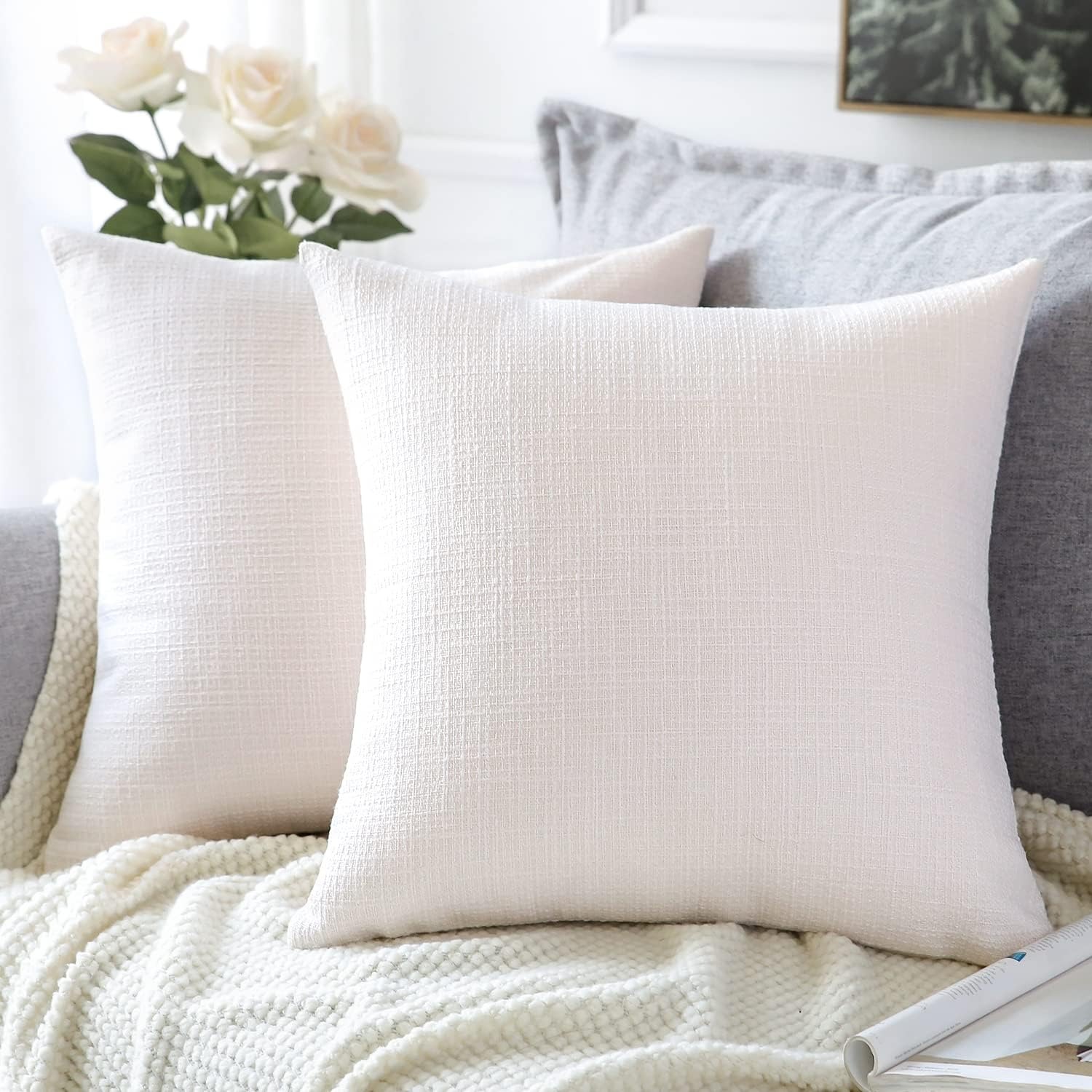
If you measure the scatter cushions on an average sofa, there is a very good chance they are 45 x 45 cm. It has become the default square size across most furniture ranges, which is why 45 cm cushion covers are the easiest to shop for and the easiest to replace later.
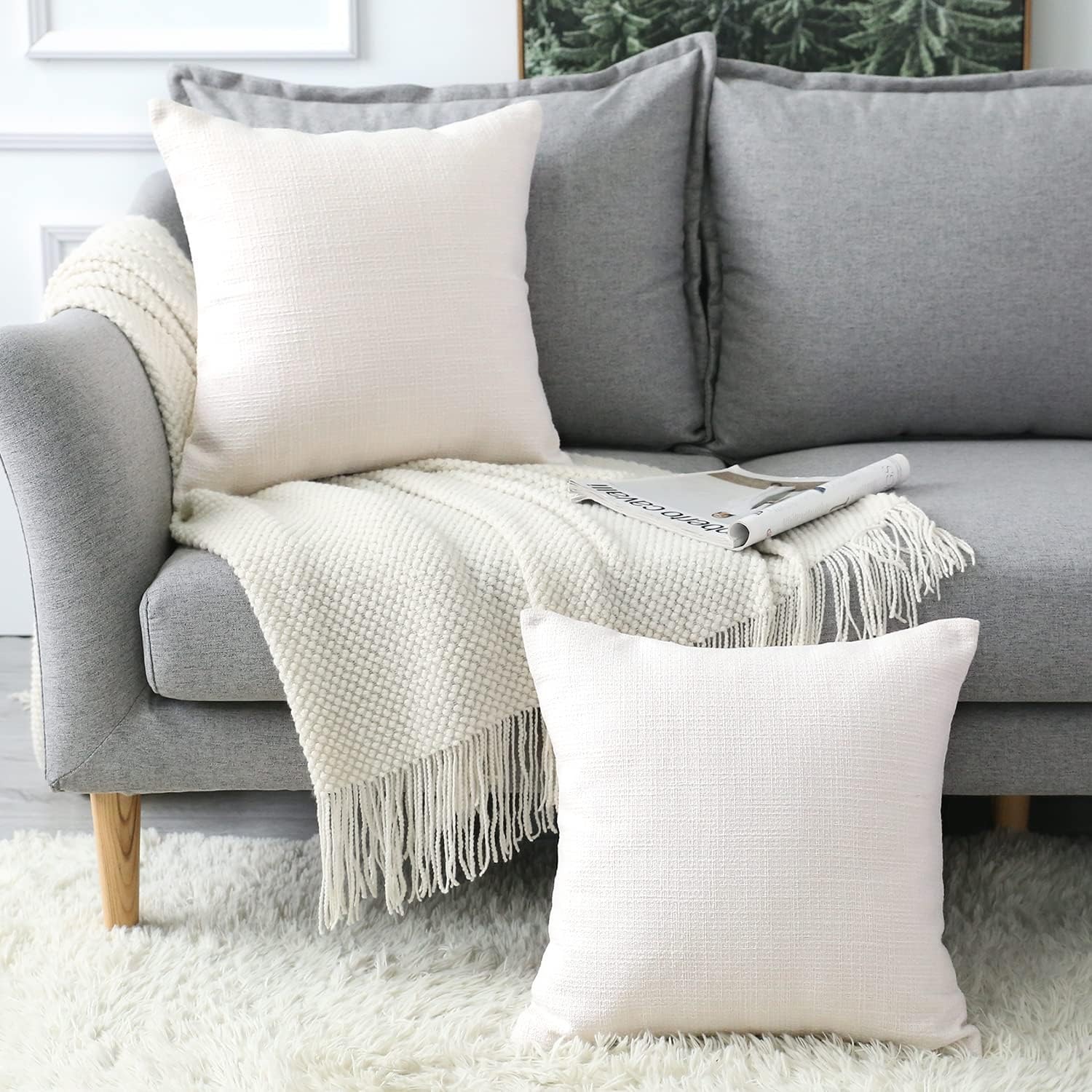
These covers are made to that standard. The maker notes a 1 to 2 cm tolerance because the pieces are cut and sewn by hand. A centimetre either way is hard to see once a pad is inside.
One trick worth knowing. If you like cushions that look full and plump rather than soft and flat, put a 50 cm pad inside a 45 cm cover. The corners fill out, and the cushion holds a fuller shape on a deep sofa. If you prefer a lived-in slouch, a matching 45 cm pad is exactly right.
What "linen look" really means
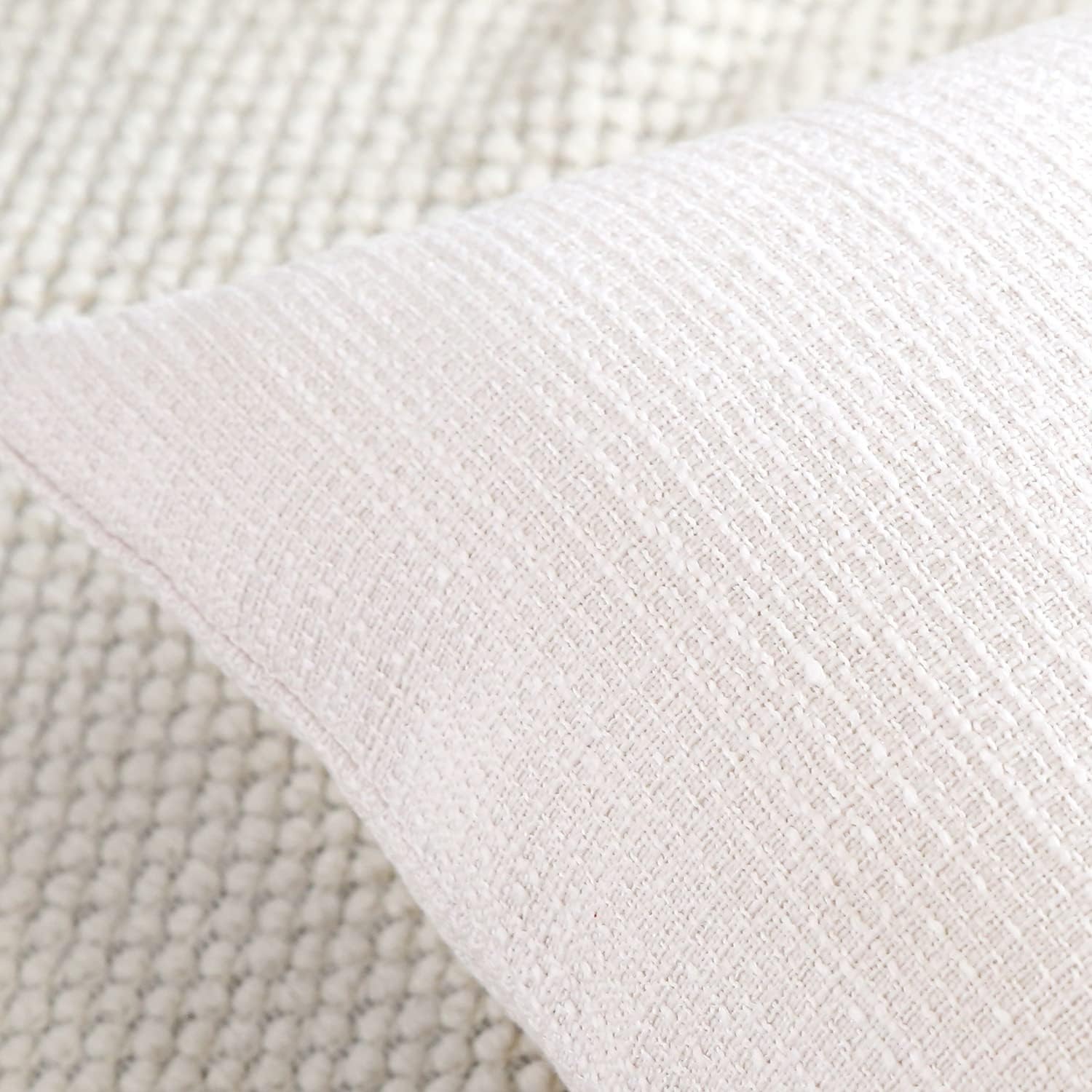
Linen has a particular appearance. It is matt rather than shiny, slightly uneven in the weave, and it reads as natural and relaxed. That look has been popular for years, and plenty of fabrics are now made to imitate it.
These covers are one of them. The fabric is polyester, woven so that the surface has a texture you associate with flax. The maker describes it as polyester linen. There is no stated linen content, so it is best understood as a linen-effect weave rather than the real fibre.
Is that a problem? It depends on what you want. Real linen is a different cloth, with its own feel and its own habits. It creases the moment you sit on it, usually costs more and needs more care. These covers are not that. A polyester linen look weave gives you the visual texture with less creasing, and it goes in a cold machine wash. For a sofa in a busy house, that trade is often the sensible one.
The honest summary: buy these for the look and the practicality, not because you want genuine flax.
Cream, and why neutrals are worth the shelf space
Cream is not an exciting colour, and that is exactly the point. A plain neutral cushion is the piece you keep when everything else changes.
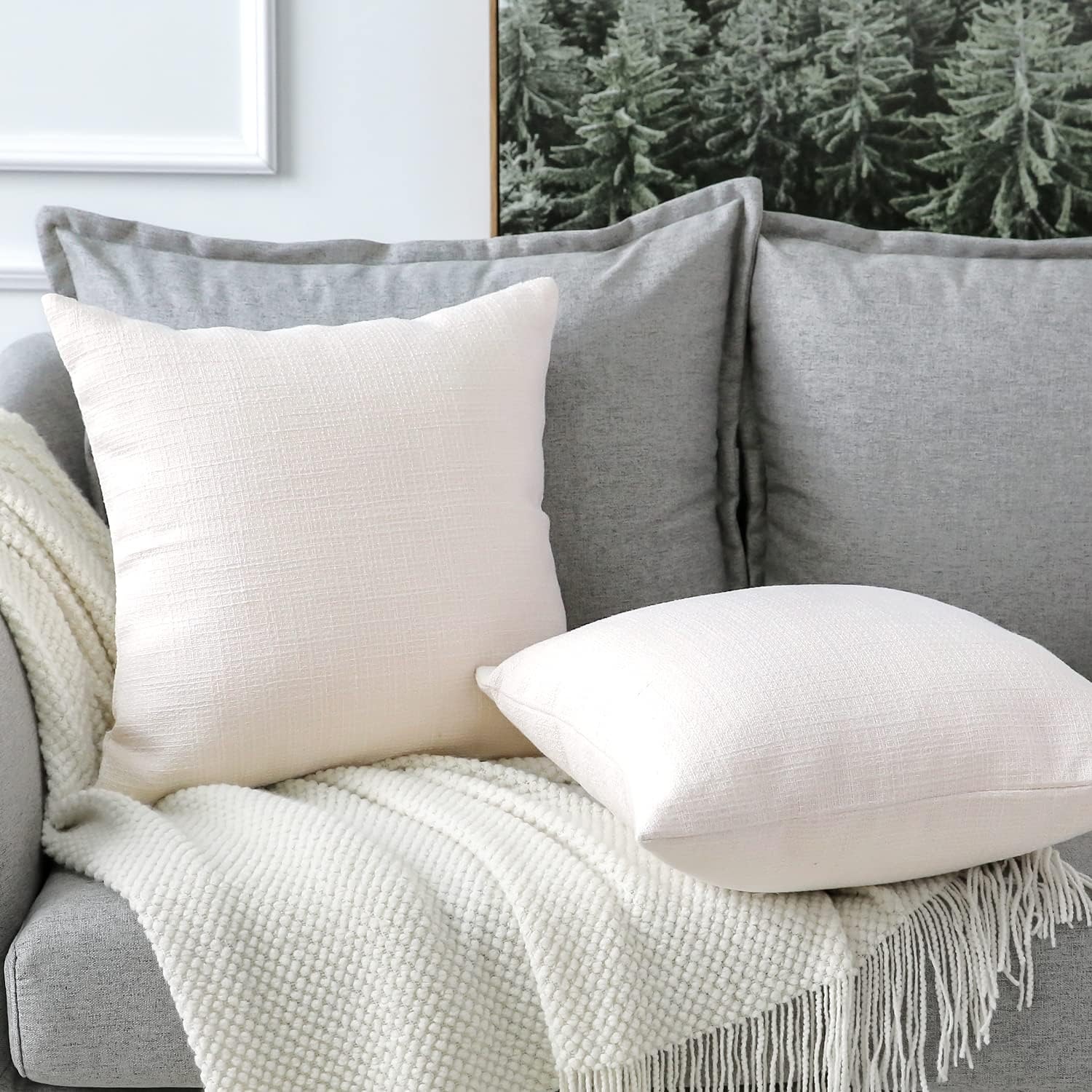
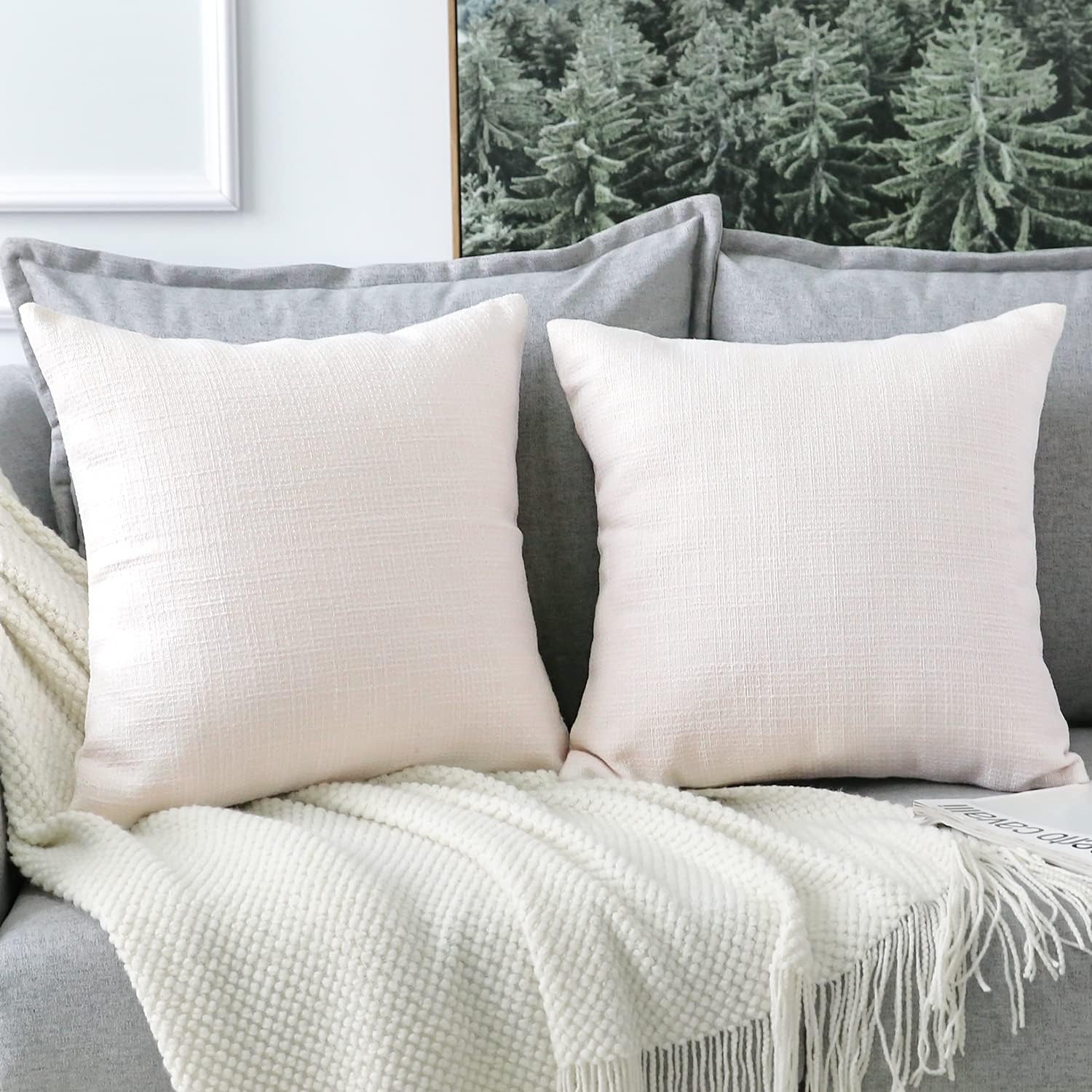
It works against grey sofas, navy sofas, dark leather, pale oak and almost any wall colour short of a very warm yellow. It bounces light rather than absorbing it, which helps in rooms that face north or do not get much sun. And because there is no print, it layers without clashing.
Think of your cushion arrangement as having loud pieces and quiet pieces. The quiet pieces give the eye somewhere to rest. Two cream covers at the outer corners of a sofa, with something bolder in the middle, is a simple arrangement that almost always reads well. Plain cream scatter cushions do the structural work while the patterned ones get the attention.
The one honest drawback is marks. A pale cover shows a spilled drink more clearly than charcoal would. That is less of an issue than it sounds, because the cover zips off and goes in the machine.
The details that decide whether a cover looks good
A few small things separate a cover that looks smart from one that looks like an afterthought.
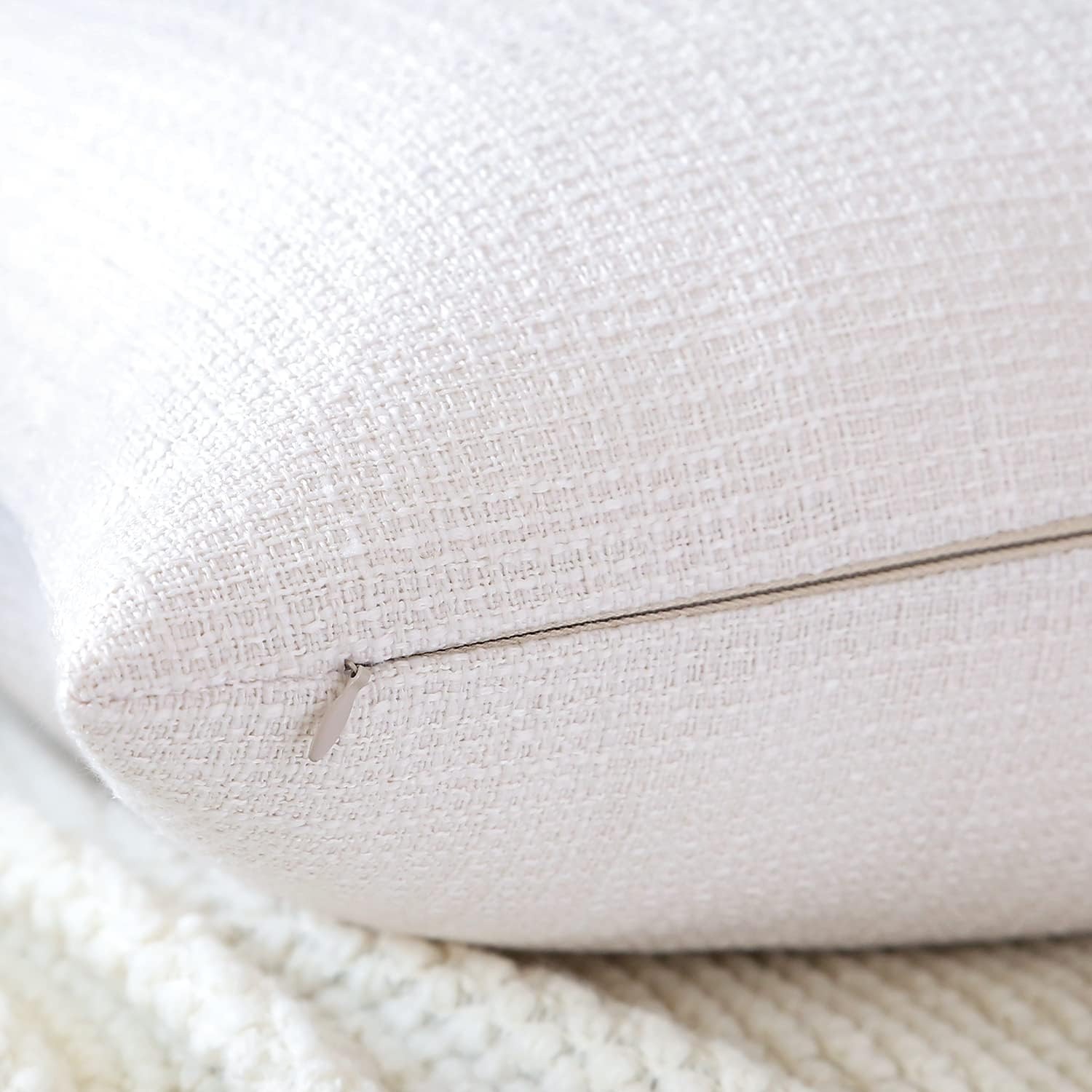
The closure is the first. A visible zip across the bottom of a cushion is distracting, especially on a plain fabric where there is nothing else to look at. These covers use a hidden zip set into the seam, so the front face stays uninterrupted. It also means you can flip the cushion either way round without one side looking wrong.
The second is how the corners sit. If a cover is slightly too large for its pad, the corners droop and the cushion looks tired. Pushing the pad firmly into each corner before closing the zip fixes most of this. Going up a pad size fixes the rest.
The third is seam quality, which you can only really judge in hand. Turn the cover inside out when it arrives and look at the stitching along the zip. Clean, even stitching is a good sign. This is a budget-friendly product, so expect sensible construction rather than couture finishing.
Where these actually get used
Sofas are the obvious home, but square 45 cm covers turn up all over a house.
On a bed, two of them in front of the main pillows adds depth without the bulk of larger shams. In a bedroom, neutral covers are useful because they sit under whatever duvet set you have on that week.
On an armchair or reading chair, a single cushion gives you something to lean against. In a home office, the same cushion on a hard desk chair makes a long afternoon more bearable, and when it gets grubby it goes in the wash rather than the bin.
On a window seat or a bench, a row of three or four plain covers turns a hard surface into somewhere people actually sit. Because these come as a set of two, buying two sets gives you four matching covers for that kind of run.
The maker also suggests patios and porches. A covered porch on a dry day is fine, but they are not described as weatherproof, so do not leave them out in rain or beating sun.
Looking after them
The care routine here is short, which is most of the appeal.
Take the cover off the pad before washing. Machine wash in cold water, as the maker instructs, with similar colours. Skip the bleach, and skip fabric softener too, since it can coat woven fabrics and dull the texture over time.
Drying flat or on a line is the cautious choice, since the maker gives no tumble drying or ironing instruction. Reshape the covers while they are still damp and most creases drop out on their own.
Rotate your cushions every few weeks, swapping the ones that get sat on with the ones that do not. It spreads the wear and keeps the set looking even.
The short version
If you have 45 cm cushion pads and want a different look without spending much, a pair of covers is the efficient answer. These are cream, plain, and woven in polyester to imitate linen, with a hidden zip and a cold machine wash.
They are not real linen and the product does not claim to be beyond calling the fabric polyester linen. What they offer is the texture and quiet colour that make linen cushions popular, in a fabric that creases less than flax and can be machine washed in cold water.
Buy the right pad size, push the corners in properly, and wash them cold. That is the whole job.