
The complete guide
How to Choose a Cross Back Cotton Linen Apron
The small annoyance that stops you wearing an apron
Most people own an apron. Fewer people wear one. The gap between those two facts is usually some combination of a neck strap that needs adjusting every time, a tie that works loose halfway through dinner, and the simple fact that the apron lives folded in a drawer rather than hanging where you can grab it.
By the time you have decided you need one, you already have flour on your hands or soil under your nails. Anything that takes more than two seconds to put on gets skipped. That is the problem a cross back pinafore solves. There is nothing to fasten at the neck, nothing to buckle, and nothing to adjust before you start. Lift it, drop it over your head, tie the sides, carry on.
How the cross back shape works
A traditional bib apron hangs from one loop around the back of your neck. All the weight of the cloth, plus anything you put in the pockets, pulls down on that single point. Over ten minutes you do not notice. Over two hours of standing at a bench, you very much do.
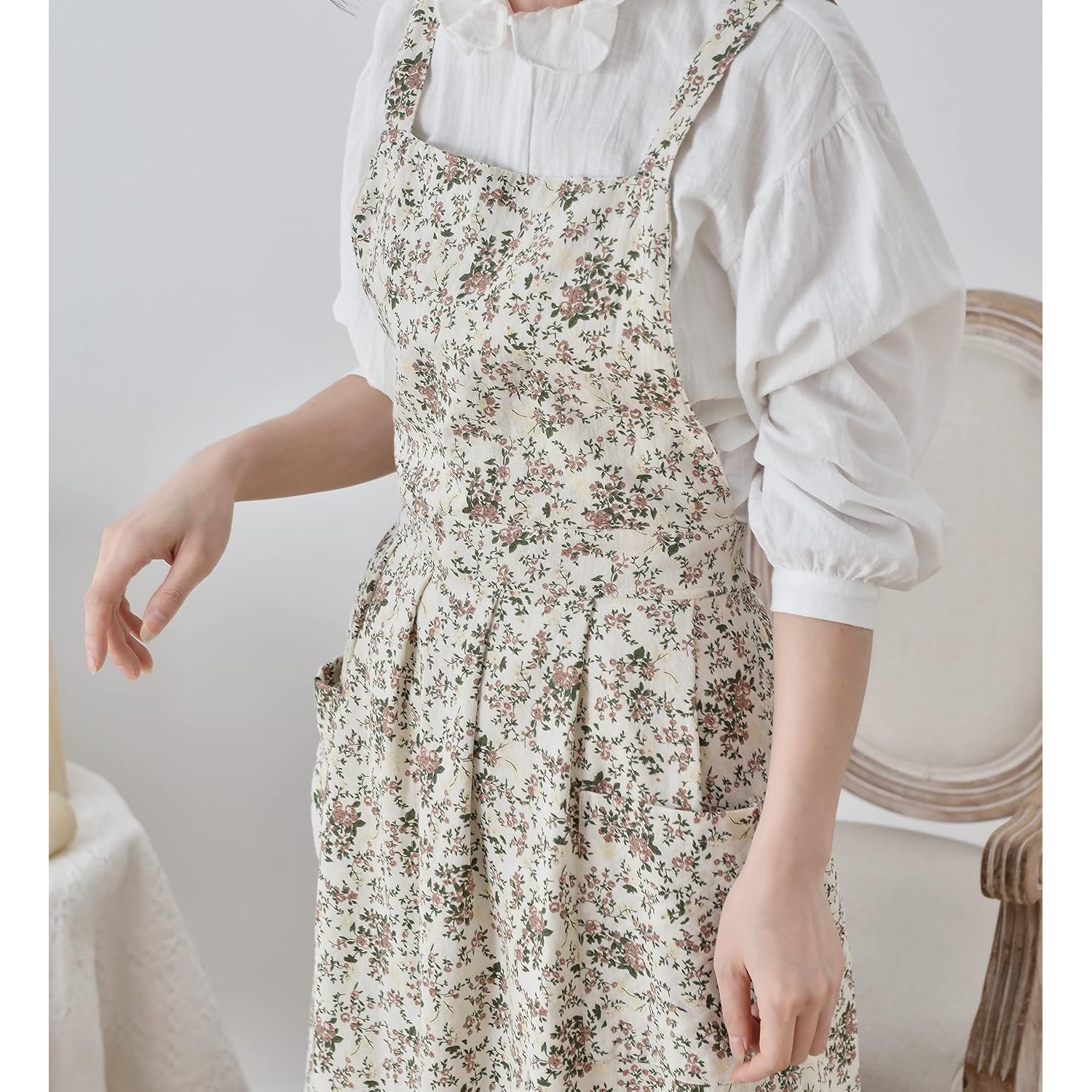
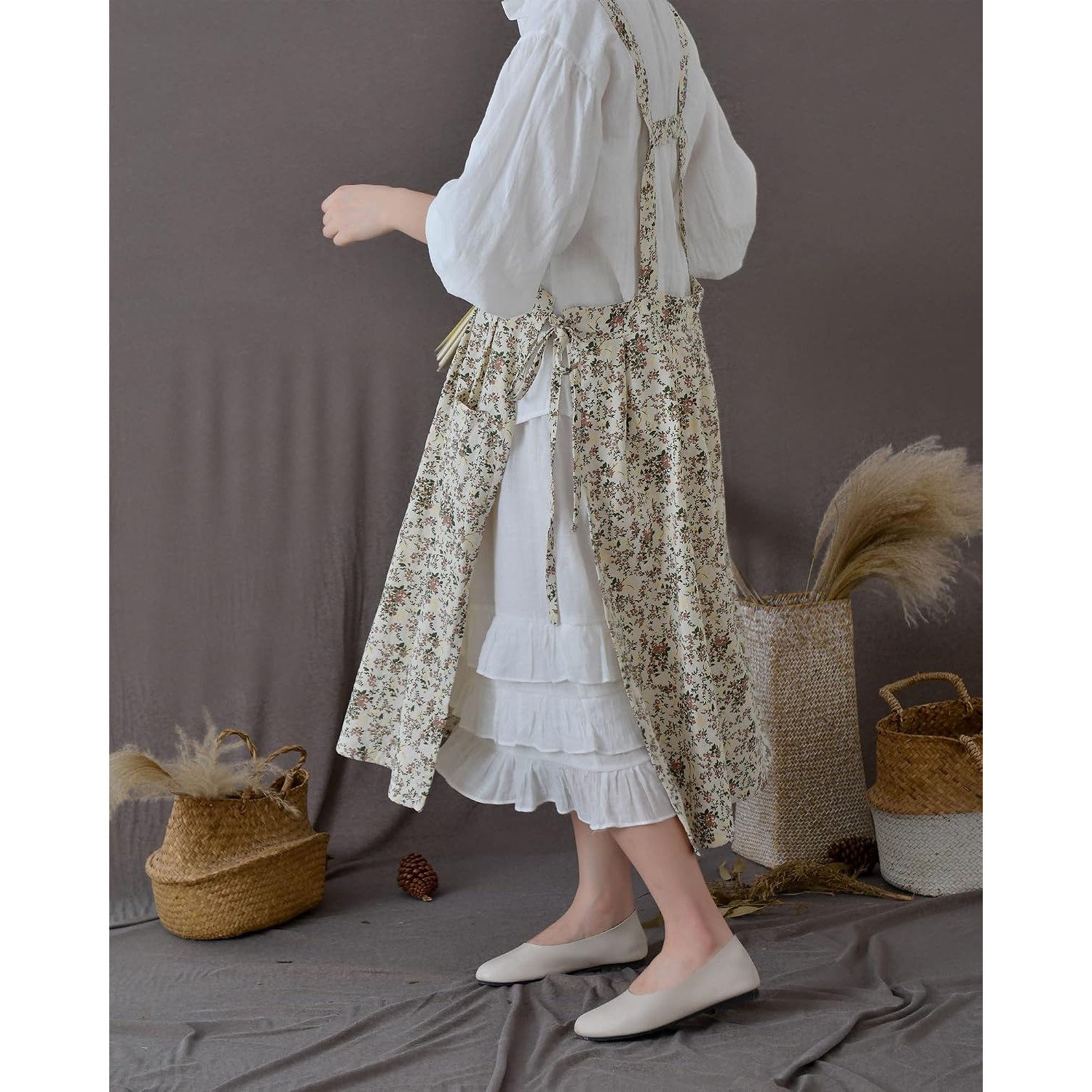
A cross back apron takes the same bib shape and splits the support into two straps that cross over your shoulder blades. The load spreads across both shoulders, the way a rucksack does rather than the way a shoulder bag does. Your neck stays free, and you can turn your head without the fabric dragging.
There is a second benefit that people usually discover by accident. Because the straps are fixed and crossed, the apron does not slip sideways when you lean over a sink or reach into a low oven. A single neck loop lets the whole thing swing. A cross back stays square to your body.
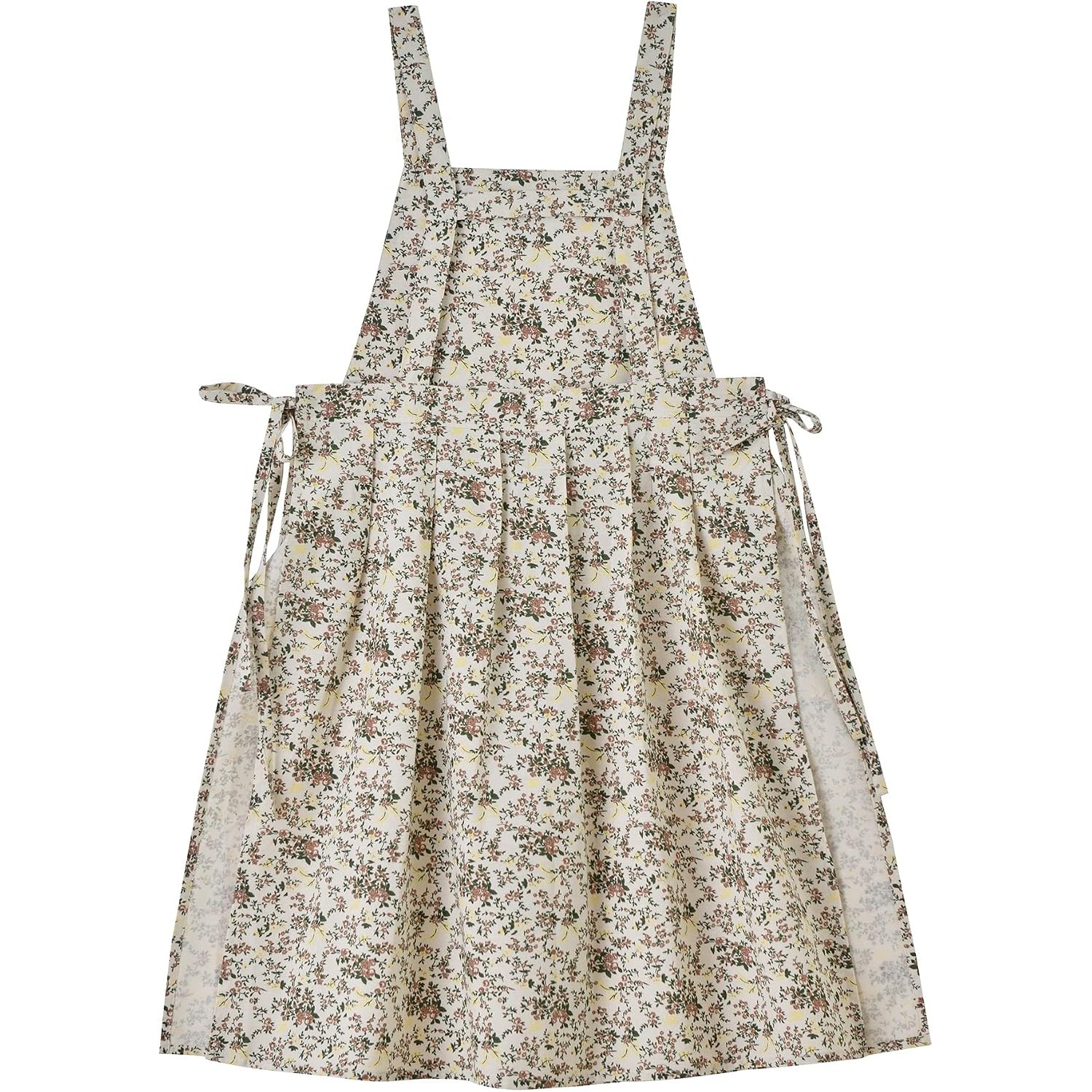
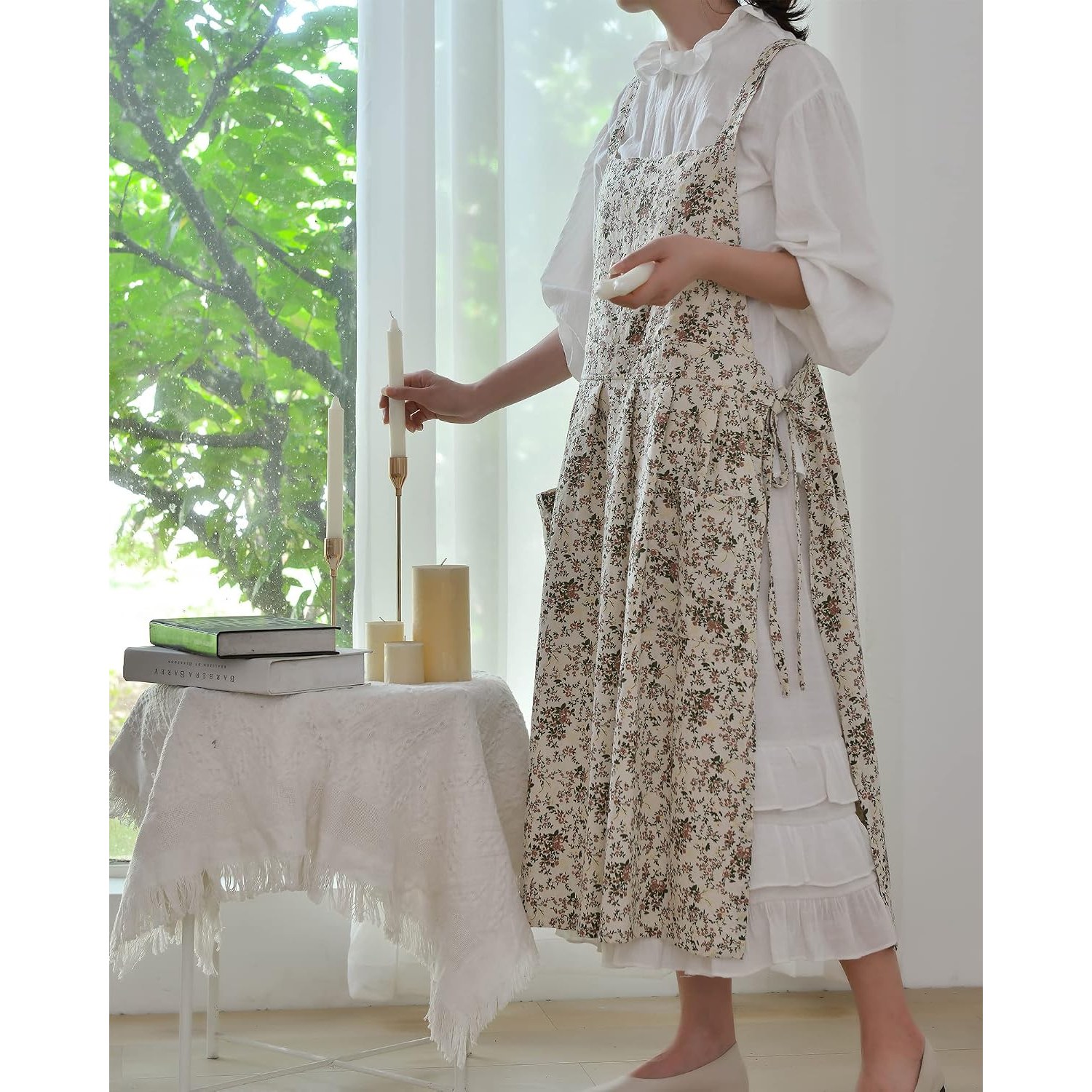
The side ties then handle the fit. The front and back panels meet at each side of the waist, where a pair of ties knots into a bow. Leave the bows loose for an easy drape, or tie them closer for something nearer the waist. That adjustment is why a single size works for a range of people.
The fabric, honestly described
This apron is made from a cotton and linen weave. The maker lists both fibres and does not give percentages, so the right way to think about it is a natural blend rather than pure linen.
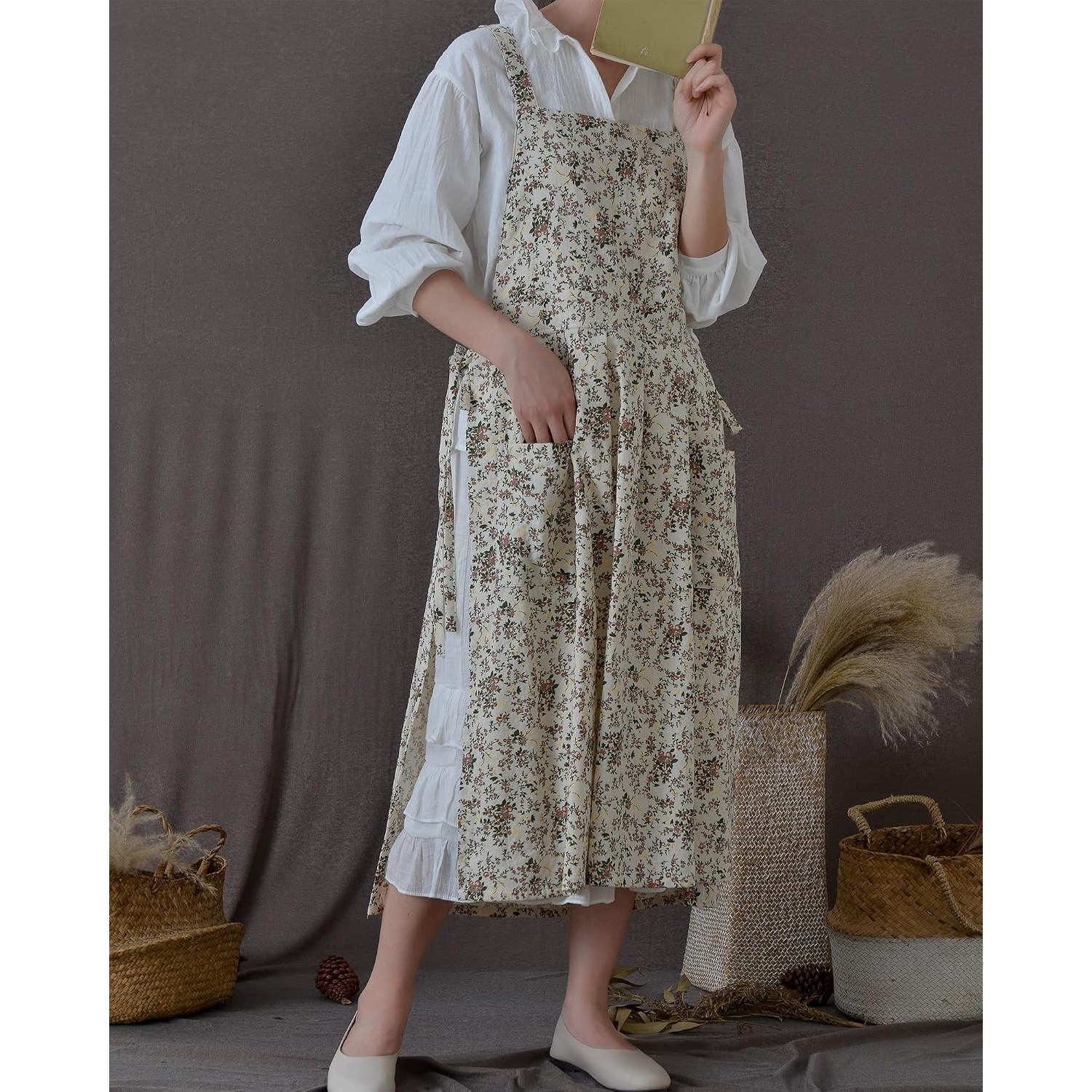
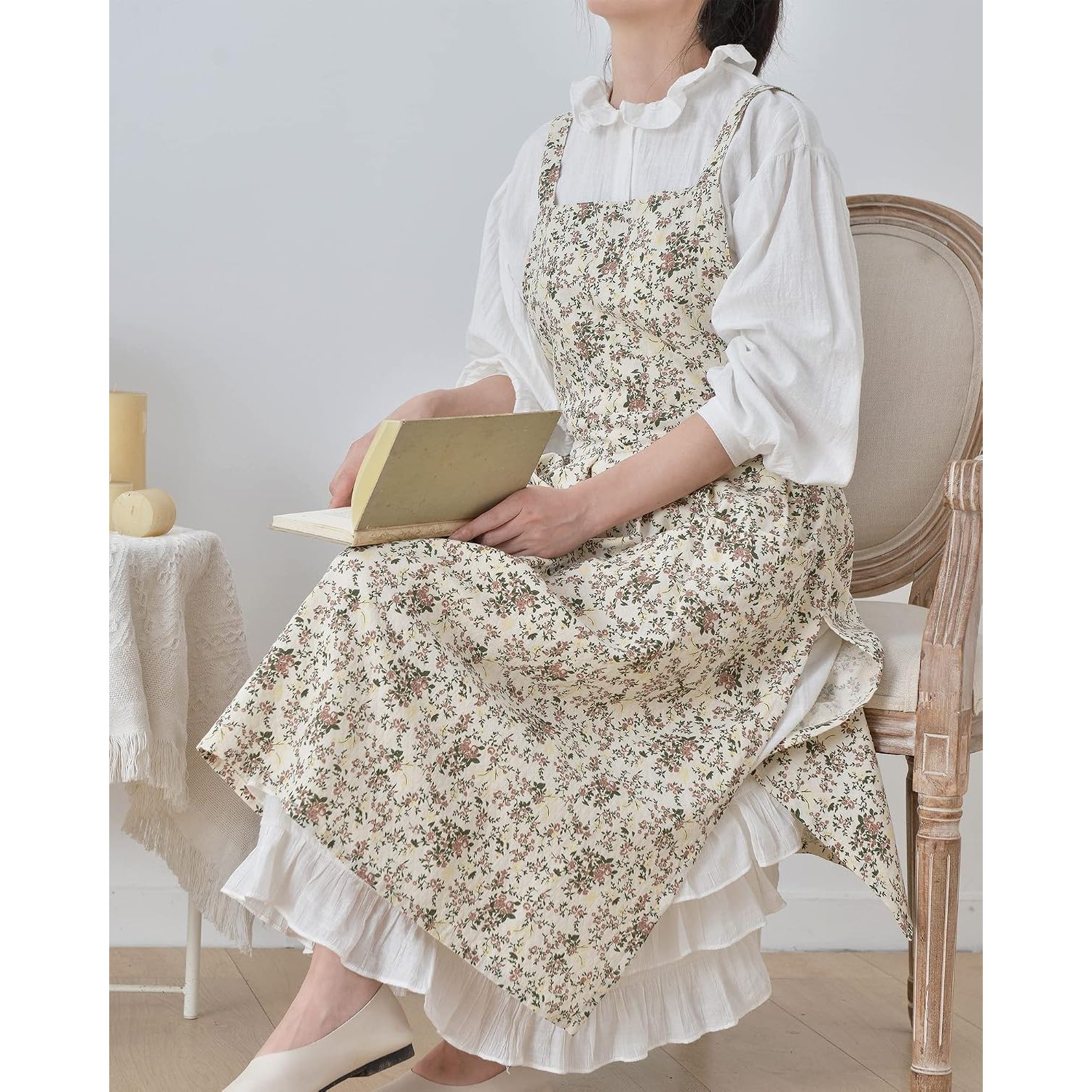
The maker describes the apron as lightweight. This one comes in the White Flower design, an off-white ground with a small floral print in soft pink, green and pale yellow, and the skirt is pleated below the waistband.
One point to be clear about. This apron is not waterproof. A woven cotton and linen cloth will catch splashes, crumbs, flour and the odd drip. It will not stop standing water. If you need a barrier for washing a large dog or scaling fish, you want a coated apron, and that is a different product entirely.
For everyday cooking, baking, gardening, craft and cleaning, a woven apron is usually the nicer thing to wear. It does not stick to you, and it does not make a plasticky noise when you move.
Who this suits
Home cooks get the most obvious benefit. If you cook most nights, the thing that decides whether you wear an apron is how fast it goes on, not how good it looks folded.
Bakers notice the comfort first. Long sessions of kneading, rolling and shaping mean a lot of time leaning forwards. A neck loop becomes a nuisance quickly. Spread the weight and the hour passes more easily.
Gardeners use the pockets more than anything else. Twine, labels, seed packets, a phone, a pair of gloves. Having all of it at your waist saves a surprising number of trips back to the shed.
Makers and artists treat this cut as a smock. It covers the front of your clothes, the pockets take brushes or tools, and the shape does not restrict your arms. Just be aware that paint, dye and clay can mark the cloth permanently, so if you want one apron to stay smart, keep a second one for messy work.
And then there are the people who simply wear it. The pinafore shape has been part of everyday dress for a very long time, and worn over a plain shirt it reads as clothing rather than kit.
How to choose and how to fit it
Start with the strap style, because it matters more than anything else. If you have ever finished a cooking session rubbing the back of your neck, go cross back and do not look back.
Next, look at pockets. Two front pockets sound like a small detail until you have them. The maker lists recipe cards, gloves, glasses and a phone among the things these will hold.
Then think about where it will live. An apron on a hook by the kitchen door gets worn. An apron at the bottom of a drawer does not. Choose something you are happy to leave on display, because visible storage is what turns an apron into a habit.
For fit, put it on and tie a loose bow at each side of the waist first. Stand normally and see where the hem falls. The apron is about 96 cm long, not counting the shoulder straps. If it feels too loose across the body, retie the bows a little closer. That brings the front and back panels in towards your waist.
Looking after it
Wash it. That is the main thing. Aprons work best when they are treated as a working item rather than something precious, and the maker's care information allows both machine washing and hand washing.
Machine wash or hand wash, whichever suits you. Keep the temperature cool to moderate, use a gentle cycle and a mild detergent, and wash with similar colours. Skip the bleach, which can leave patchy marks on a printed cloth.
Deal with stains early. Blot, do not rub. For grease, a little washing up liquid worked into the mark before washing usually does it. Keep heat away from any stain you have not shifted yet, because heat sets marks.
For drying, a line or an airer is kinder than a hot tumble dryer. Give the apron a good shake, smooth the straps flat and hang it by the shoulders. If you like a crisp finish, iron on the reverse while it is still slightly damp. If you prefer a more relaxed look, just hang it and leave it be.
Store it dry. A damp apron folded into a drawer will smell musty by the weekend.
The short version
A cross back cotton linen apron solves a small, daily annoyance. It goes on in one movement, it stays where you put it, and it takes the weight off your neck. The two front pockets quietly become the part you rely on most.
The fabric is a cotton and linen blend, not pure linen, in the White Flower print. It is not waterproof, so think of it as everyday cover rather than armour. Tie the side bows loosely for an easy drape or closer for a snugger fit.
Hang it somewhere you will see it. That single decision does more for whether you wear an apron than any feature on the label.