
The complete guide
How to Choose a Desk Tray or Catchall That Actually Gets Used
The problem with a surface that has no landing spot
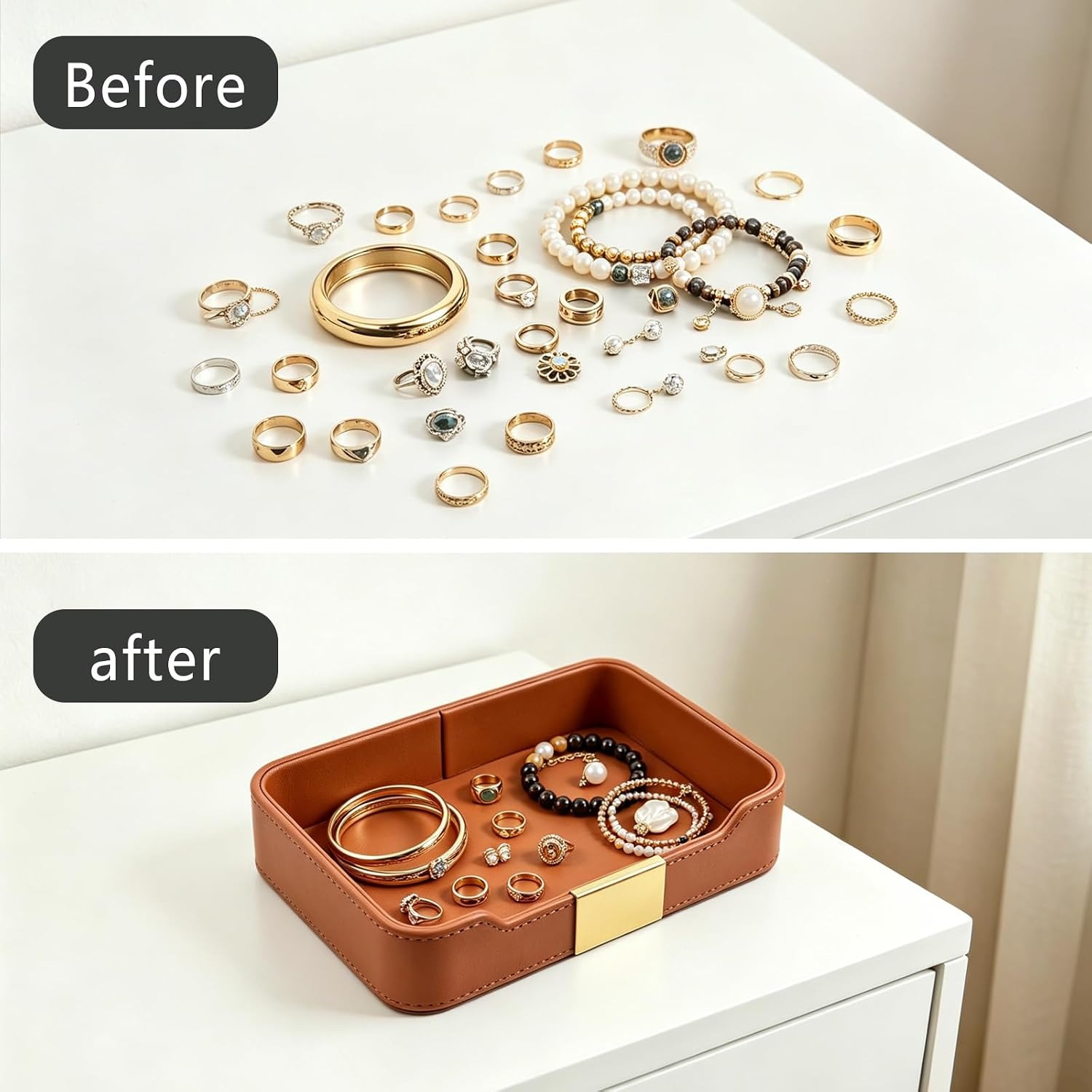
Clutter on a desk is rarely about having too much stuff. It is about having nowhere specific to put the few things you touch constantly. Keys, a watch, a phone cable, a pen, a card you pulled out of your wallet. None of those items has a shelf or a drawer that makes sense, so they settle wherever your hand drops them. By Thursday there are eleven small objects spread over the surface, and finding the keys means lifting three of them.
A catchall tray solves this with one decision. You give those items a border. Everything inside the border is fine, because the border is small and your eye reads it as tidy. Everything outside gets noticed and put away. That is the whole trick, and it is why one small tray can change how a room feels.
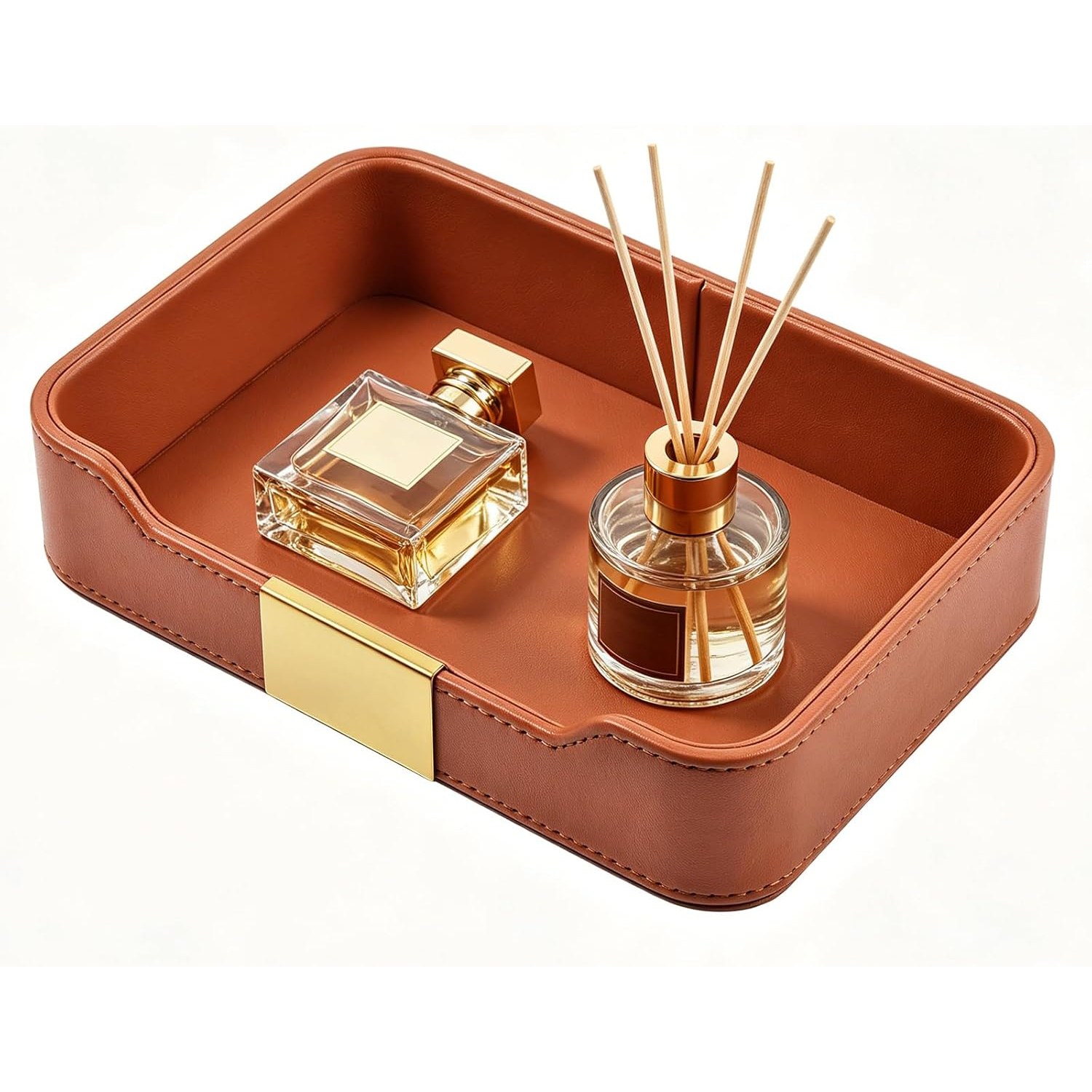
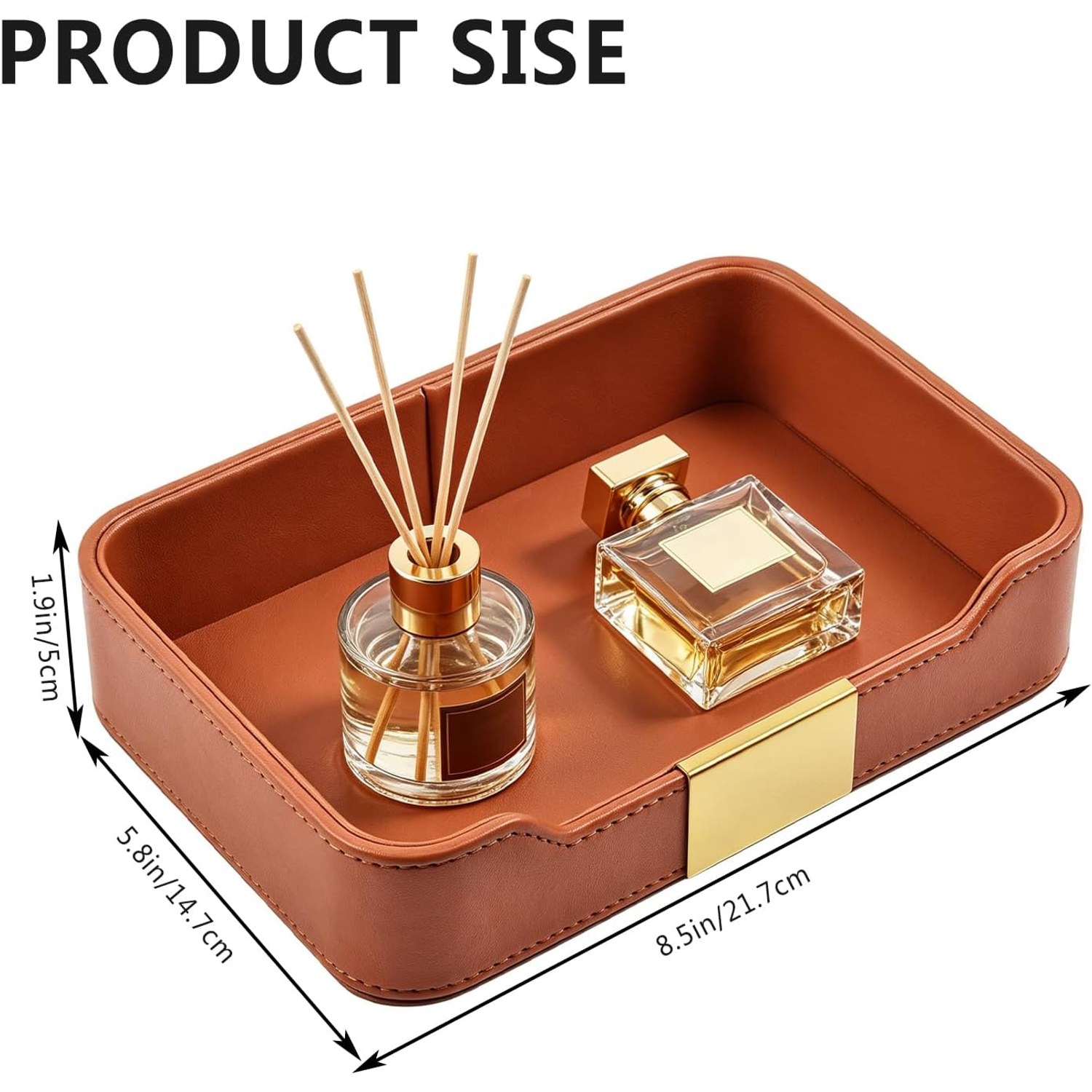
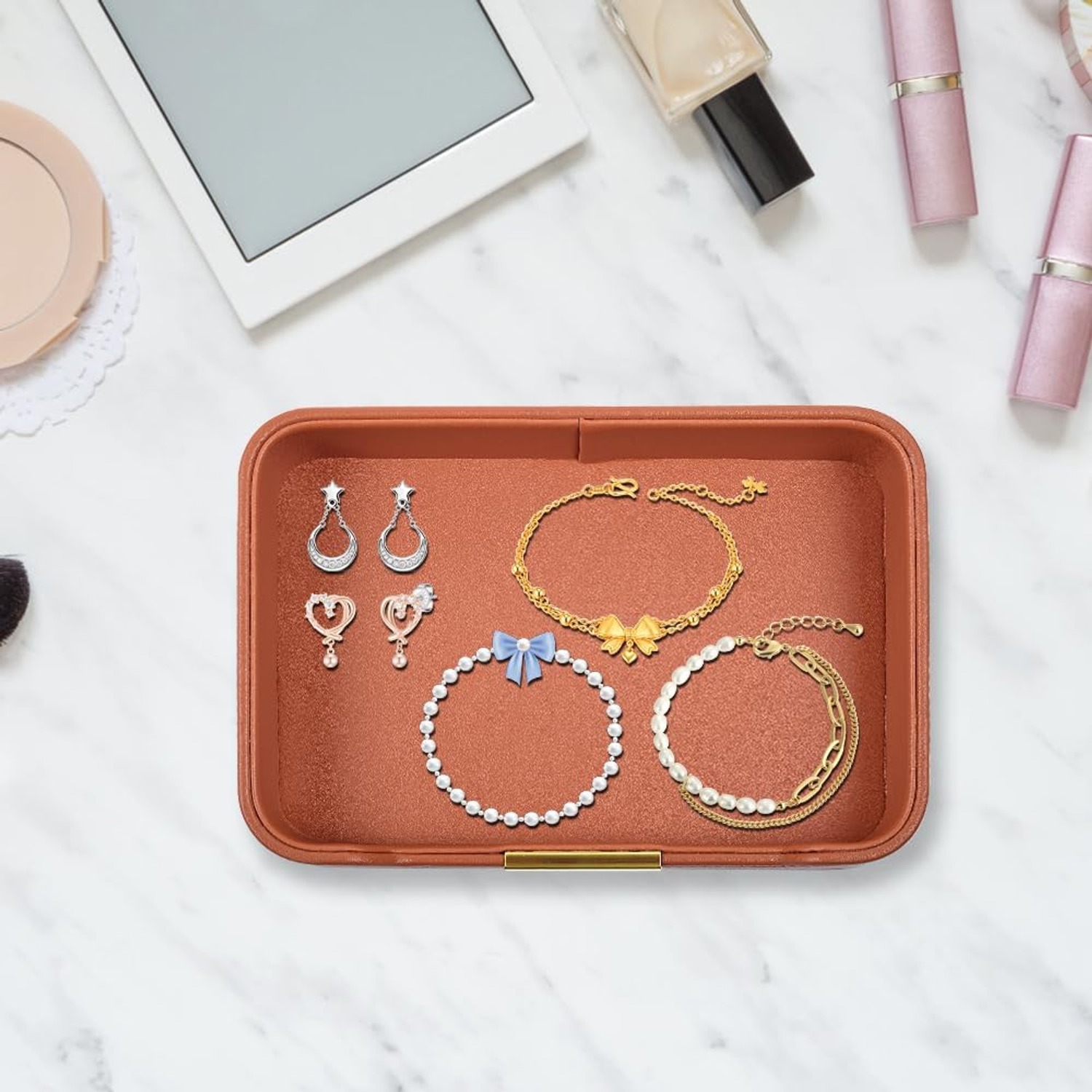
This particular tray is a rectangular desk catchall in PU faux leather over an MDF core, 21.5 x 14.7 x 4.8 cm, in orange. Let us go through how a tray like this works, where it fits, and how to pick one you will keep using a year from now.
How a catchall tray works in practice
The useful bit is the ritual, not the object. Set the tray down where your hand naturally lands when you arrive, which for most people is either the desk corner nearest the chair or the hall shelf by the door. Then do the same thing every time. Keys in, phone in, watch in. After a while it stops being a decision and becomes a habit, and you stop searching.
Size matters more than people expect. A tray that is too big turns into a shallow junk drawer, because there is always room for one more thing. A tray that is too small means items perch on the rim and fall off. Something around 20 cm long is a sweet spot. It holds a day's worth of pocket contents and physically cannot hold a week's worth, which keeps you honest.
Side height does the other half of the work. At 4.8 cm overall, the walls here are tall enough to stop a ring or a coin rolling out when you nudge the tray. Flat dishes look elegant and lose earrings. A raised edge is less photogenic and far more practical.
What PU faux leather means for you
The outer on this tray is PU, which is a polyurethane coating that gives the look and hand feel of leather. It is not hide, and we would rather say that plainly than let anyone assume otherwise. Underneath there is an MDF core, which is the part that gives the tray its shape and stops the base flexing when you drop a heavy keyring in. The edges are sewn, which keeps the covering anchored at the corners where trays usually start to fail. A metal plate is set into the front edge, gold in tone as pictured.
There are real upsides to faux leather in this role. It wipes clean with a damp cloth, so pen marks, dust and fingerprints come off in seconds. It does not need conditioning or feeding the way real hide does. It takes a strong, even colour, which is how you get this warm orange.
There are limits worth knowing. PU does not like being soaked, and the MDF core underneath really does not. Keep it dry, mop up spills quickly and do not use solvents or abrasive cleaners. Long hours in direct sunlight will dull any coloured finish over the years, so a spot away from a sunny windowsill is kinder.
Where to put it
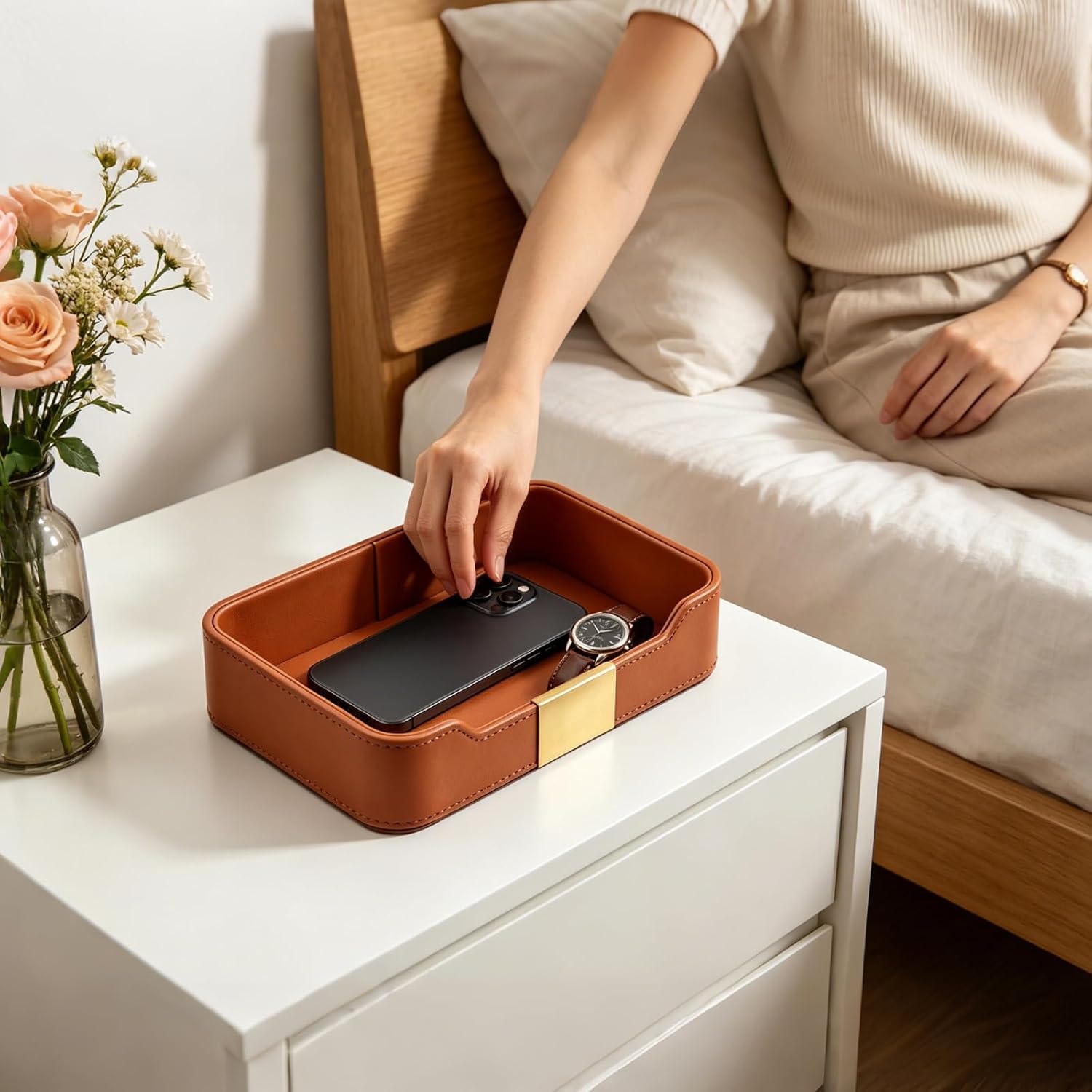
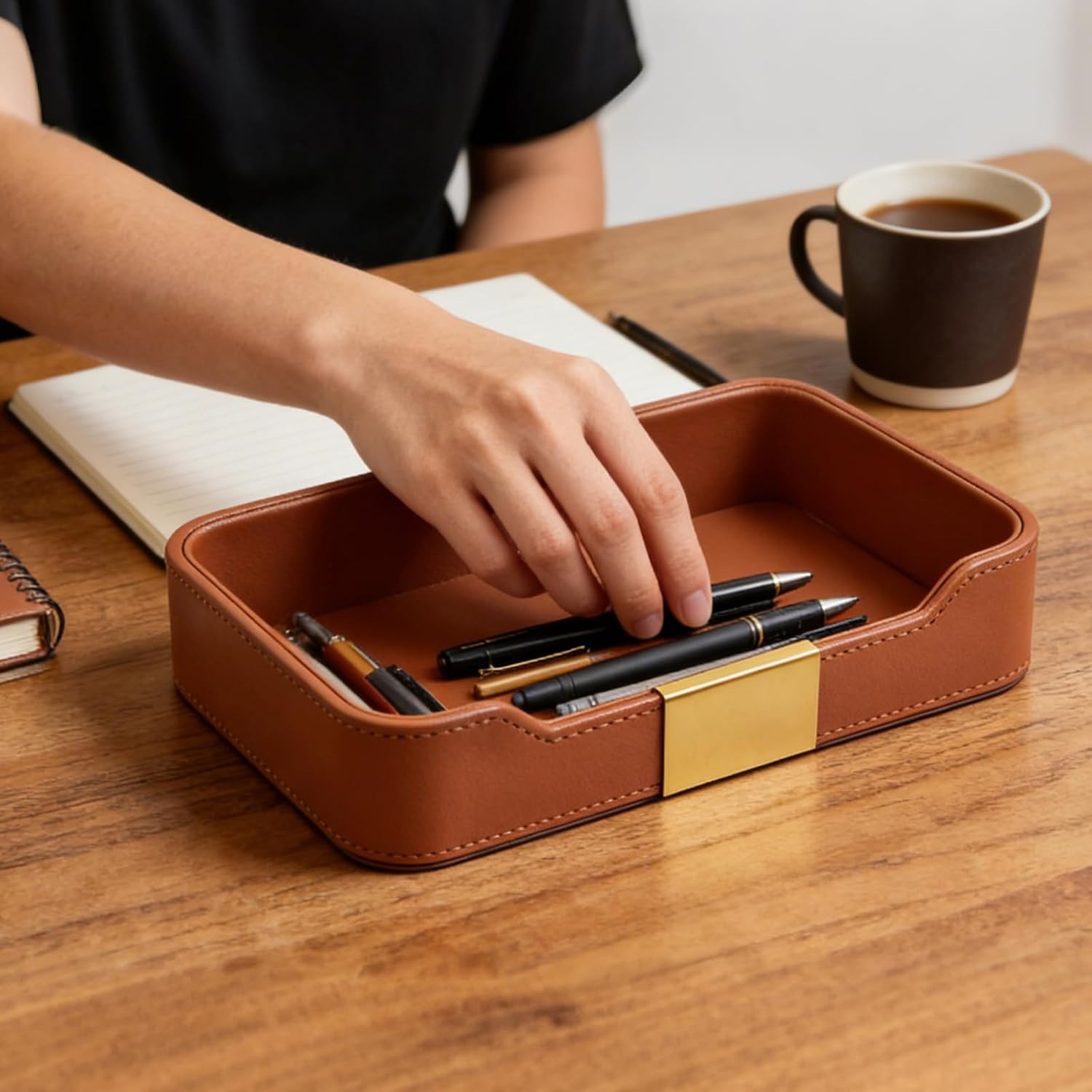
On a desk. Put it on the side you reach with your dominant hand, far enough from the keyboard that you are not knocking it. Use it for the day's carry: phone, keys, a pen, lip balm, a dongle. A good small desk organiser does not try to hold your whole stationery collection, just the moving parts.
On a dressing table or bedside table. This is where it earns its keep as a jewellery tray. Rings and studs come off at night and go straight in instead of onto a cloth where they get swept into the laundry. It is also an easy watch tray, keeping a strap flat rather than coiled in a drawer.
By the front door. On a hall console or shelf, it becomes an hallway key tray, and it will cut down the number of frantic searches before you leave. Pair it with a bowl for post if you get a lot of letters, and let the tray handle only the pocket items.
For cosmetics. Lipsticks, tweezers, a compact and a few brushes sit neatly inside, and powder dust wipes straight off the faux leather surface. Keep anything liquid upright so the seams stay dry.
How to choose between trays
Start with the space, not the product. Measure the free area you actually have. If you have 20 cm of clear desk depth, a tray 14.7 cm deep leaves a margin. If your hall shelf is 12 cm deep, this one will overhang and you want something narrower.
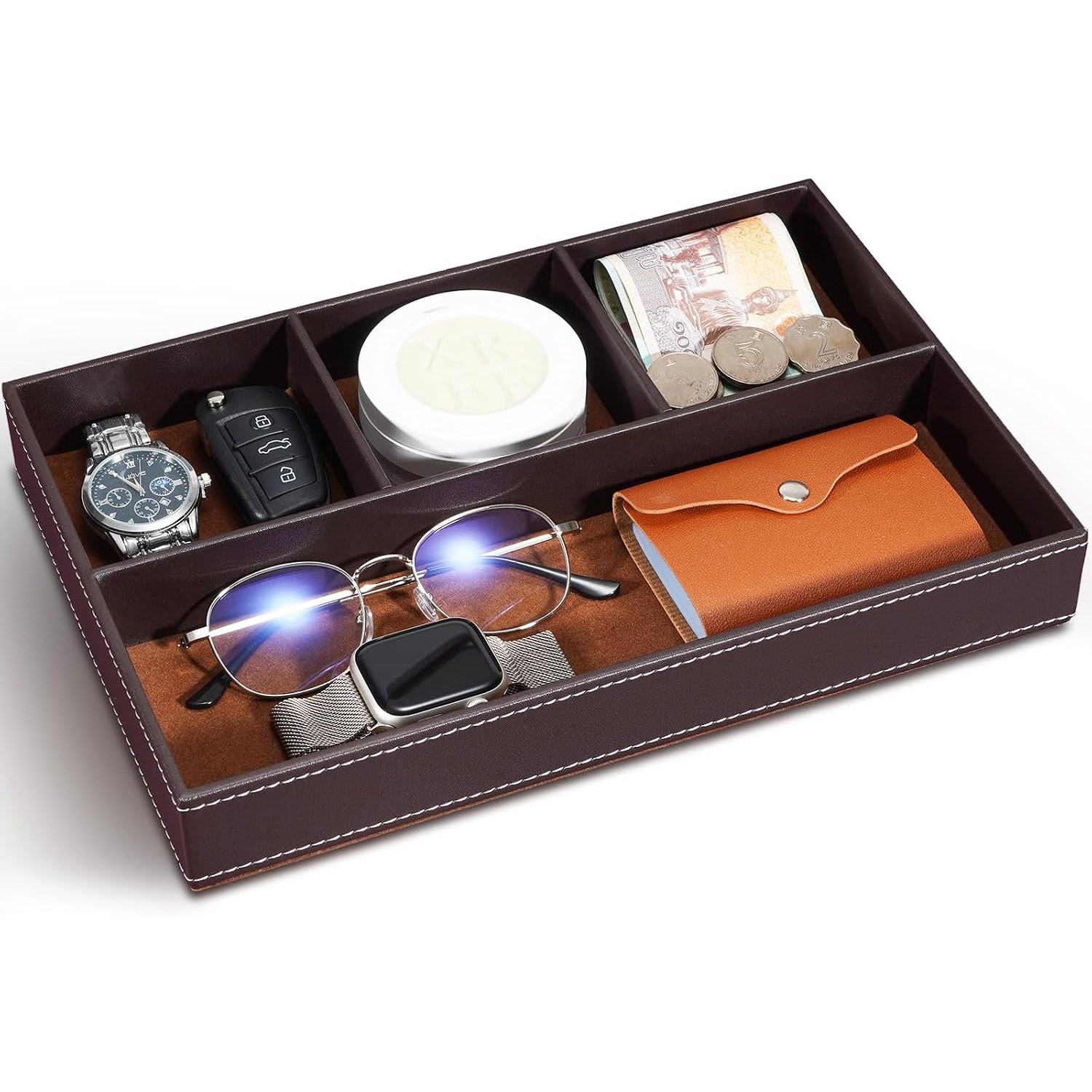
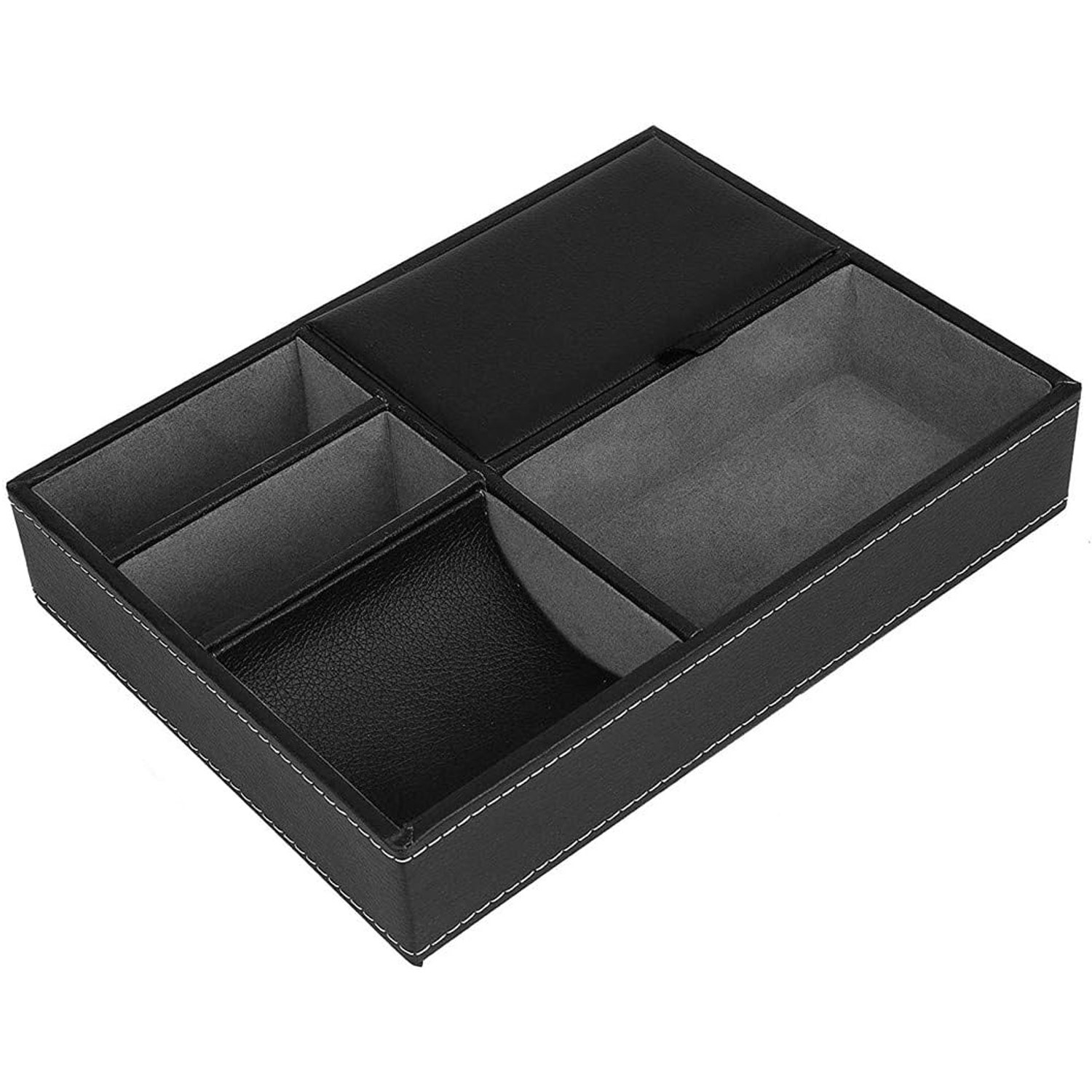
Then think about what goes in it. Open trays like this one give you one flexible space, which suits mixed daily carry. Compartmented organisers suit people who want pens here, clips there, and will keep to that system. Neither is better. They are different habits.
Consider the finish against the room. A bright orange tray is a deliberate accent. On a dark walnut desk or a white shelf it pops and looks intentional. If your space is full of competing colours already, a louder piece can tip into busy, so check what sits around it.
Finally, think about upkeep honestly. Fabric lined trays look lovely and trap dust. Wooden trays scuff. Metal trays are noisy when you drop keys in. A wipe-clean faux leather surface over a rigid core is the low-maintenance middle ground, which is why so many desk valet trays are built this way.
Keeping it looking good
The routine is short. Once a week, tip the contents out, wipe the inside and rim with a soft cloth dampened with plain water, then dry it with a clean cloth straight away. That is it. No polish, no conditioner, no special products.
Avoid bleach, white spirit, nail polish remover and scouring pads, all of which can lift or cloud a PU finish. Do not put it in a dishwasher or washing machine, and do not leave it sitting in a puddle on a bathroom shelf. If something sticky spills, deal with it the same day while it is still on the surface rather than in the seams.
Two small extras help. Felt pads on the base stop any sliding on a polished desk and protect the wood underneath. A thin soft cloth laid inside gives a bit of cushioning if you are storing a polished watch case or a pair of glasses.
The short version
A catchall tray works because it draws a line. Inside the line is fine, outside the line gets put away. This one is a compact 21.5 x 14.7 x 4.8 cm rectangle in orange PU faux leather over an MDF core, with sewn edges, a gold-tone metal plate on the front and sides deep enough that rings and coins stay in.
It suits a desk corner, a dressing table, a bedside table or a hall shelf. It handles keys, a watch, jewellery, cards, coins, pens and a phone. It cleans with a damp cloth and asks for nothing else. If you have been meaning to deal with the small pile of things that migrates across your desk every week, this is the simplest fix there is.