
The complete guide
Choosing Linen Napkins, A Practical Buyer's Guide
The small problem nobody talks about
Most tables are let down by the napkin. The food is fine, the plates are fine, and then there is a folded square of paper that tears the moment someone wipes their mouth, or a thin polyester thing that pushes the mess around instead of soaking it up. It is a small annoyance, but it happens at every meal.
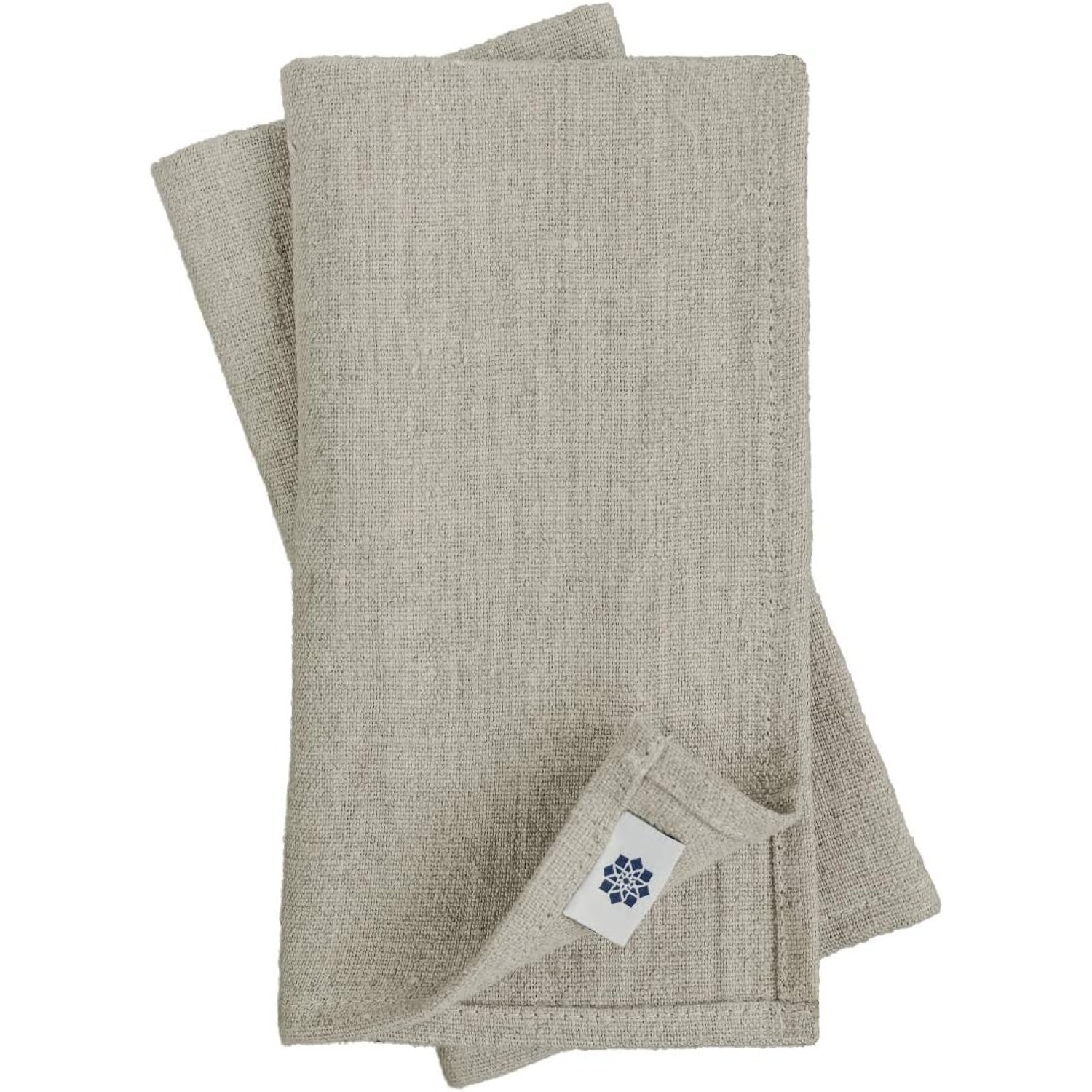
Cloth solves it, and linen solves it better than most cloth. A linen napkin absorbs properly, dries fast enough that it does not go clammy halfway through dinner, and looks like you made an effort even when you did not. These rustic napkins come as a set of four, each one a 42 x 42 cm square in 100% linen, in a natural beige that goes with nearly everything.
What linen actually does
Linen comes from flax, a plant that has been grown for textiles for thousands of years. The fibre is hollow and longer than cotton fibre, which gives linen two useful habits. It pulls moisture in quickly, and it releases it quickly too. That is why a linen tea towel beats a cotton one, and it is why linen napkins stay pleasant to use through a long meal.
The second thing linen does is soften. New linen has a crispness to it that some people love straight away and others find a bit stiff. Wash it once and it usually relaxes. With more washing it tends to gain a softer drape and hand feel.
The third habit is less convenient. Linen creases. You can iron it flat if you want sharp edges, and it presses beautifully while slightly damp, but many people deliberately leave it a little rumpled. That relaxed texture is the whole point of rustic linen napkins, and it means you can skip the ironing board on a Tuesday night without the table looking neglected.
Why 42 cm is a sensible size
Napkin sizes drift around a lot. Cocktail napkins can be as small as 25 cm, which is fine for holding a canapé and useless for anything else. Banquet napkins run past 50 cm and start to feel like small tablecloths on an ordinary dining table.
The 42 cm square sits in the practical middle. Unfolded, it covers an adult lap properly during a meal, which is the main job. Folded once it makes a neat rectangle beside a plate. Folded twice it is a tidy square for a place setting. Rolled, it slips into a napkin ring without bulking out. If you only ever buy one size of linen dinner napkins, this is the one that handles every situation.
Who these suit
They suit people who eat at a table regularly. That sounds obvious, but it matters, because the whole case for cloth over paper rests on repeat use. If you sit down to dinner most nights, a set of four everyday cloth napkins pays for itself quickly in comfort and in bin space.
They also suit anyone setting a table for guests. Natural beige is a forgiving colour. It reads warm under candlelight and soft under daylight, and it does not clash with the plates you already own. That makes it an easy choice for dinner parties, Sunday lunches, christenings and weddings, where you want the table to look considered without the linen shouting about it.
They suit renters and movers too. Table linen is one of the few decorating decisions that travels. Your napkins will suit the next kitchen as well as this one, which is more than can be said for a paint colour.
How to choose, honestly
Start with composition. A napkin labelled 100% linen behaves differently from a linen-look blend. Blends are cheaper and crease less, but they do not absorb as well and they do not soften over time in the same way. If you want the genuine article, check the fibre content, as you can here.
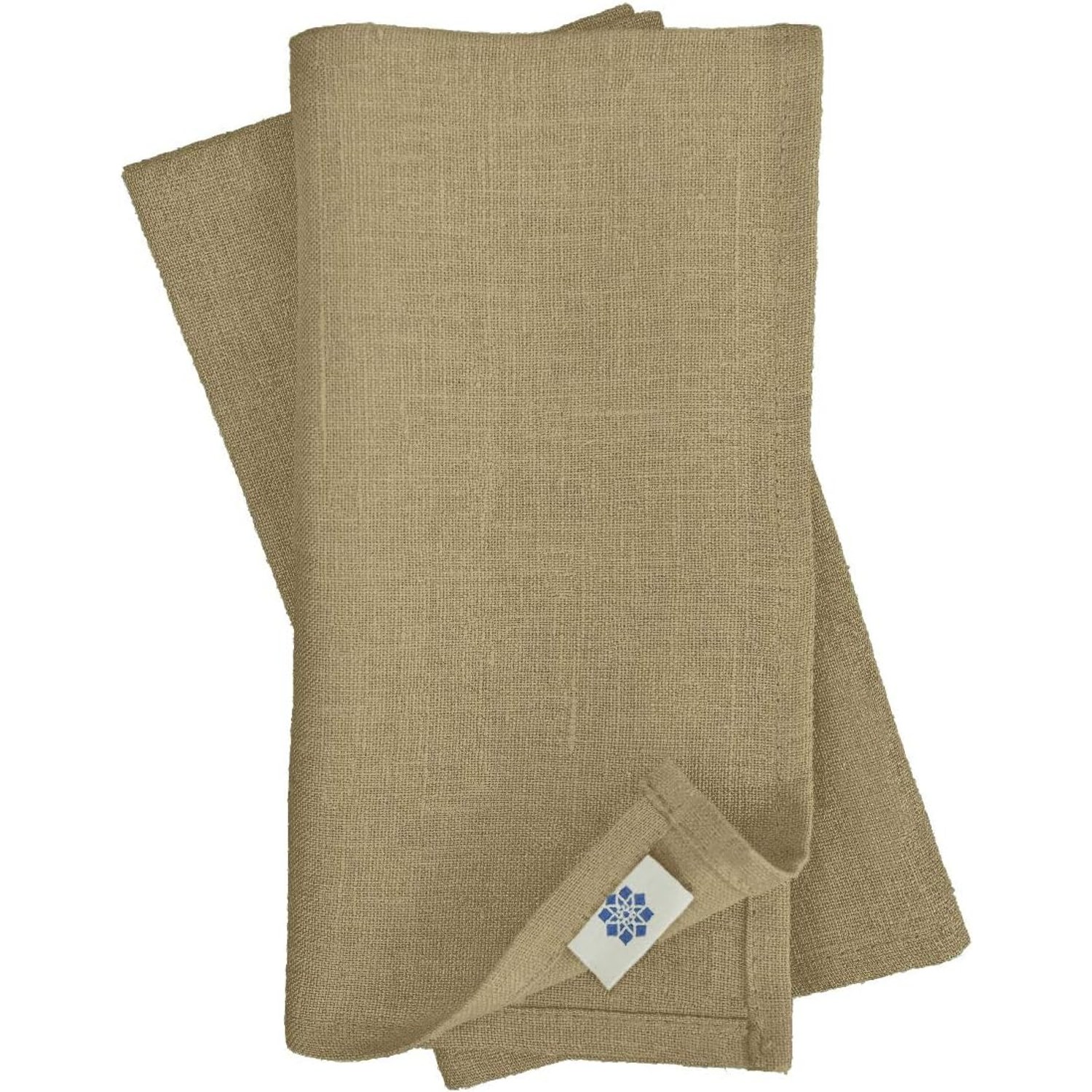
Next, think about colour. White is classic and shows every stain. Dark colours hide marks but look heavy on a small table. Natural beige sits between the two, which is why neutral table linen is an easy choice for a first proper set.
Then count heads. Four napkins cover a family of four or a dinner for two with spares in the drawer. If you regularly feed six, buy two sets so they match. Nothing undermines a nice table faster than three napkins in one shade and three in another.
Finally, be realistic about care. If you will genuinely never iron, buy linen and accept the texture, which looks intentional. If you want hotel-sharp folds, budget five minutes with a steam iron before guests arrive. Both are valid, but decide before you buy rather than after.
Looking after them
The care routine is short. Machine wash at 40°C with similar colours. Wash them once before the first use, because that first cycle is where most of the softening happens.
Leave the fabric softener out. It works by coating fibres with a thin film, and that film is the enemy of absorbency. Linen does not need it anyway, since washing alone softens the cloth.
Dry on a line if you can, or tumble on low. Pulling them out slightly damp makes life easier if you intend to iron, because linen presses best when it is not bone dry. If you are not ironing, fold them straight away so they set with a soft fold rather than a hard crease.
For spills, speed beats strength. Rinse with cold water as soon as you can, treat with a normal stain remover, then wash as usual. Skip the bleach, which weakens the fibre and can leave uneven lightening on a natural shade.
Store them folded flat in a drawer, not sealed in plastic. Natural fibres prefer air.
Getting more out of them
A few small habits make a set of four go further. Keep them in the dining room or a kitchen drawer rather than buried in a linen cupboard, because napkins you can reach are napkins you use. Wash them with towels rather than with delicates, as the cycle suits them and nothing snags.
If you entertain, buy the second set early rather than later. Dye lots on natural fabrics can vary slightly over time, and matching is easier when the purchases are close together.
And do not save them. The instinct with nice table linen is to keep it for special occasions, which means it sits in a drawer looking perfect and doing nothing. Linen is at its best when it is used, washed and used again, and linen usually softens as it is washed.
The short version
Four square napkins, 42 x 42 cm each, in 100% linen, in a natural beige that works with almost any china and any table. Machine washable at 40°C. Made in the EU, as stated by the maker.
They are absorbent, they dry fast, and they usually get softer as you wash them. If you want table linen that looks relaxed rather than fussy, a set of pure linen napkins is one of the easier upgrades you can make to how you eat every day.