
The complete guide
How To Choose And Style Heart Shaped Ceramic Vases
The empty shelf problem
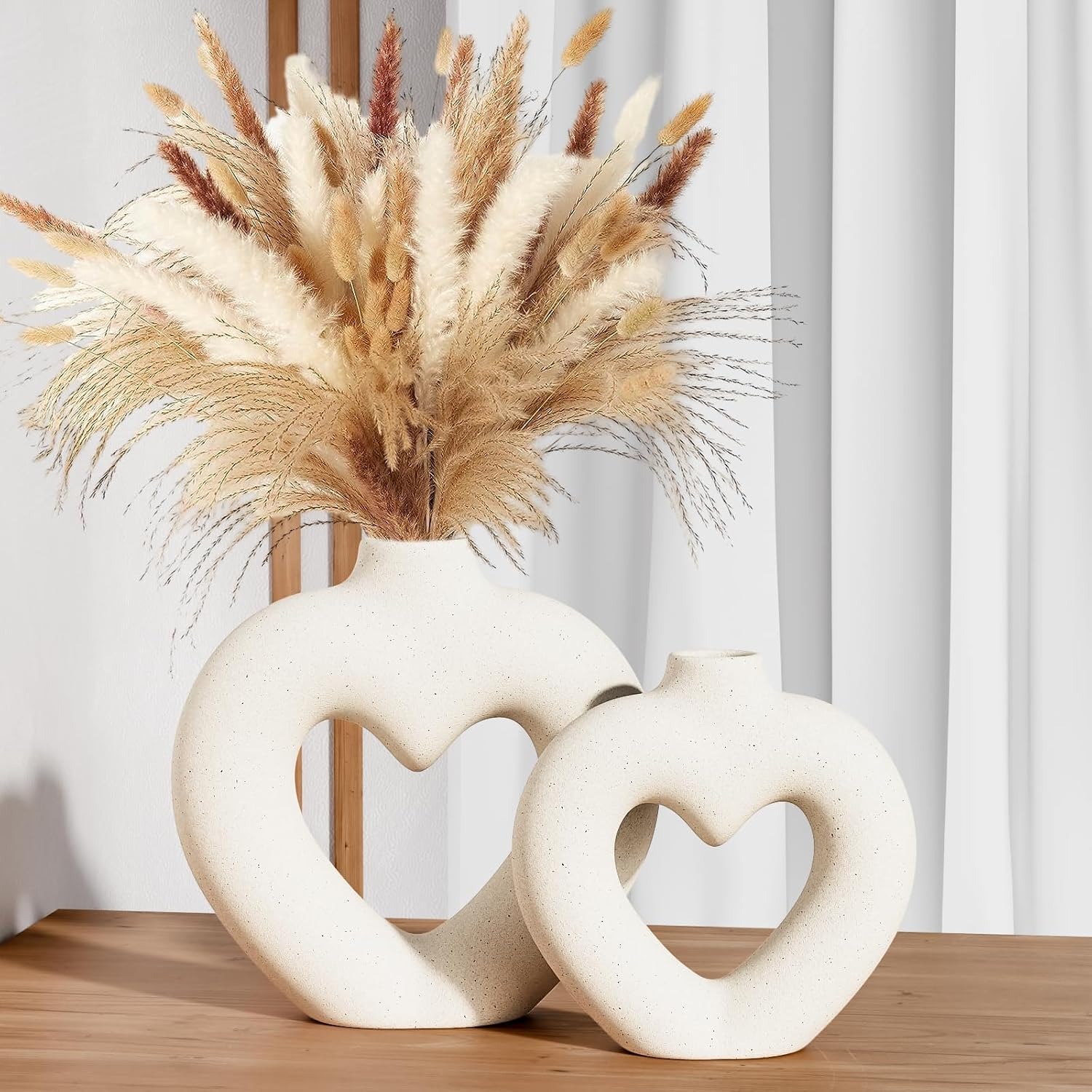
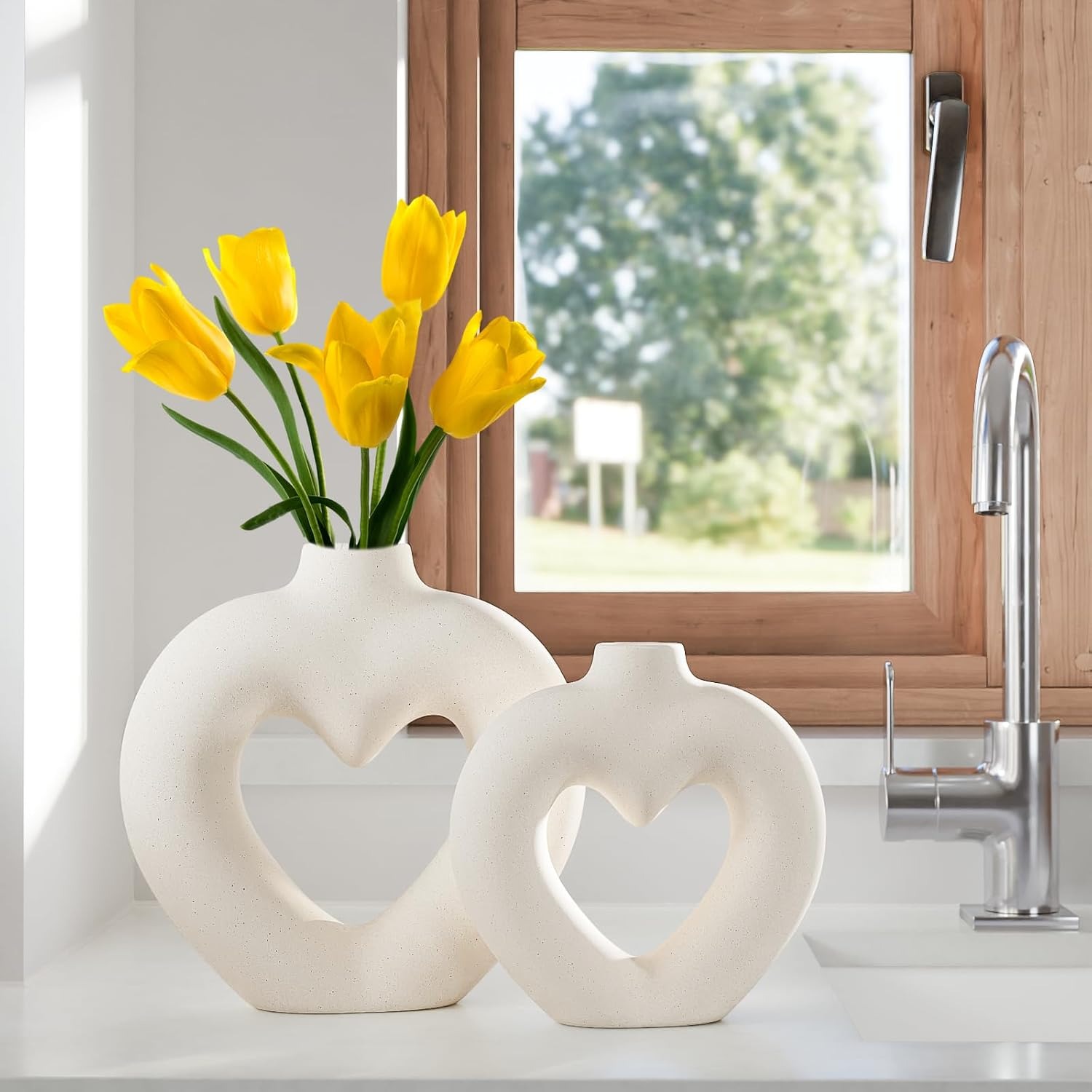
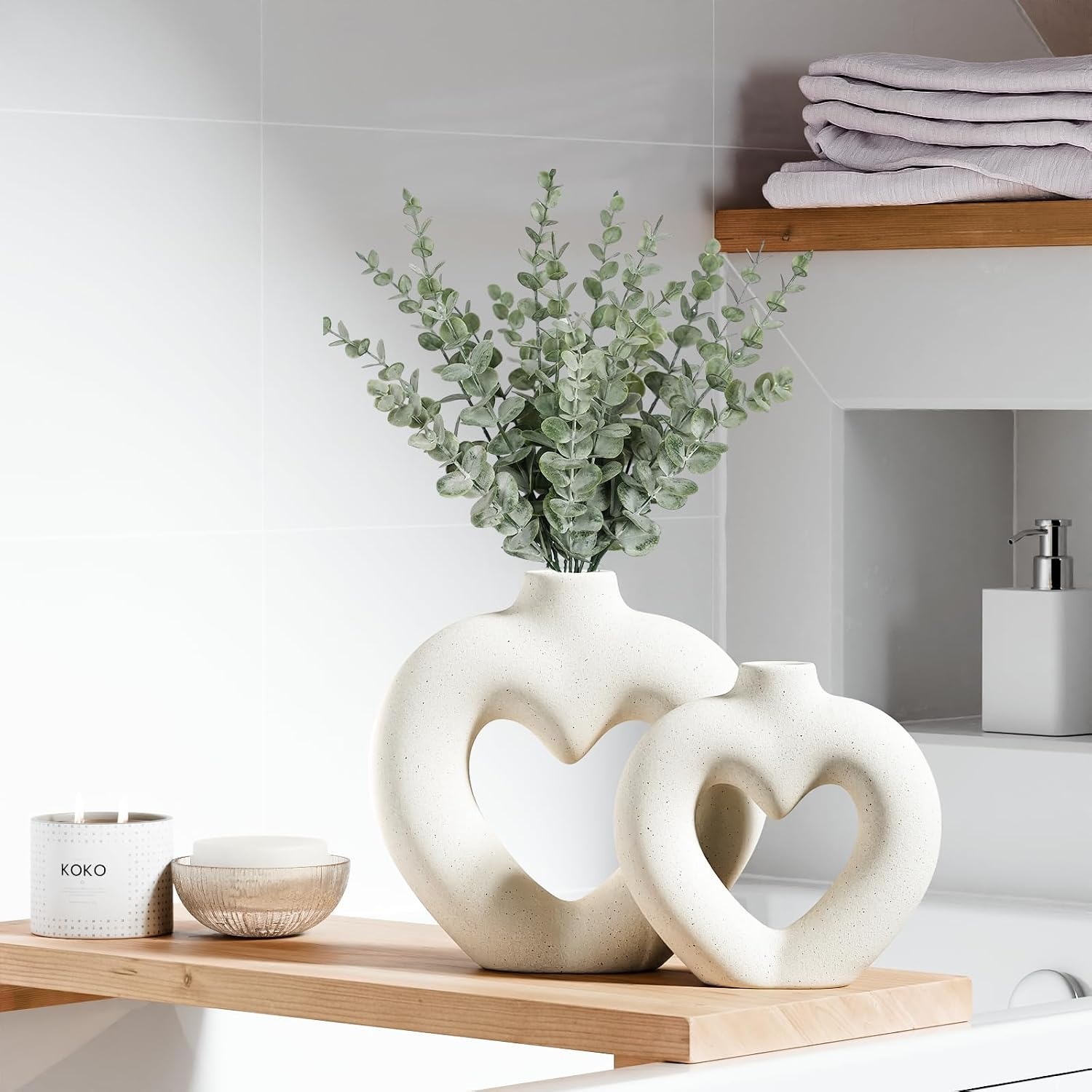
Almost every home has one. A shelf, a console, the middle of a dining table, a mantelpiece that looks slightly unfinished. You know something should be there, but a single object looks lost and three objects start to look like clutter. Two objects in a related shape and different sizes is a simple answer, and that is exactly what a pair of heart ceramic vases gives you.
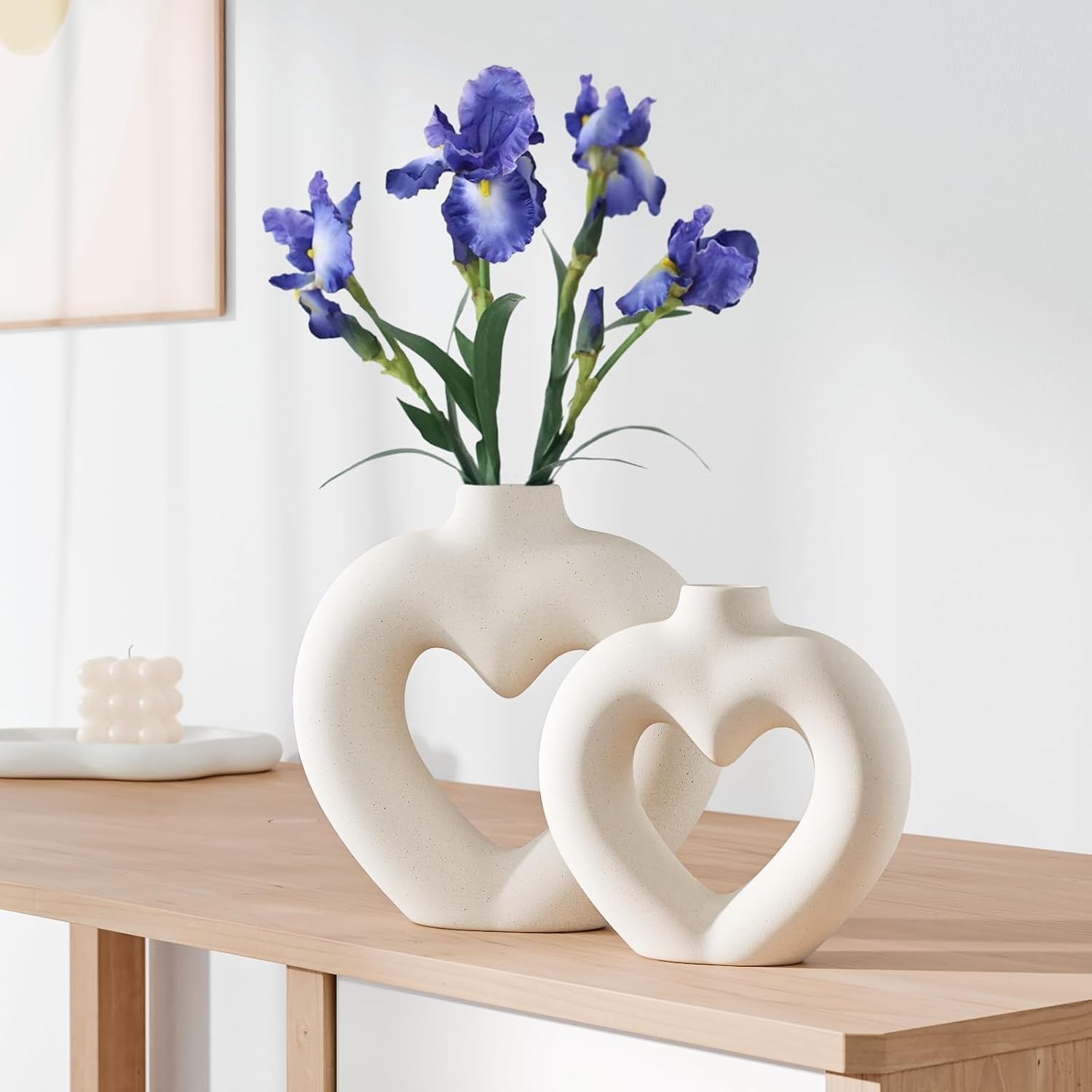
The reason a pair works better than a single piece comes down to height. One vase on its own creates one line. Two vases of different heights create a step, and the eye reads that step as deliberate. It is the same trick behind grouped candlesticks and stacked books. You are not adding more stuff, you are adding rhythm.
What a matt sand glaze does
Glaze is the thin glassy layer fired onto the surface of ceramic. A gloss glaze is shiny and reflective. A matt glaze scatters light instead of bouncing it back, which gives a flat, soft look with a slight texture under the fingers. The maker describes the finish on these vases as a matt sand glaze.
That choice changes how the vases behave in a room. Shiny white under a ceiling spotlight throws a bright highlight that pulls the eye straight to it. Matt white does not. It sits back and lets whatever you put inside take the attention, which is useful if you are styling with dried grasses, branches or a few seasonal stems. It also photographs well, if you are the kind of person who cares about how a shelf looks on camera.
The one thing to know about matt surfaces is that they show finger grease more readily than gloss. It is not a flaw, just a habit to pick up. Lift the vases by the base rather than the body and give them a dry wipe now and then.
Why ceramic rather than glass or metal
Glass vases are cheap and they let water and stems show through, which can be lovely with fresh flowers. They are also light, which is a problem when you put anything tall in them. Metal vases are durable but can read as cold and often dent.
Ceramic sits in the middle. The maker says the polished base of these vases gives a stable footing, which is the practical argument. Ceramic is also opaque, so you never see a tangle of stem ends or cloudy water. And it holds shape well, which is why a defined form like a hollow heart is possible in the first place.
The honest downside is fragility. Ceramic chips at the rim and breaks on a hard floor. That is not a reason to avoid it, it is a reason to think about placement before you unpack.
Who these suit
If your taste runs to plain, calm rooms with natural materials, this pair slots straight in. White matt ceramic sits happily next to oak, rattan, linen, stone and off-white paint. A plain white ceramic vase does not fight with anything, which makes it easy to keep in use as a room changes.
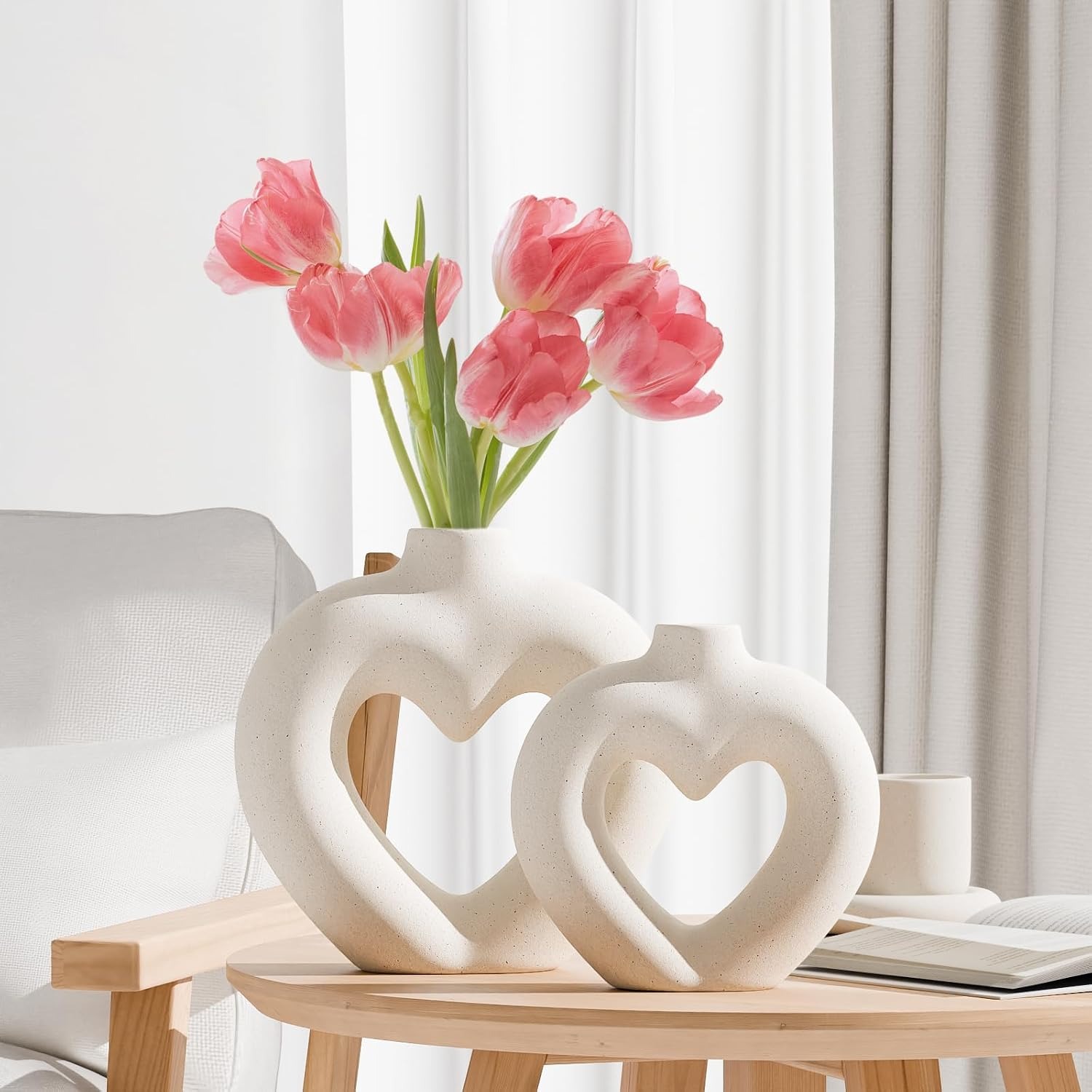
They also suit people who want something a little warmer than a plain cylinder. The hollow heart adds a touch of character without tipping into novelty, mostly because the shape is simple and the colour is neutral. If the same shape came in glossy red it would be a very different object.
Gift buyers are the other obvious group. Weddings, engagements, new homes and milestone birthdays all call for something that looks considered but is not too personal. A pair of vases is useful, and plain white suits most decorating styles.
Choosing what goes in them
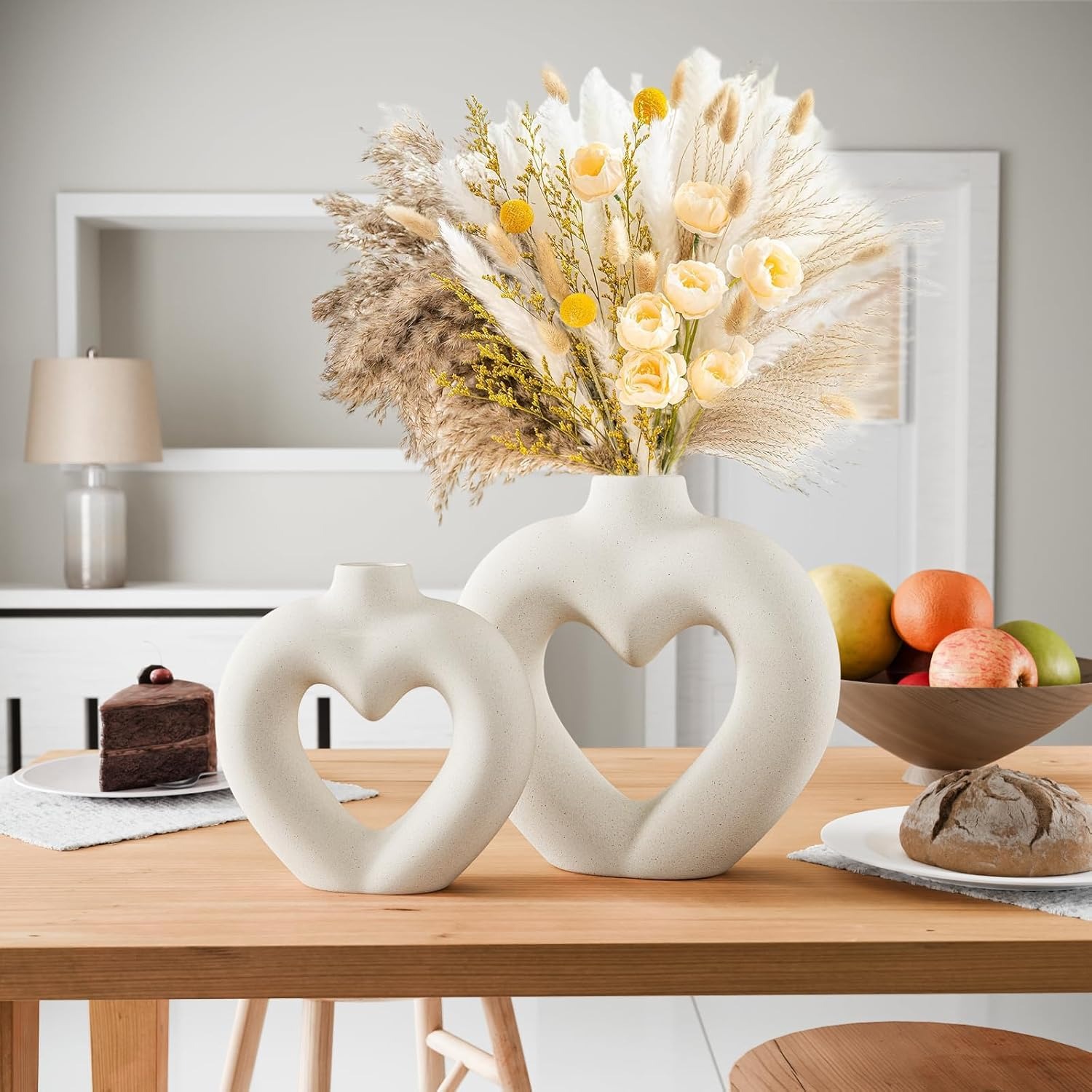
Dried arrangements are the easiest match. They need no water, they do not drop petals, and they last for years with an occasional shake outdoors to clear the dust. Bunny tails, dried wheat, preserved eucalyptus, bleached ruscus and small pampas plumes all work. With dried stems in a ceramic set like this there is nothing to maintain.
Faux stems are the next option, and modern ones are good enough that most visitors never notice. Look for stems with a matt finish and some variation in leaf colour. Shiny plastic gives the game away instantly.
Fresh flowers are possible, but treat these as decorative vases first. Test with a small amount of water on a protected surface before you commit to a full arrangement, or drop a slim glass liner or jam jar inside and fill that instead. The liner trick also makes cleaning much easier, since you lift it out rather than reaching inside a narrow neck.
Whatever you choose, keep the stem count low. Three to seven stems at mixed heights almost always looks better than a tight packed bunch. Trim so the tallest stem clears the rim by roughly half the height of the vase, and let a couple of shorter stems sit lower to fill the gap.
Where to put them
A dining table centre is the first place most people try, and it works because the two heights stop the arrangement blocking conversation across the table. A hallway console is the second, especially next to a bowl or a small lamp. Mantelpieces, the ends of bookshelves, sideboards and bedroom chests all take the pair comfortably.
Think about edges. Set the vases at least a hand's width back from the front of any surface. On an open shelf, put them where a passing sleeve cannot catch them. If you have a very busy household, a higher shelf is kinder than a coffee table.
Splitting the pair is allowed and often looks better than you expect. One on a shelf and one on a side table across the room creates a quiet echo. That repetition is what makes a room feel put together rather than randomly decorated.
Looking after them
Care is simple. Dust the outside with a soft dry cloth, or very slightly damp if something has dried on. Skip abrasive pads, scouring powders and strong chemical cleaners, all of which can dull a matt glaze and leave shiny patches.
For the inside, rinse with warm water and a drop of mild washing-up liquid, swirl, and rinse again. A bottle brush with soft bristles helps if the neck is narrow. Let the vase dry completely before you put dry stems back in, because trapped moisture can mark them.
Hand cleaning is the sensible approach. The maker does not say these are dishwasher safe, and heat plus harsh detergent is rarely kind to a matt finish.
Store them wrapped in a cloth or bubble wrap if they go into a cupboard between seasons, and never stack one inside the other. Ceramic against ceramic is how chips happen.
The short version
Two white heart ceramic vases, one medium and one small, finished in a matt sand glaze. The maker gives the larger vase as about 17.1 cm wide and the smaller as about 13 cm wide by 14 cm tall. The stated overall dimensions are 23.3 cm by 15.3 cm by 23.3 cm.
They suit dried stems, pampas and faux arrangements best, work as a pair or split across a room, and sit comfortably in calm, natural interiors. Handle them as fragile ceramic, keep them back from surface edges, wipe rather than scrub, and they will keep that empty shelf looking finished.