
The complete guide
Choosing Stonewashed Linen Cushion Covers: A Practical Buyer's Guide
The problem with most cushion covers
Cushions are supposed to be the easy part of decorating. You buy a couple, drop them on the sofa, and the room looks finished. In practice, a lot of people end up with cushions they quietly dislike. The fabric is shiny in a way that does not match anything else. The zip digs in. The colour was described as grey but turned up closer to lilac. Or the cover looks fine for a fortnight and then goes limp and crumpled in all the wrong ways.
Part of the issue is fabric. Cheap polyester blends photograph well under studio lights and then look flat in a real living room, because they have no texture at all. They also tend to pill where arms and elbows rub. Part of the issue is sizing, since a cover that is a touch too big for its insert will always look deflated no matter how much you plump it.
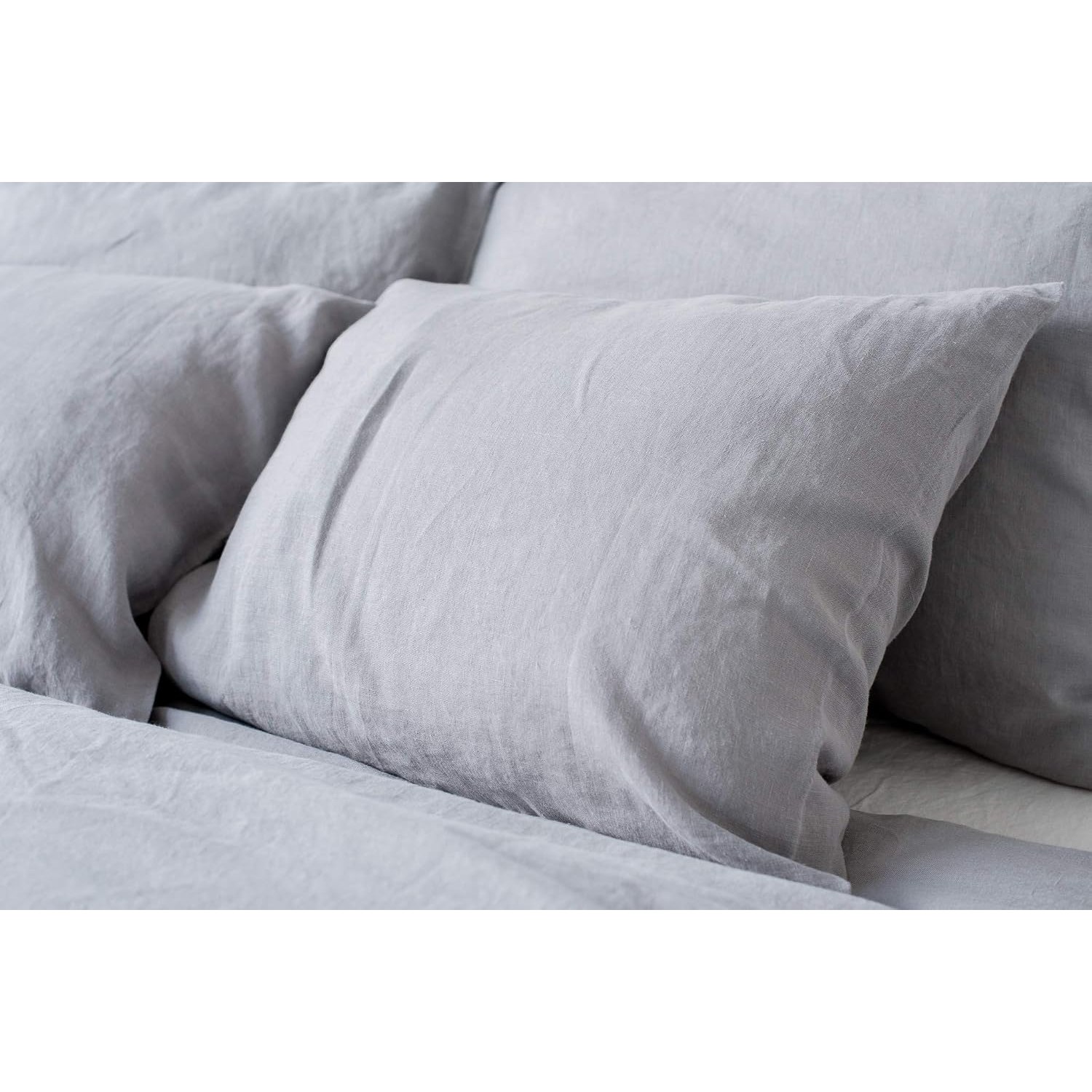
Stonewashed linen solves a lot of this by starting in the right place. The fabric already has texture, it already has a soft handle, and it is meant to look slightly relaxed rather than perfectly pressed. The crumple is the point, not a flaw.
What stonewashed linen actually is
Linen comes from flax, a plant fibre that is naturally a bit stiff when new. In its raw woven state it has real body. That is excellent for tea towels and not so lovely for something you want to lean against.
Stonewashing is a mechanical softening step. The woven cloth is tumbled before it is cut and sewn, which breaks down some of that natural rigidity and relaxes the weave. The result is a fabric that feels soft straight away and has the gently rumpled surface people associate with good linen bedding. It also means the cover does not go through a dramatic change in the first few washes.
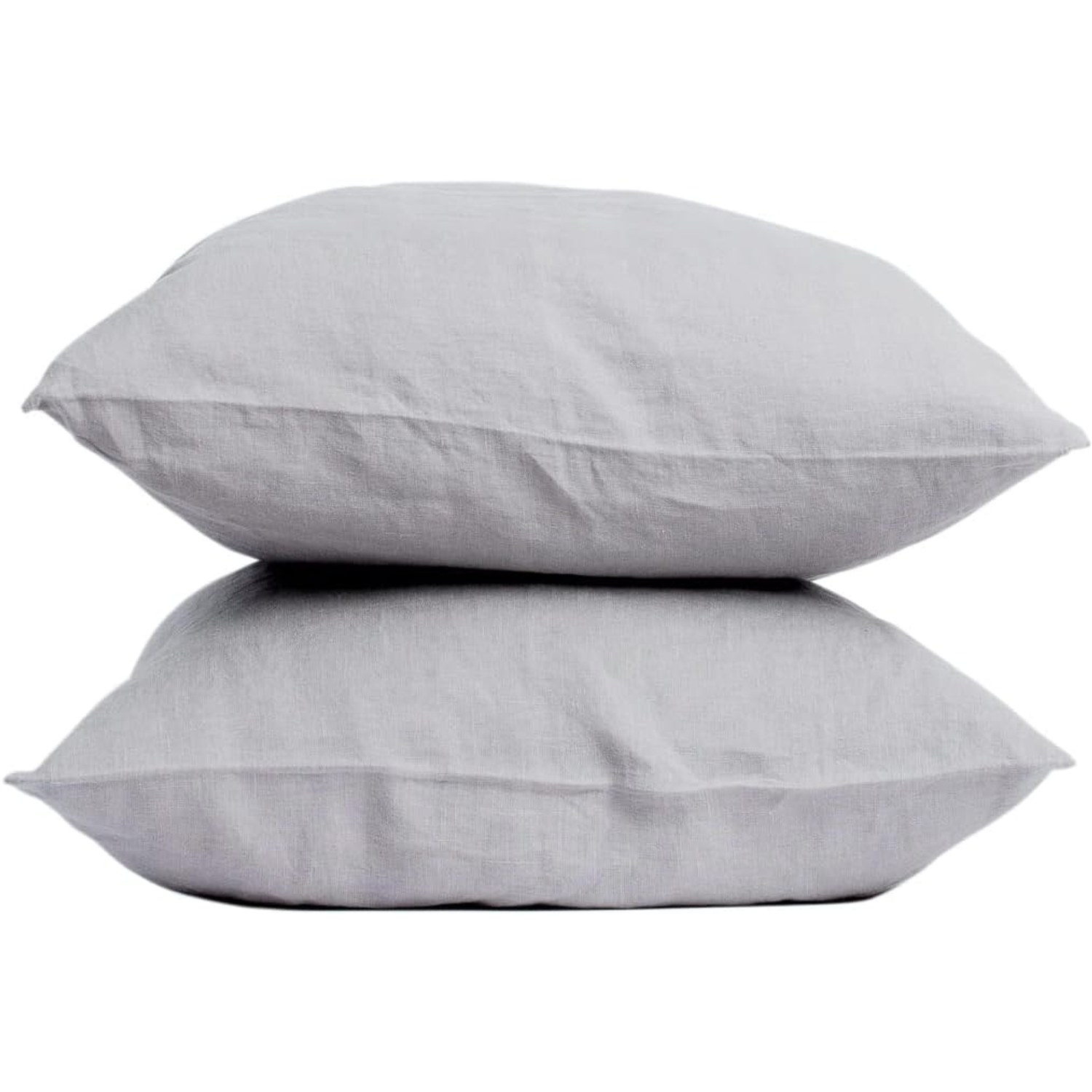
These covers are 100% stonewashed linen, made in the EU as stated by the maker. There is no cotton backing or synthetic lining listed, so the same fabric runs front and back.
The practical details that matter
Each set contains two covers, and both are 40 x 40 cm. That square is the workhorse size in soft furnishings. It is big enough to read as a proper cushion on a sofa and small enough to sit at the front of a bed without swallowing the pillows. Inserts in that size are widely available, which matters if you want to replace a flat pad in three years without hunting for an odd dimension.
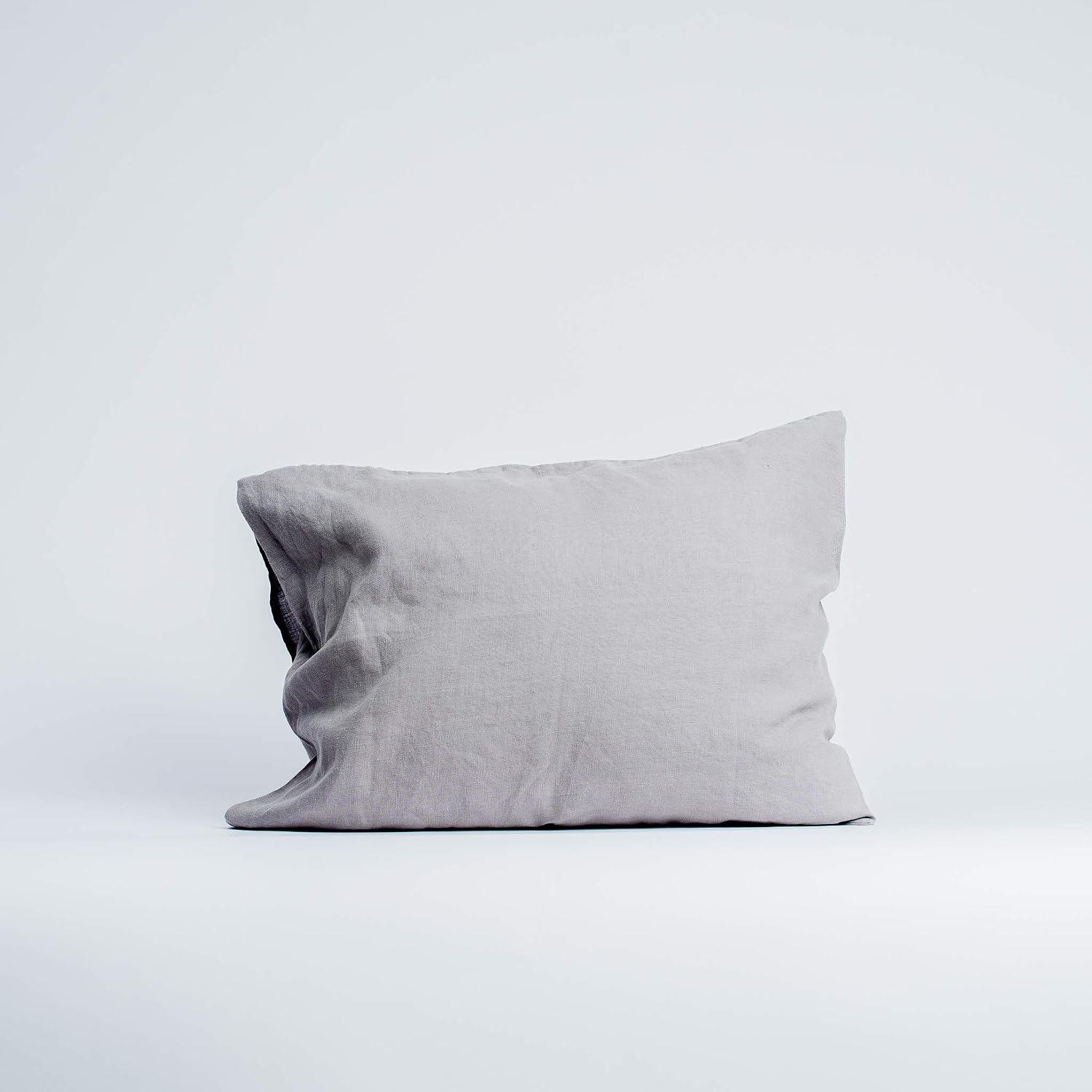
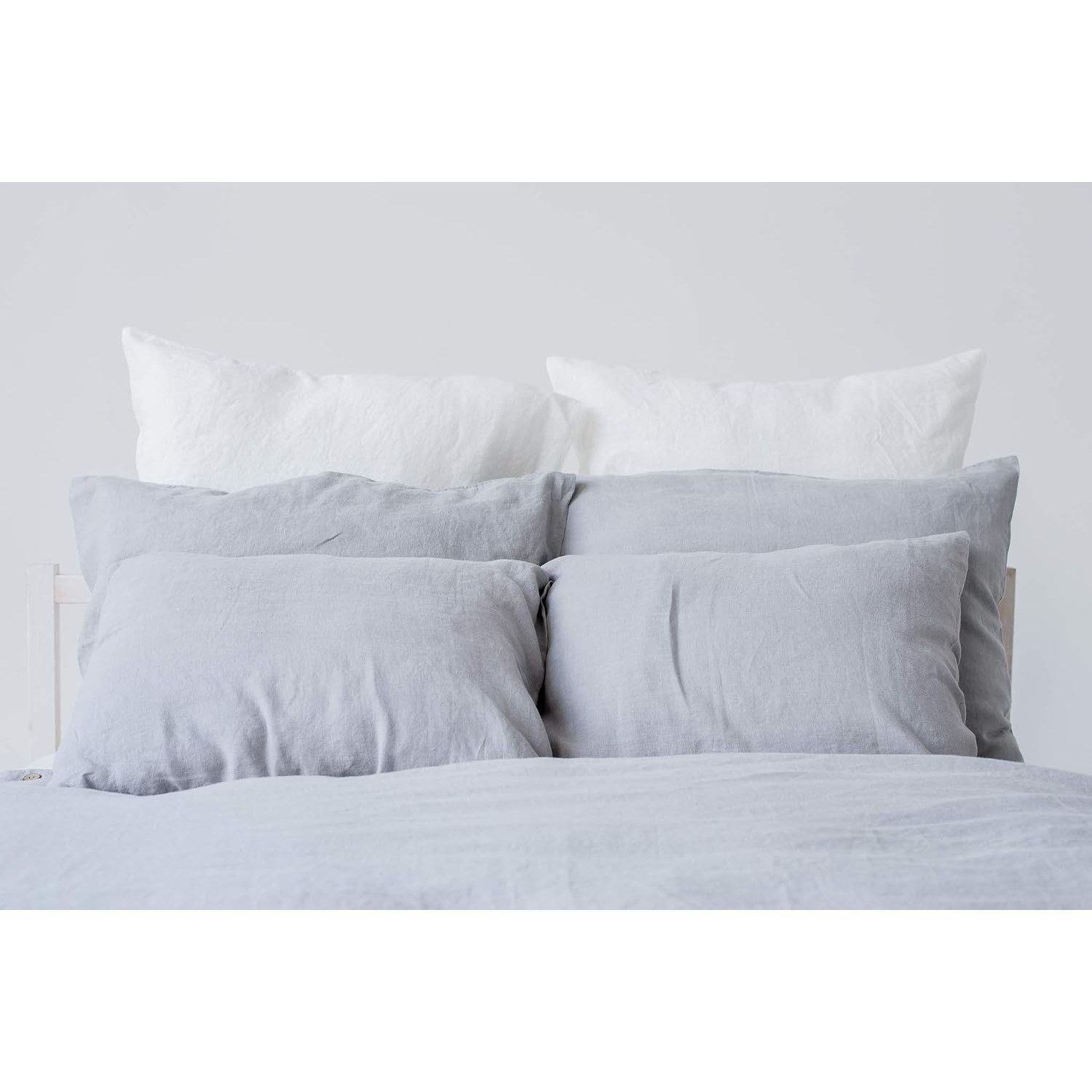
The colour is light grey. Grey has a reputation for being a safe choice, which is fair, but it is also genuinely useful. It picks up warmth from timber and warm whites and it cools down against navy or charcoal. If your room changes with the seasons, neutral cushion covers for sofa use will keep working while the throws and the ceramics come and go.
The back uses an envelope closure. Two panels of linen overlap, you feed the insert in, and the fill holds the overlap shut. Nothing shows from the front. There is no zip to split, no buttons to pop off in a hot wash and no hardware to scuff a leather or wood frame. It is the quietest closure there is, and on a plain neutral cover that simplicity is exactly what you want.
Inserts are not included. That is deliberate rather than a gap. Fill is a personal thing, and shipping pads you already own is wasteful.
Picking the right insert
This is the decision that changes the look most, and it is the one people think about least.
A 40 x 40 cm insert in a 40 x 40 cm cover gives a soft, slightly slouchy cushion that sinks a bit when you lean on it. It suits casual rooms, deep sofas and beds where you want a low, relaxed look.
A 45 x 45 cm insert in the same cover gives a fuller shape. The corners fill out, the face of the cushion is tighter, and it holds its form when you stand it upright. This reads as more considered and works well in a formal sitting room or a show bedroom.
Fill type matters too. Feather and down inserts are the softest and take a karate chop dent beautifully, but they need regular plumping and some people do not want feathers in the house. Polyester inserts hold their shape with no effort and cost less, though they can feel springy rather than soft. A feather and down blend sits in the middle and is a reliable default for square cushion covers 40 cm wide.
Who these suit
If you like a calm, natural room with plenty of texture, linen cushion covers are close to the obvious answer. They work in Scandinavian, coastal, modern farmhouse and plain contemporary schemes without needing anything else to tie them in.
They also suit anyone who is tired of fussy maintenance. A cover that washes at a high temperature and can be ironed, or left alone, is easy to live with. That makes them practical in a family room, a holiday rental or a spare bedroom that gets sporadic use.
They are less suited to someone who wants a sharp, flat, hotel-crisp finish. Linen does not do that, even ironed. It always keeps a little movement in the surface. If that would bother you every time you walked past the sofa, a tightly woven cotton sateen is a better match for your taste.
Living with linen
Care is simple. Wash with similar colours on a cycle you would use for bedding. The maker states the covers can go up to 60°C, though a cooler wash is plenty for routine freshening and is kinder to the colour over the long run. Use a mild detergent and leave the fabric softener out, since linen softens through washing and softener just coats the fibres.
Dry on low heat or on a line. If you tumble dry, take the covers out while they still feel slightly damp and smooth them flat with your hands. That removes most of the hard creasing without any ironing at all. If you prefer a smoother finish, iron on a warm setting while damp.
Direct strong sunlight over years will lighten any dyed natural fabric, so if a cushion lives in a bright window it is worth rotating it with another from a shadier spot now and then.
Mixing and matching
Two matching covers give you a base. From there, layering is straightforward. Pair them with one larger cushion in a deeper tone behind, or with a small lumbar cushion in front. Texture contrast works better than colour contrast with linen, so a chunky knit or a boucle alongside the washed surface looks more interesting than adding another smooth fabric.
If you are furnishing a whole room, buying two sets at once is sensible. Natural fabrics can shift slightly between dye lots, and ordering together gives the closest match across all four covers.
The short version
You are getting two 40 x 40 cm covers in 100% stonewashed linen, made in the EU, in a light grey, with a hidden envelope back and no inserts. The fabric is soft from the start, usually softens further with washing, and handles a 60°C cycle when it needs it.
Buy the inserts to suit the look you want, 40 cm for relaxed and 45 cm for plump. Skip the fabric softener. Then more or less forget about them, which is the highest compliment you can pay a cushion cover.