
The complete guide
How to Choose Linen Look Cushion Covers That Actually Suit Your Sofa
The problem with a tired-looking sofa
Furniture rarely wears out before it starts looking dated. The frame is fine, the seat is still comfortable, but the whole thing has gone flat somehow. Nine times out of ten the culprit is the cushions. They are the same ones that came with the sofa, the colour has dulled, the fabric has gone a bit shiny at the corners, and they no longer relate to anything else in the room.
Replacing a sofa costs a lot. Replacing the covers on the cushions costs very little and takes about five minutes. That is the whole argument for buying cushion covers rather than whole cushions, and it is why a pair of plain light brown covers can do more for a living room than most people expect.
What a linen look weave actually is
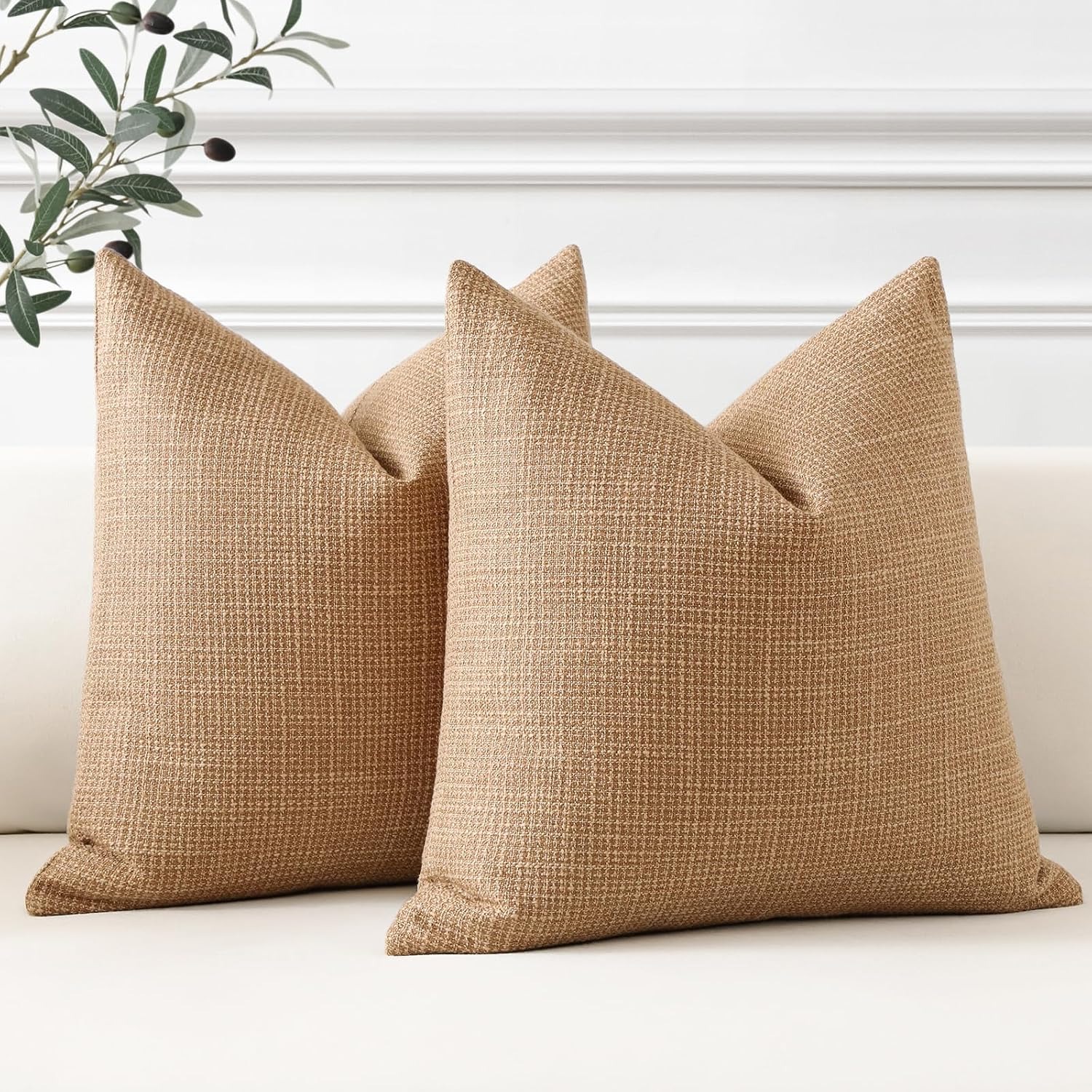
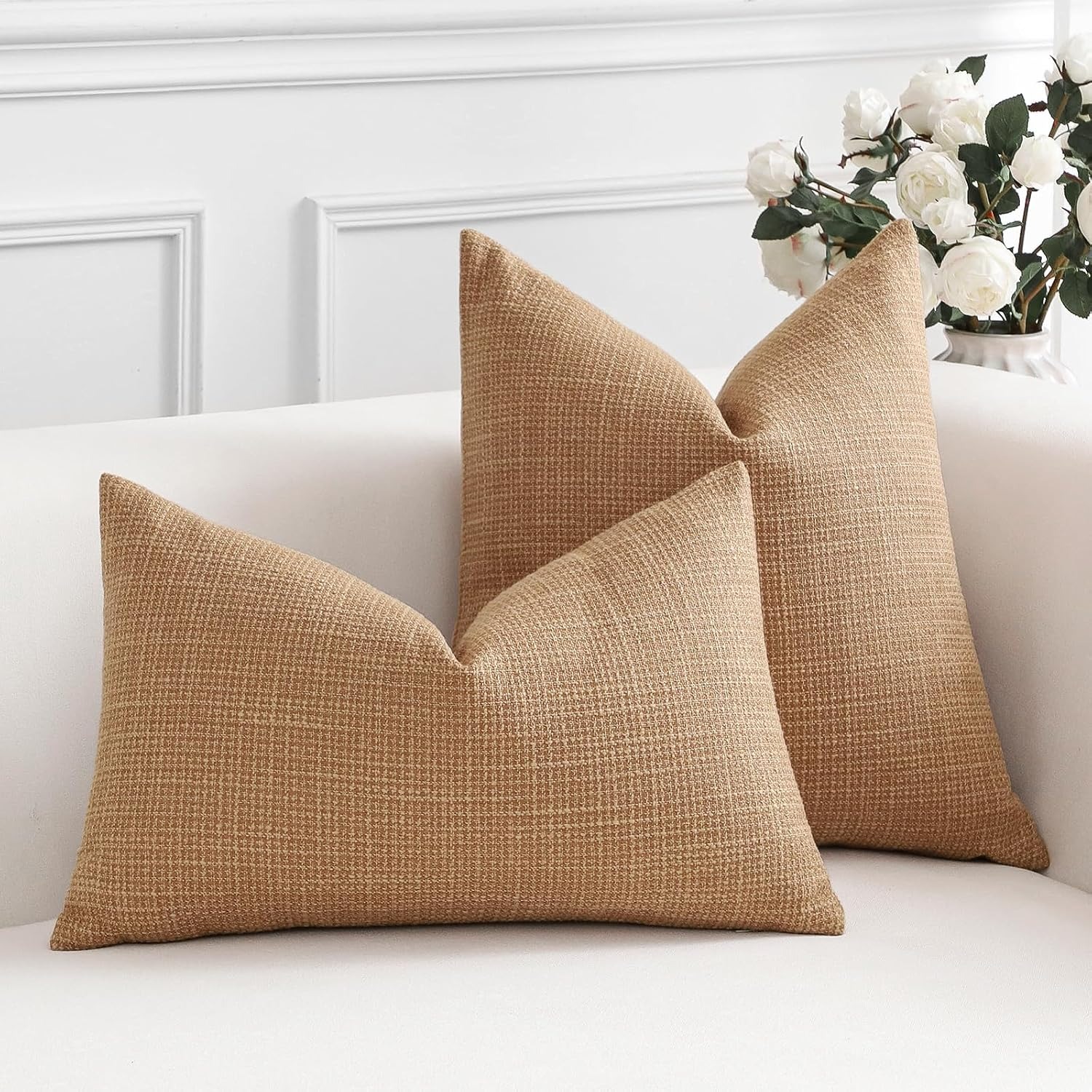
This fabric is polyester woven to imitate linen. The maker calls it polyester linen. It is not pure linen, and no linen percentage is given, so the honest description is a linen look.
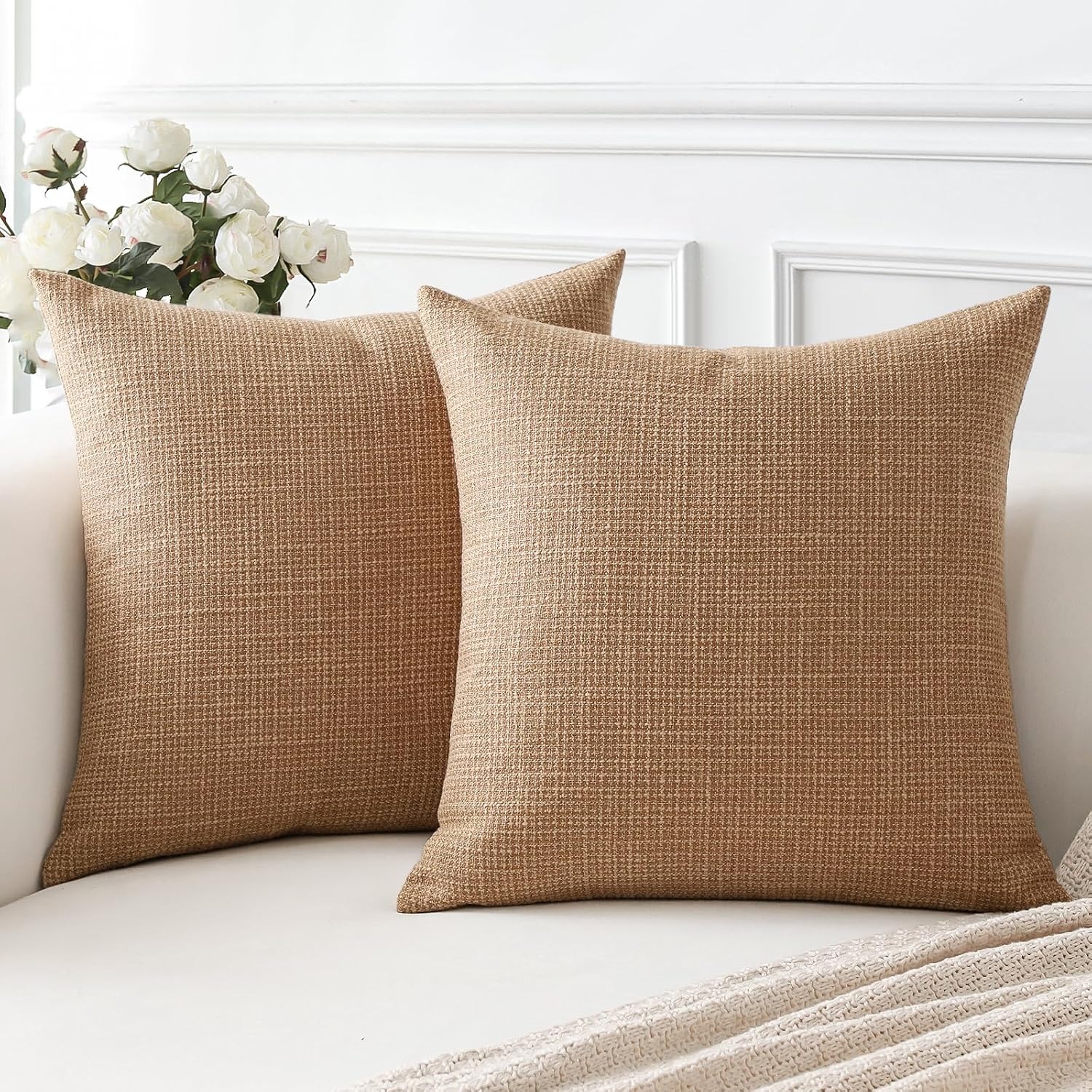
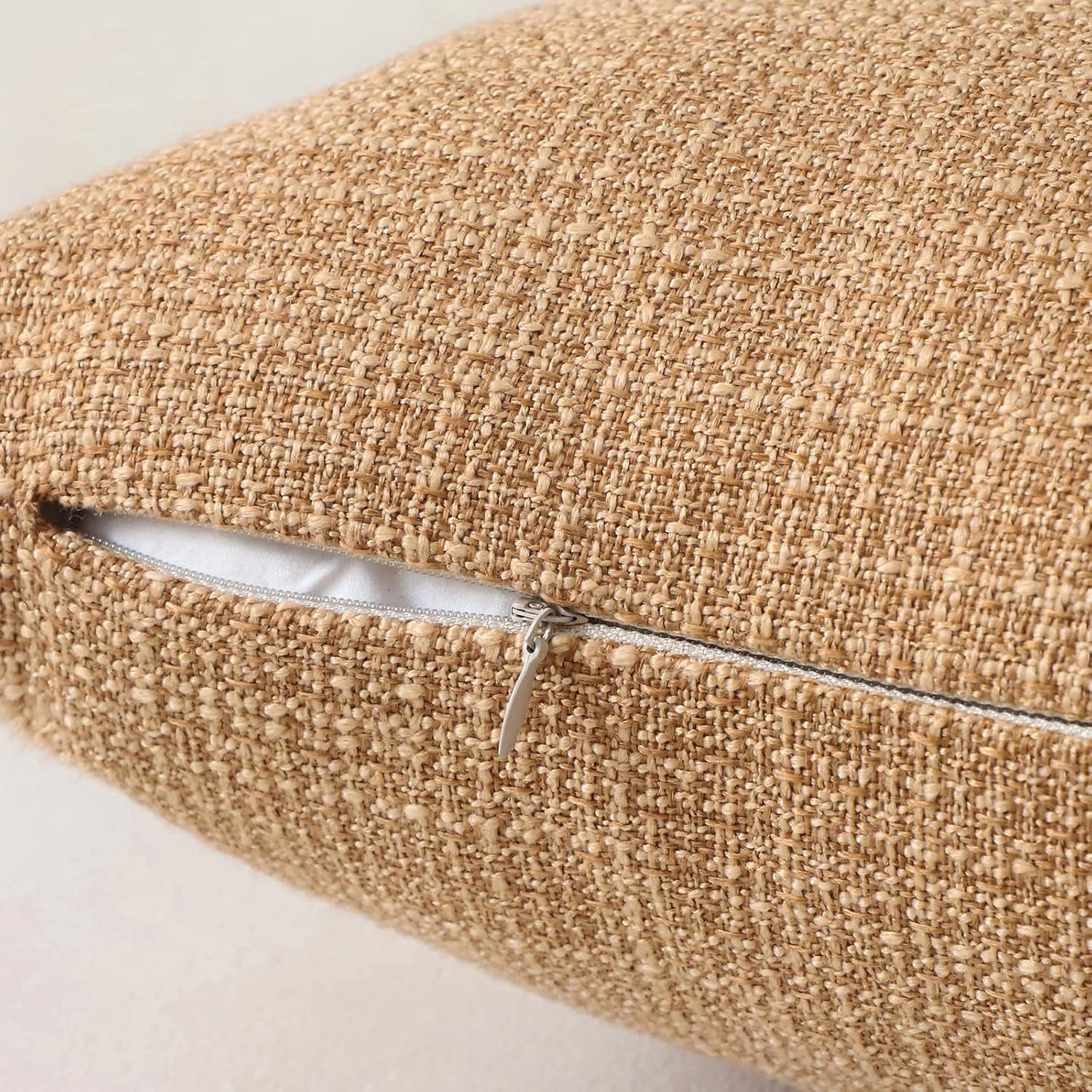
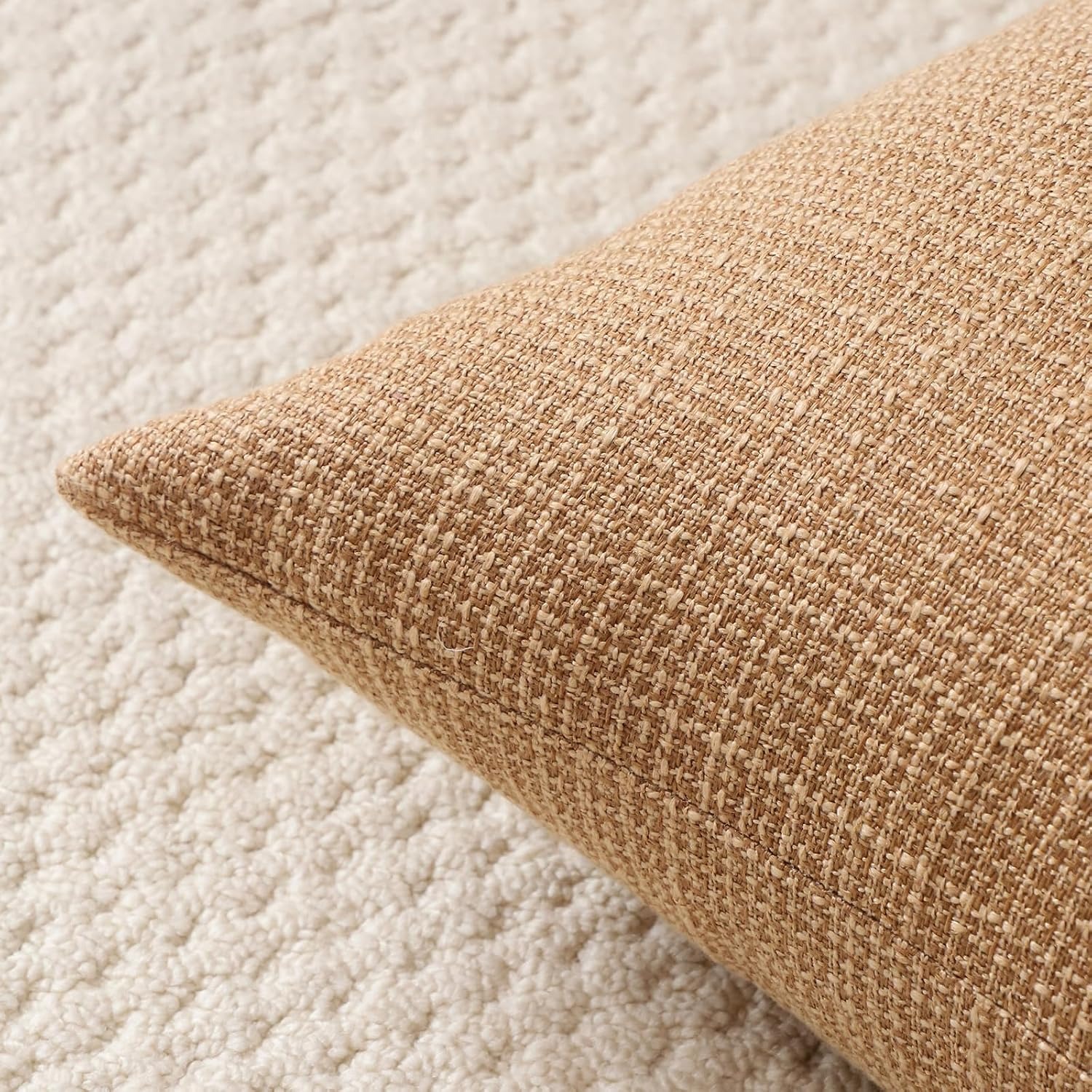
What you get from that weave is texture. Instead of a flat, smooth synthetic surface, the cloth has a visible, slightly chunky weave with lighter threads running through the brown. Light catches it unevenly, and the finish is matt rather than glossy. From normal viewing distance it reads as a natural cloth.
What you give up is the particular hand feel of real linen, that cool, crisp, slightly papery touch that softens over years of washing. Real linen also creases dramatically, which some people love and others find maddening. Polyester does not do that. It comes out of the machine more or less ready to go back on the cushion.
There is a trade-off in breathability too. Linen moves air better, which matters for bedding and clothing. For a cushion cover on a sofa, it matters much less, since you are leaning against it rather than sleeping under it.
Who these suit
They suit anyone who wants the look of natural fabric with the practicality of a synthetic. That covers a lot of households: families with small children, people with dogs that treat the sofa as their own, renters who want to change a room without changing the furniture, and anyone who simply does not want to iron cushion covers.
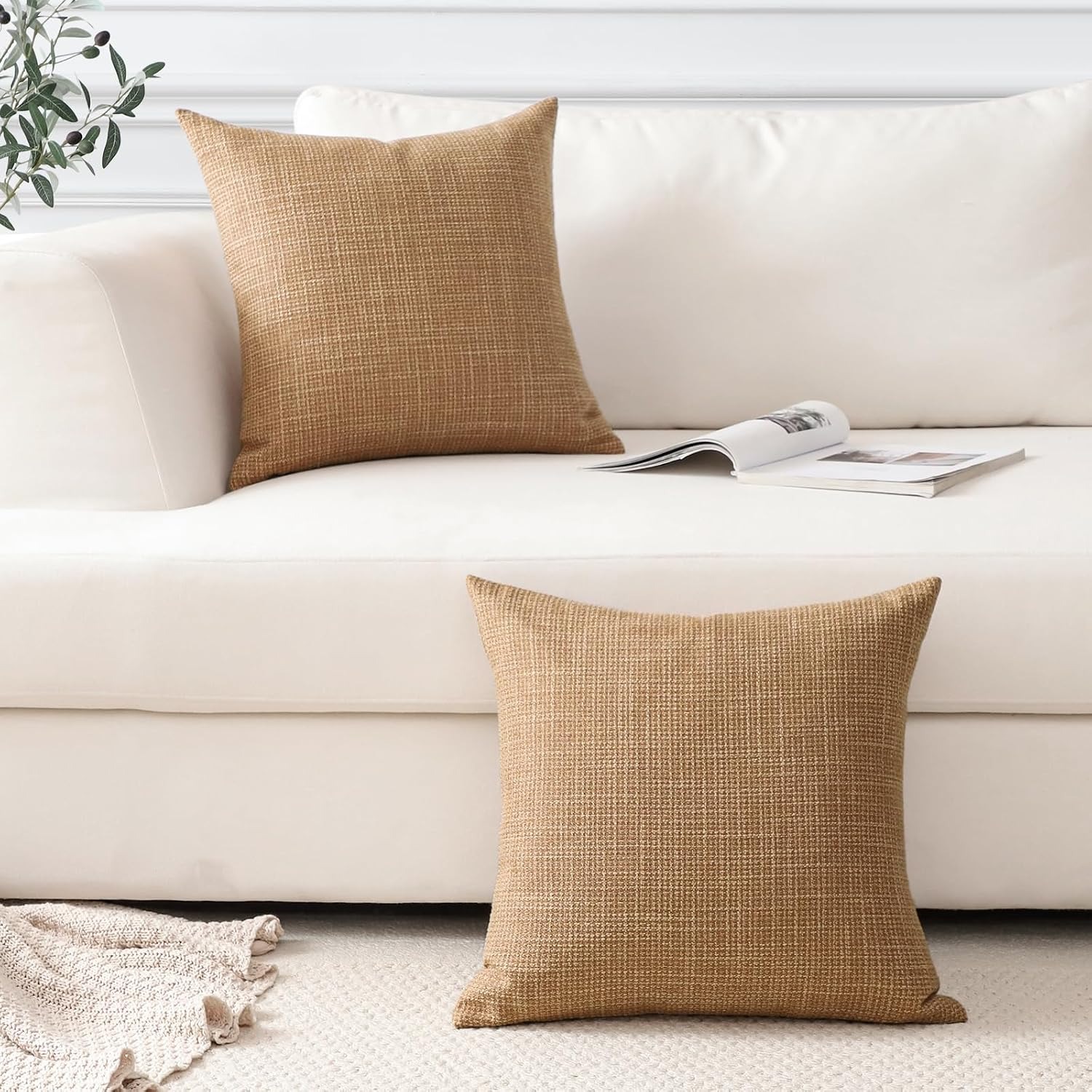
They also suit people who are building a room slowly. A pair of plain neutral covers is the furniture equivalent of a plain white t-shirt. It goes with everything you already own and everything you buy later. If you are not confident about colour, neutral is the safe starting point, and light brown is one of the warmest and friendliest neutrals you can pick.
They are less suited to someone who specifically wants the fibre, not the look. If you care about pure linen for environmental or tactile reasons, this is not that product and we would rather say so plainly.
Getting the size right
The covers are 50 x 50 cm, with a tolerance of 1 to 2 cm because they are cut and sewn by hand. That is the most common square scatter cushion size, so there is a fair chance your existing pads already match.
Here is the trick most people miss. If you put a 50 cm insert into a 50 cm cover, the result is correct but a little soft. If you put a 55 cm insert into a 50 cm cover, the cushion fills out, the corners stay sharp, and it looks like something from a shop display. The cover works a bit harder, but it sits much better.
Going smaller is the opposite problem. A 45 cm pad inside a 50 cm cover leaves loose fabric at the corners and the cushion flops when it leans against the arm of the sofa. It is not a disaster, but it never quite looks finished.
Measure an existing cushion before you order. Measure the pad itself, not the cover, from seam to seam across the middle.
Fitting and the hidden zip
The zip is set into the seam so it stays out of sight once the cover is on. That matters more than it sounds. A visible zip on the front of a cushion draws the eye and makes a plain cover look cheap. A hidden closure keeps the front of the cushion plain.
To fit one, open the zip all the way. Fold the insert slightly and push one corner into the far corner of the cover first. Then work the second far corner in, flatten the middle, and tuck the two near corners last. Run the zip closed with one hand holding the fabric flat so the slider does not catch. After the first one you will be doing it without thinking.
Colour and how to use it
Light brown is a warm neutral. It sits somewhere between toast and caramel, and it does three useful jobs.
First, it warms up cool colours. Grey sofas, in particular, can look a bit cold and office-like. A pair of warm brown cushions helps with that.
Second, it bridges. If your room has cream walls and a dark wood floor, brown cushions link the two rather than fighting either.
Third, it quietens. If you already have a bold rug or a patterned throw, plain covers give the eye somewhere to rest.
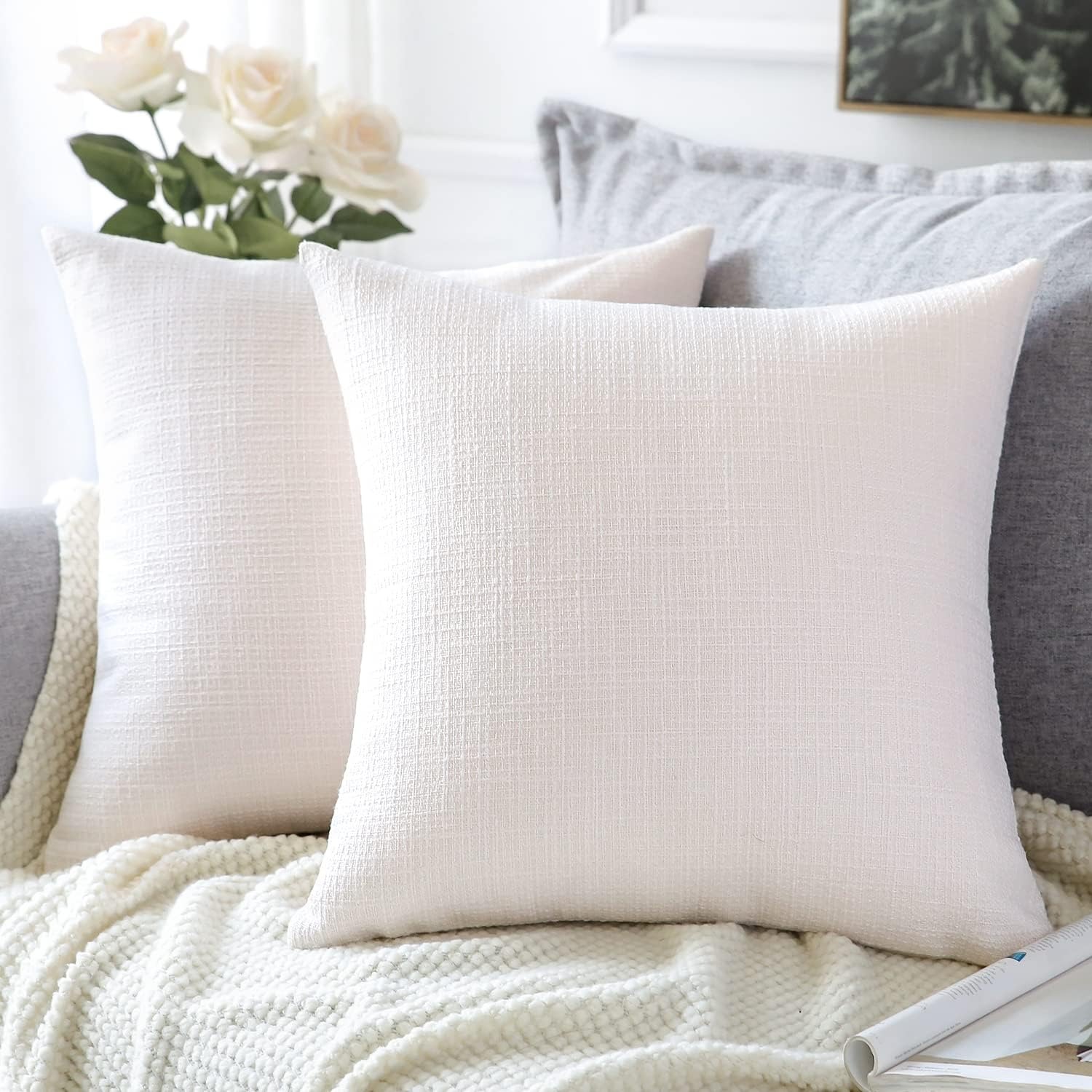
Colours that work alongside it include cream, oatmeal, soft white, olive green, rust, mustard and charcoal. Avoid putting it directly against a strong orange or a cool lilac unless you are confident, as both tend to make brown look muddy.
One honest note on colour. Screens render brown differently depending on calibration and the light in your room. The shade you see online may be a touch warmer or cooler than the cloth in person. That is true of every fabric sold online, and brown is particularly prone to it.
Washing and keeping them looking good
Take the insert out. Close the zip. Wash cold on a gentle cycle with similar colours. No bleach. Tumble dry low or hang them in the shade.
Avoid washing cushion covers with anything that has a hard zip, a buckle or velcro, because those are what snag and pull threads in a woven surface. Skip the ironing. The texture is the point, and a hot iron flattens it.
For spills, blot rather than rub, then treat the spot with a mild detergent and cool water before putting the whole cover through a wash. Treating just the spot often leaves a faint ring, so wash the full cover once you have lifted the worst of it.
Direct sunlight is the main long-term enemy. A cushion that sits in a south-facing window will fade faster than its partner at the other end of the sofa. Swapping the positions of your cushions every few months evens that out.
Building a set
Two covers is a complete solution for a small sofa or a bed, and a useful half of a larger arrangement. A common approach on a three-seater is two plain covers at the outer corners and one patterned or textured cushion in the middle, or a pair of plain and a pair of patterned staggered across the seat.
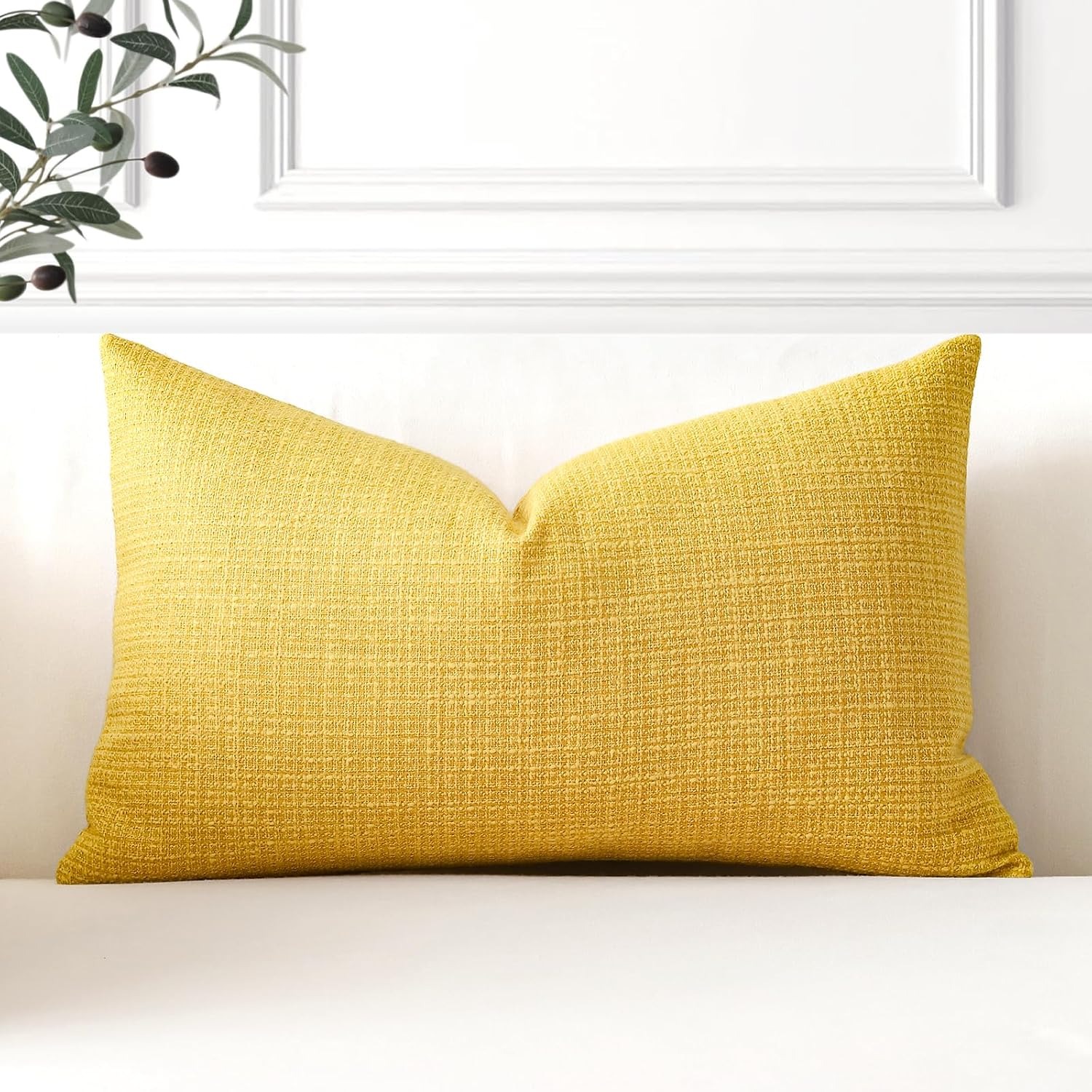
Varying the sizes helps too. A 50 cm square next to a smaller 40 cm square or a rectangular lumbar cushion gives a sofa depth. All-matching cushions in identical sizes look tidy but a bit formal.
If you like a layered look, mix the surfaces rather than the colours. A smooth cotton, a chunky knit and a linen weave in the same neutral tone look considered without any risk of clashing.
The short version
These are two plain cushion covers, 50 x 50 cm, in a light brown polyester weave that looks like linen but is not linen. They have a hidden zip, they wash cold in the machine, and they do not come with inserts.
Buy them if you want to warm up a room cheaply, you already have 50 cm cushion pads, and you like the look of natural cloth but not the upkeep. Size up your insert by 5 cm if you want a fuller cushion. Keep them out of hard sun, wash them cool, and skip the iron.
For most living rooms, that is all the decision there is to make.