
The complete guide
How To Choose A Valet Tray That Actually Keeps You Organised
The pile that keeps coming back
Every home has one. A surface near the door, the corner of a desk, the top of a chest of drawers. It starts with keys. Then a few coins. Then a watch, a pair of sunglasses, a receipt you meant to keep, a cable you meant to put away. Within a fortnight you cannot see the wood, and worse, you cannot find the one thing you actually need when you are already running late.
Tidying it does not work, because tidying is a decision you have to make again every day. What works is giving the stuff a defined place that is easier to use than the pile. That is the whole idea behind a valet tray. It is not clever, it is not high tech, and that is exactly why it sticks.
What a valet tray actually does
A valet tray is a shallow open container with raised sides, set where you naturally put things down. The raised sides are the point. On a flat surface, objects spread outwards and keep spreading. Inside a tray, they stop. You end up with a 25 cm patch of organised instead of a whole table of chaos, and the boundary does the thinking for you.
Adding compartments takes it further. One open tray is better than nothing, but everything ends up in a single heap and you still have to dig for your keys under your change. A five compartment layout means keys live in one well, coins in another, watch in a third. You reach for the right section without looking. That is the difference between a tray you use for a week and a tray you use for years.
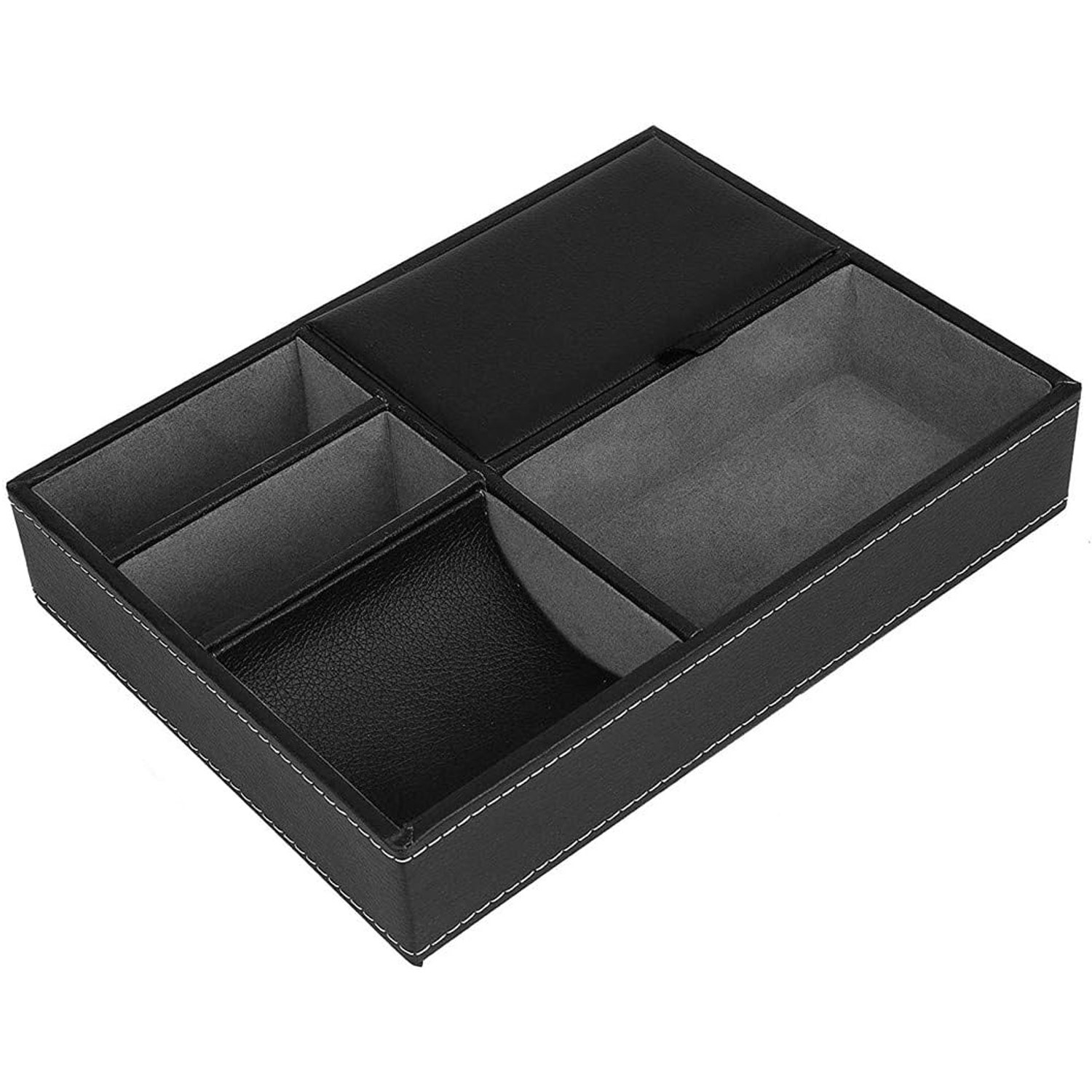
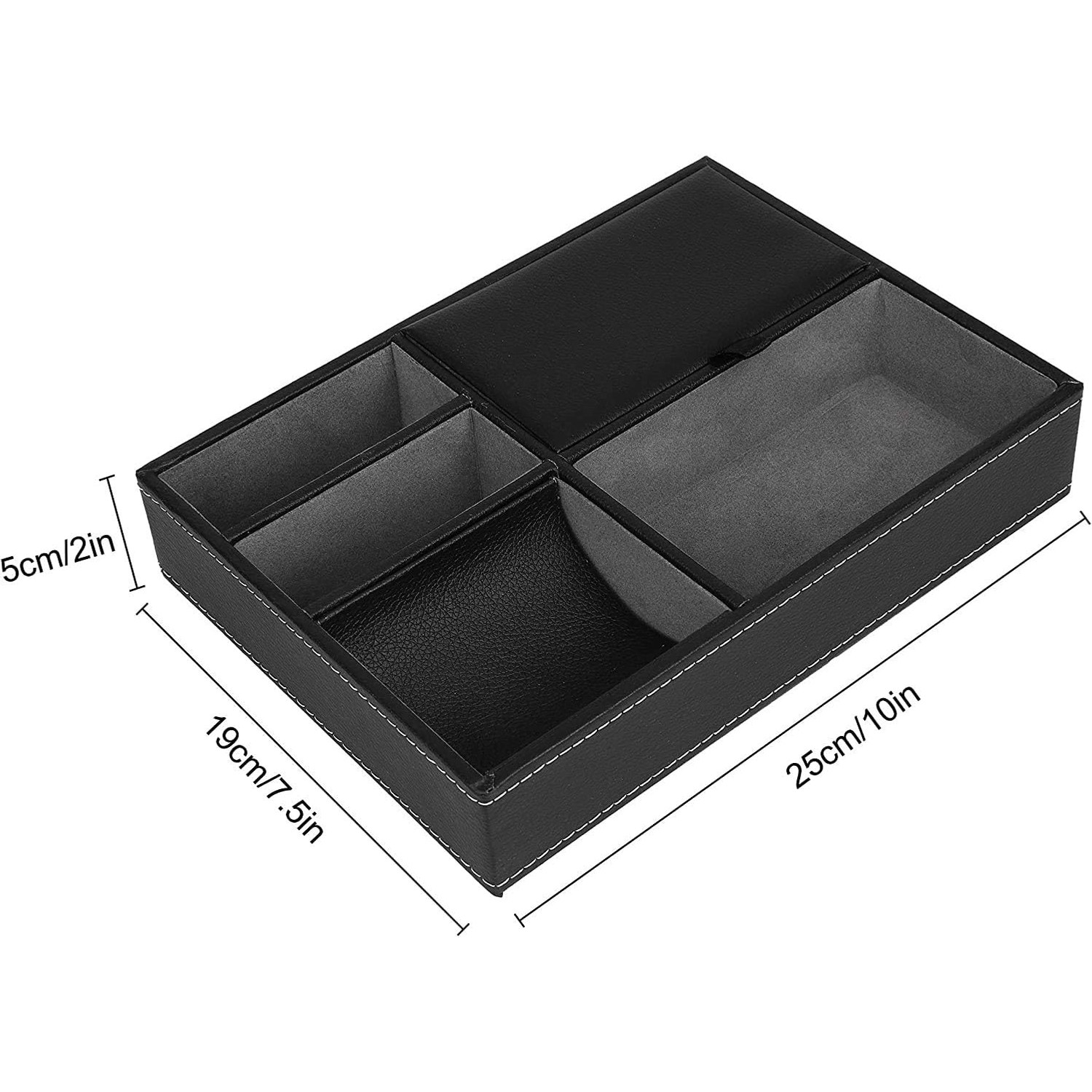
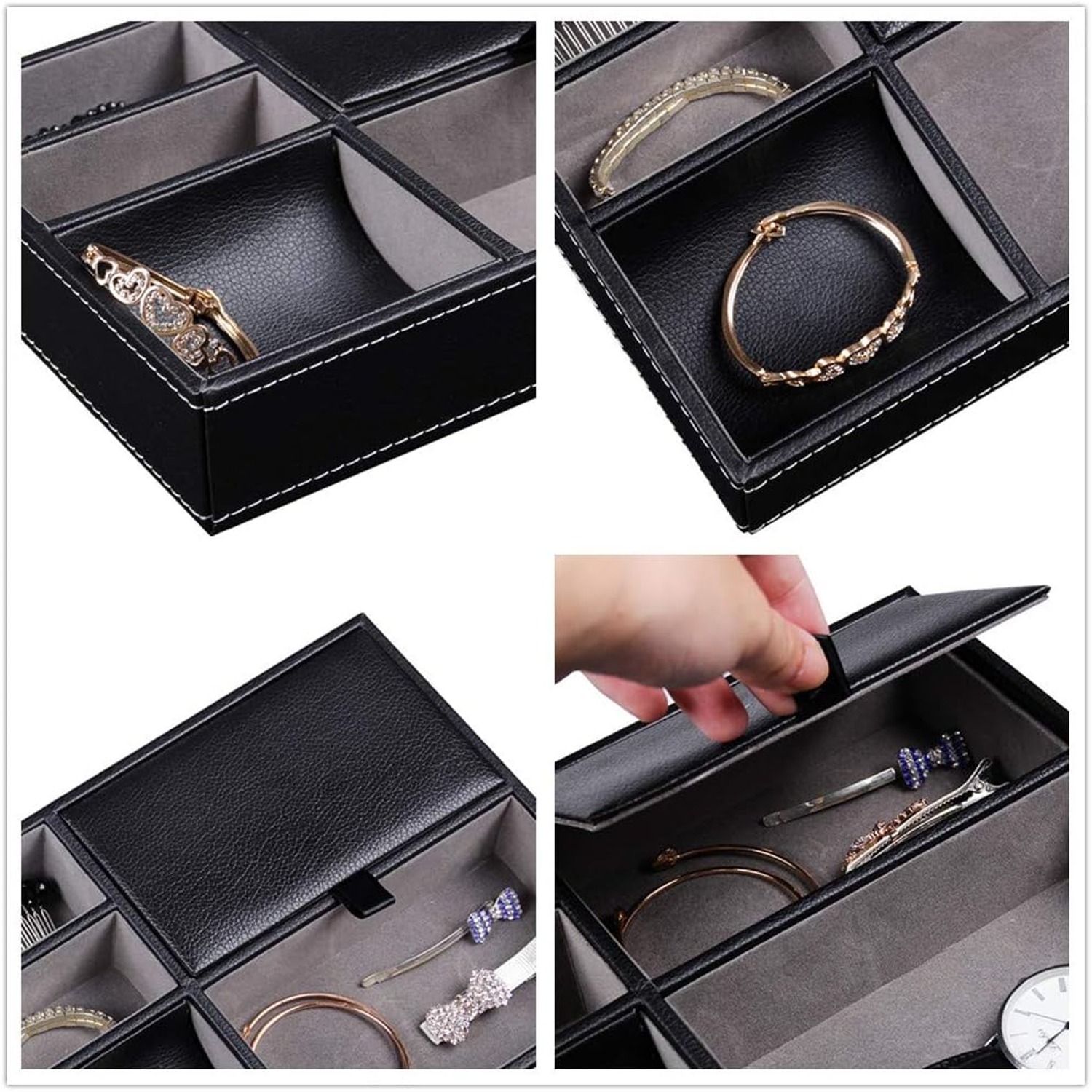
This one has five sections, each 5 cm deep. The depth matters. Shallow dishes let coins slide out when you knock the table, and a 5 cm wall stops that. One section has a curved base, which is a small, sensible touch, because loose change slides up the slope rather than wedging into square corners where you have to pick it out one coin at a time. As pictured, another section sits under a flap lid.
About the material
Be clear on this before you buy. The outer of this tray is synthetic leather, usually called faux leather or PU, and the interior is lined with faux suede. There is no genuine hide involved. The maker states it, and so do we.
That is not a drawback for this kind of product, it is just a different set of properties. Faux leather does not need feeding or conditioning. It does not darken unevenly where your hands touch it most, and it shrugs off the odd splash better than untreated hide. Cleaning is a slightly damp cloth followed by a dry one. Genuine leather trays change with age and want more attention. This one asks for less.
The faux suede lining does two useful jobs. It softens the sound when you drop keys in at eleven at night, and it is kinder to the case back of a watch or the lens of a pair of sunglasses than a hard surface would be. It is not a substitute for a lined jewellery box with a lid, so treat anything precious accordingly.
Working out the right size
The maker gives the size as about 25 x 19 x 5 cm. In practice that means a footprint of about 25 cm by 19 cm, standing 5 cm tall. Before you order any tray, put a tape measure on the surface you have in mind, because the mistake people make is buying something that looks right in a photo and then discovering it swallows the entire bedside table.
A chest of drawers usually has plenty of room. A desk corner normally does too, especially if you push it beside the monitor stand rather than in front of the keyboard. Bedside tables are the one to check, because compact bedside tables can be under 30 cm deep and a tray of this size would dominate. A hall table or a shelf near the front door is often the best spot of all, because it catches keys before they wander into the house.
The stated weight is 450 g. That is enough that it does not skate around in normal use, and it gets steadier the moment you load it with keys and change. On very smooth glass you might add a few felt dots underneath for extra grip.
Where to put it, and why placement decides everything
The single biggest factor in whether an organiser works is whether it sits exactly where you already drop things. Not where it looks best. Where your hand goes.
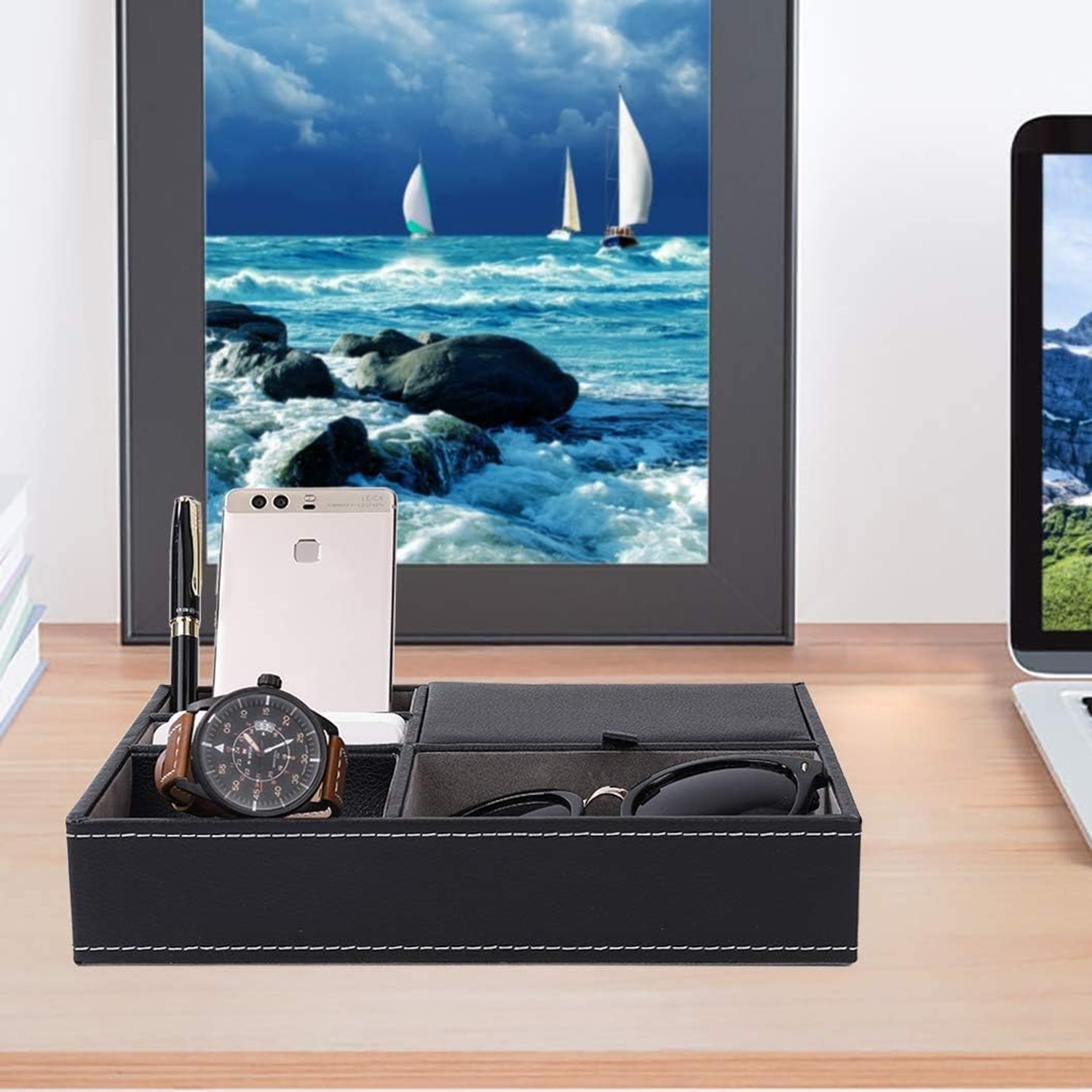
If you empty your pockets as you walk in the door, the tray belongs within arm's reach of the door. If you do it while sitting on the edge of the bed, it belongs on the bedside table. If your keys always end up on the desk because you work from home, that is where it goes. Put it two metres from the natural drop point and you will walk past it. Put it in the drop point and you will never think about the system again.
It is worth saying out loud: one tray in the right place beats three trays in the wrong places. If you need more, add the second one only after the first has proved itself for a month.
What goes in the five sections
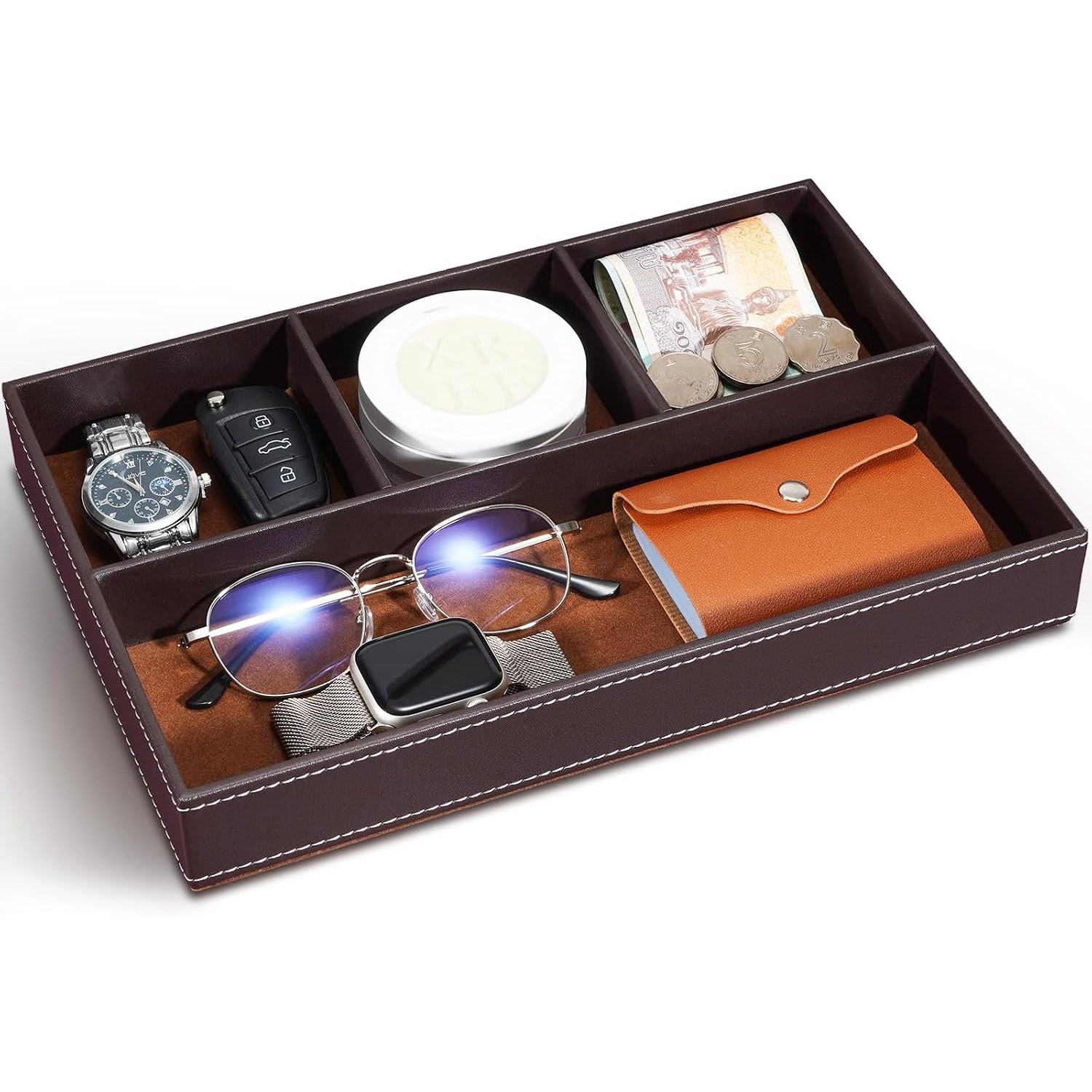
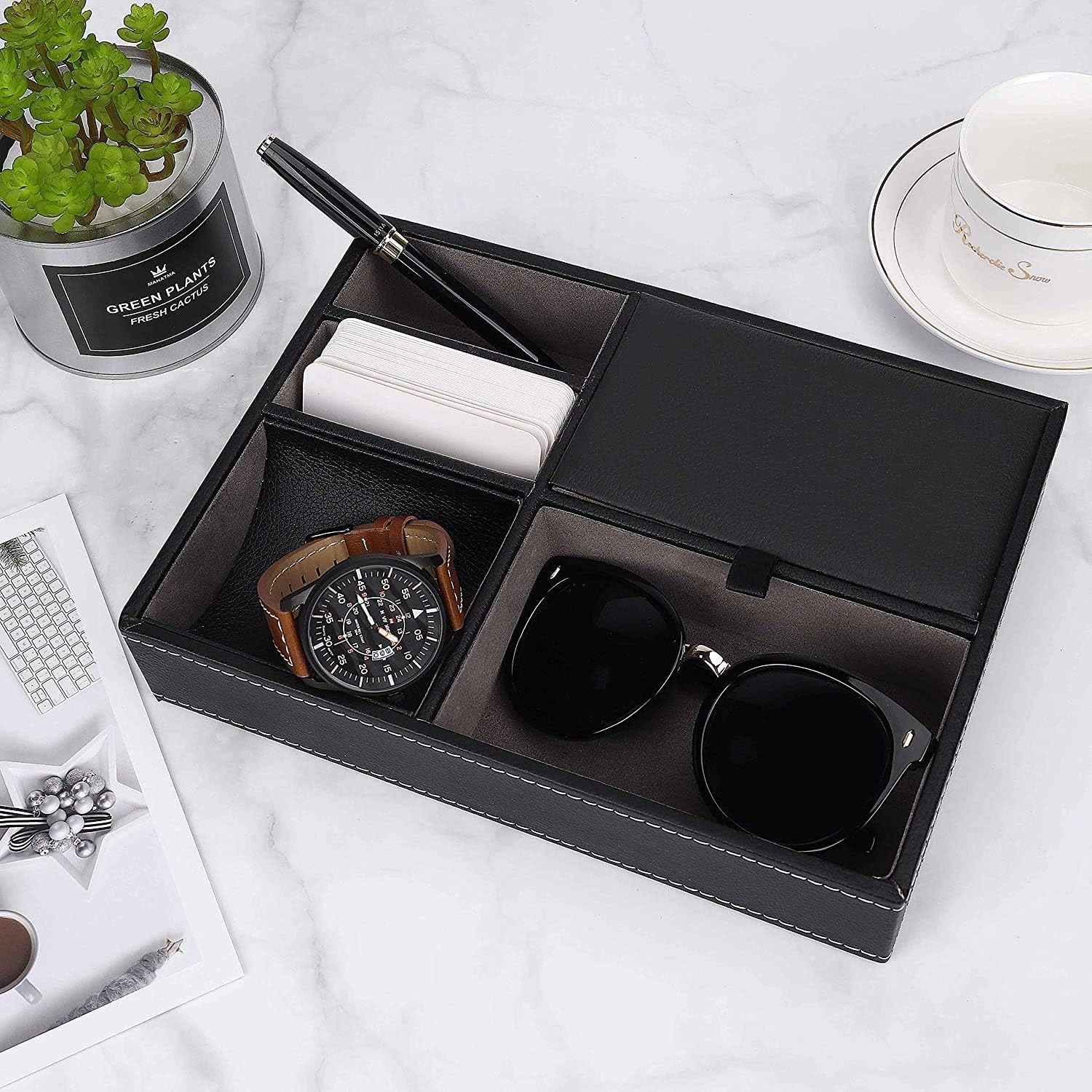
There is no fixed rule, but a layout that works well looks something like this. The large open well takes a phone or a folded wallet. The curved section takes coins. The lidded section suits things you would rather keep covered, such as cards or a spare key. The two small sections handle keys, rings, cufflinks or earphones, depending on what you carry.
The reason to assign sections deliberately on day one is muscle memory. Within a week your hand goes to the right well without you looking at it. That is when a valet tray stops being a bit of decor and starts actually saving you time.
It is not only for pockets, either. The same five sections handle makeup brushes and lipsticks, or pens, clips and sticky notes on a desk. It would do the same job on a craft table for beads and findings. The tray does not care what you put in it.
Keeping it in good shape
Care is genuinely simple. Wipe the outside with a soft cloth that is barely damp, then dry it straight away rather than letting water sit on the finish. For the faux suede lining, a dry soft brush or a quick roll with a lint roller lifts dust, grit and pocket fluff, which is most of what accumulates.
Do not soak it, do not put it in a washing machine, and skip bleach, solvents and alcohol based cleaners. Those strip and cloud synthetic finishes. Resist the urge to use a leather conditioner too, because products made for real hide can leave a tacky or patchy film on faux leather.
Keep it out of long hours of direct sun and off hot surfaces like the top of a radiator cabinet, since heat and UV dry out synthetic finishes over time. Let anything damp, a wet key fob or a rained on pair of sunglasses, dry before it goes back in.
Buying it as a gift
This style makes an easy present. The maker packs it in a white hard shell box, so you are not hunting for packaging. It suits a birthday, an anniversary, Father's Day, Christmas, a housewarming or a first flat. Most importantly, it is a gift that gets used every single day instead of going in the back of a cupboard.
The plain finish helps here too. A gift tray for him does not need to match anyone's decor scheme, because a plain black tray fits almost any room. If you want to personalise it, slipping in a folded note or a small item in one of the compartments is an easy touch.
The short version
A valet tray solves a small, daily annoyance, and it solves it simply. This one gives you five compartments, each 5 cm deep, inside a 25 cm by 19 cm footprint. The outside is synthetic leather and the inside is faux suede, not genuine hide, which keeps the upkeep down to an occasional wipe.
Measure your surface, put it where your hand already goes, and give each section a job on the first day. Do that and you will not think about the pile again.