
The complete guide
How to Choose a Tall White Ceramic Floor Vase
The corner that never quite works
Every home has one. A gap beside the sofa. The stretch of wall at the end of a hallway. The space next to a bookcase that is too narrow for furniture and too wide to ignore. You have probably tried putting a plant there and watched it struggle in low light, or stacked something in the corner and then moved it again a week later.
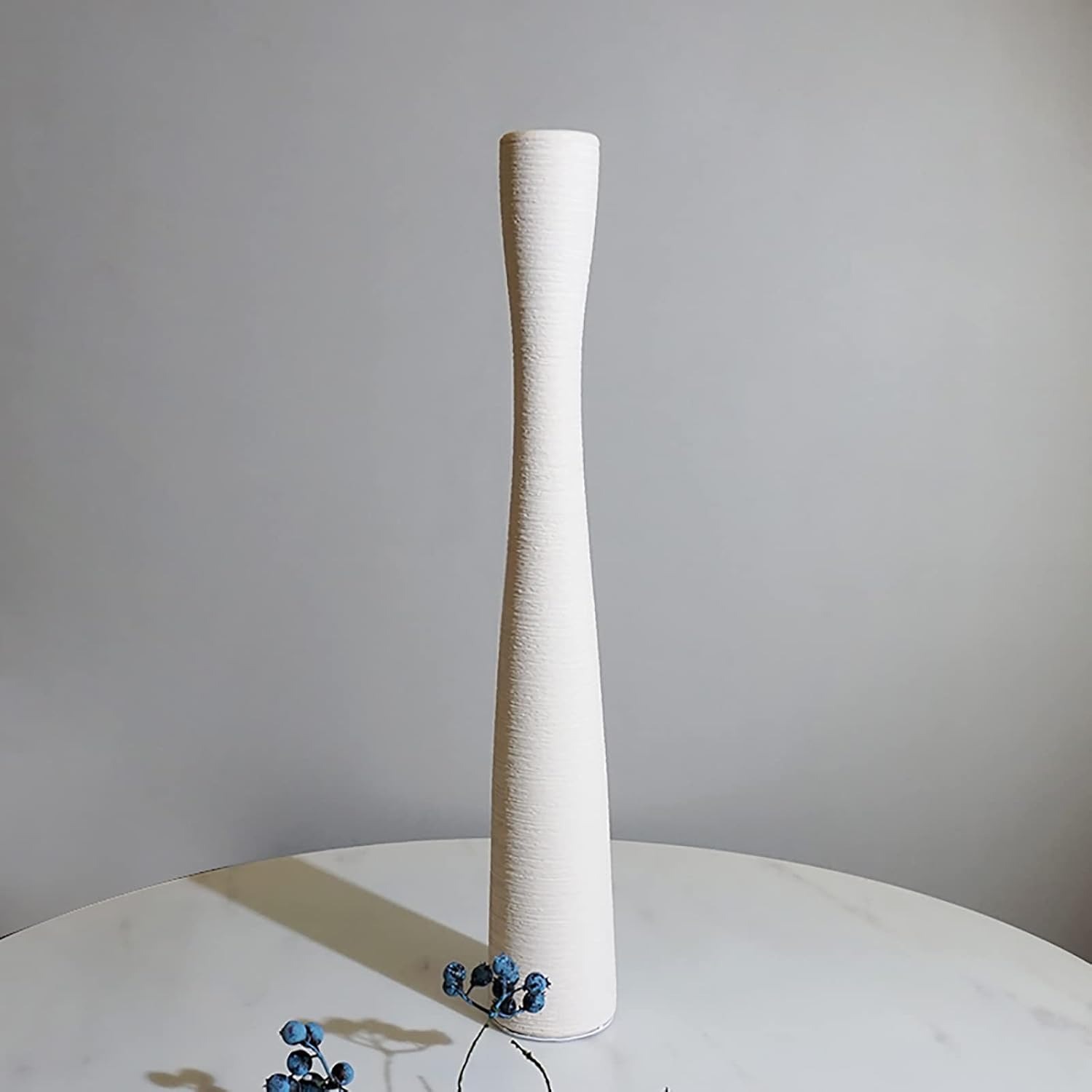
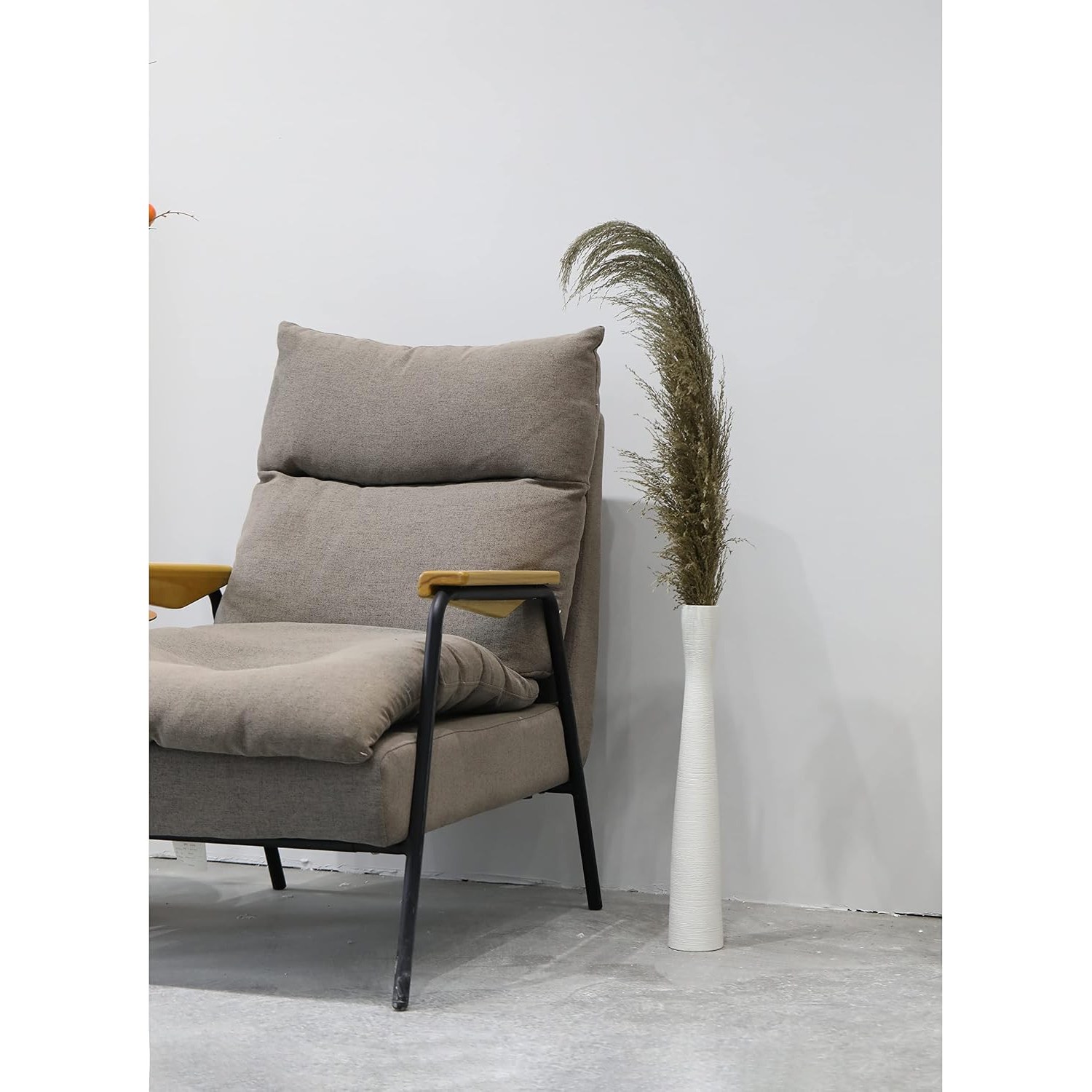
A tall white ceramic floor vase solves that problem in a way few things do. It takes up height rather than floor area. At roughly 51 cm tall and only 8 cm across the base, this one occupies a footprint smaller than a dinner plate while reading as a proper piece of decor from across the room. You get a focal point without losing anywhere to walk.
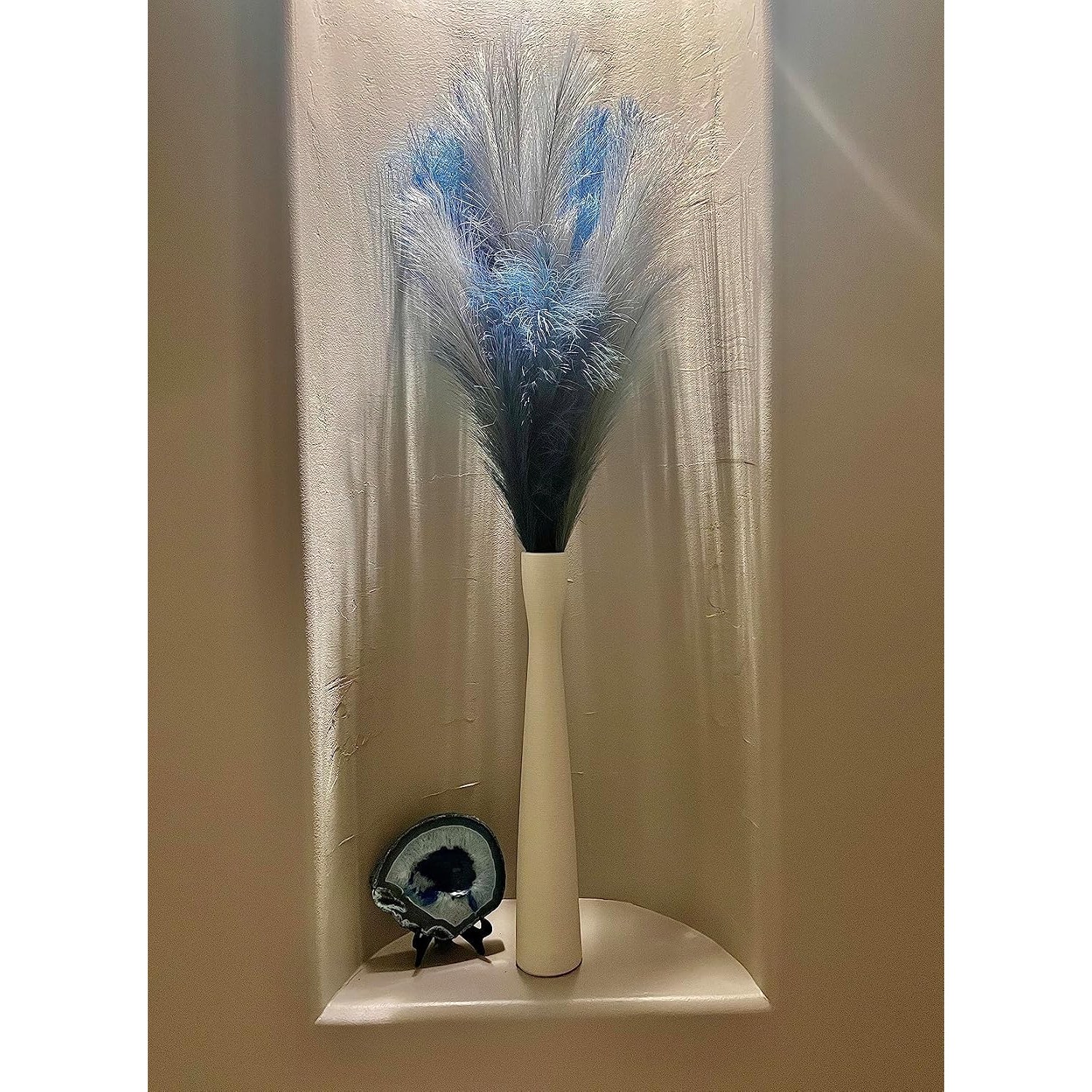
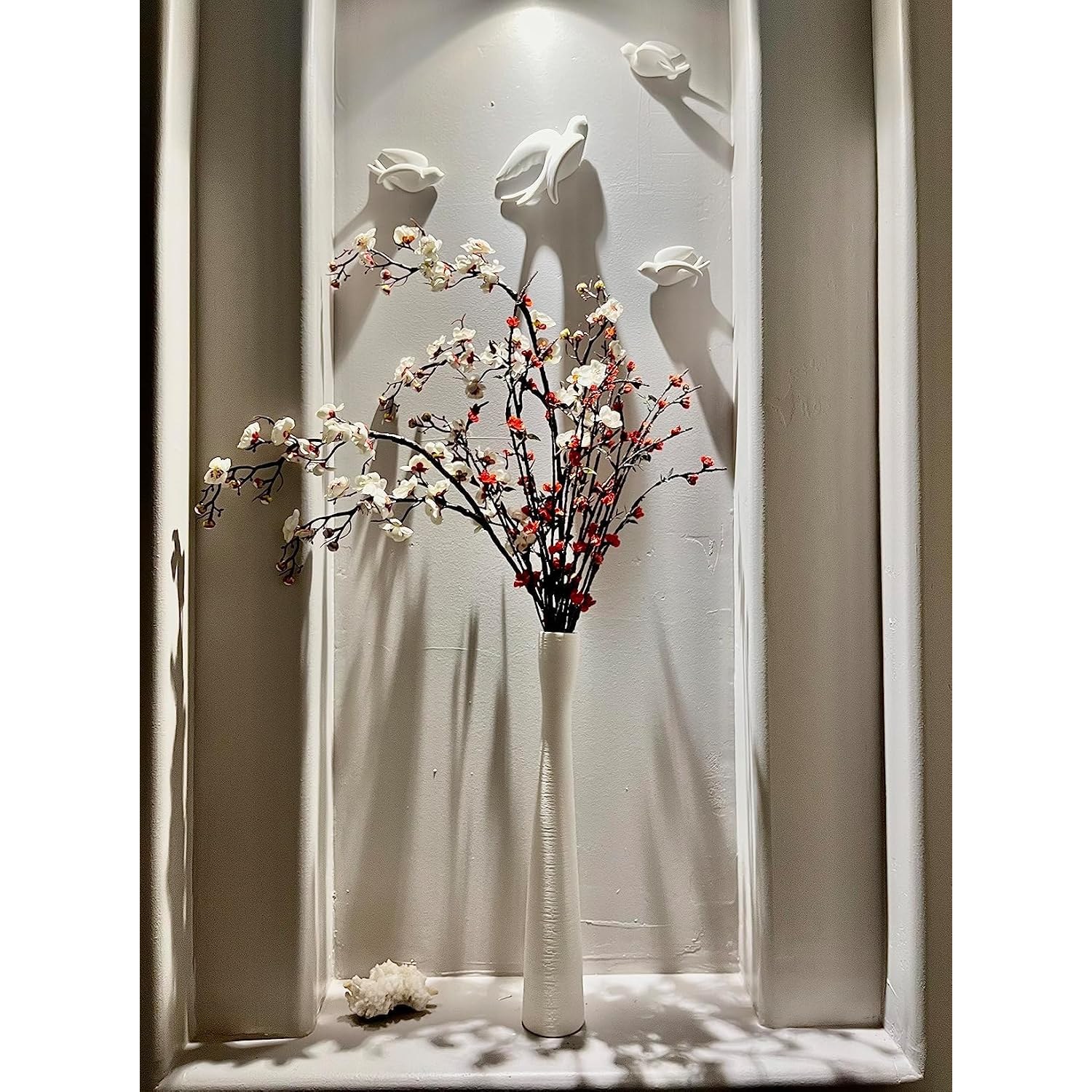
The other thing it does is give you a place to put the stems you already like. Pampas grass, eucalyptus, dried hydrangea, bare branches, long-stemmed lilies. All of those look awkward crammed into a short table vase. They need height and a narrow neck, and that is exactly what this shape offers.
How the shape actually works
The opening on this vase measures about 5 cm. That sounds small, and it is meant to be. Wide-mouthed vases are a familiar frustration. You put five stems in, they slide outwards against the rim, and within an hour the arrangement has collapsed into a sad fan. There is nothing holding them.
A narrow neck does the holding for you. Stems gather into a column, they stay vertical, and even a small number of them looks deliberate. Three pampas plumes in a wide bowl look like you ran out. The same three in a 5 cm neck look like a choice. That is why a slim ceramic vase with a narrow opening is a common choice for pampas grass.
The base is the counterweight. At 8 cm across it keeps the vase planted, and the maker notes a non-slip sticker fitted underneath. That matters on hard floors, where a tall ceramic object can creep a few millimetres every time something brushes past it. The sticker also protects whatever surface it stands on, so you are not left with faint rings on a wooden sideboard.
The finish, and why it is not glossy
This vase has a brushed ceramic finish rather than a high-shine glaze. It is worth understanding the difference before you buy, because it changes how the vase behaves in a room.
High-gloss white reflects. In a bright room it throws light back at you, and in a dim one it can look a little hard. It also shows every fingerprint and water mark, which means you are forever wiping it.
A brushed finish has a lower sheen. The surface looks softer, and the outline of the vase stays clear even against a pale wall. On this vase the finish shows as fine horizontal lines running round the body. The trade-off is that you treat it a little more gently when cleaning, which we come to below.
Who it suits
This vase suits anyone with a room that feels slightly unresolved. That covers more people than you might think.
It works in small flats, because the narrow base means it does not steal walking space. It works in rented homes, where you cannot hang shelves or repaint, but you can stand something in a corner. It works in rooms with plain walls that need one vertical line to break them up, and it works in busy rooms too, because plain white does not compete with pattern.
For bedrooms, dried stems are the practical route. There is no water to change and nothing to drop petals on the carpet. The proportions here sit nicely with preserved eucalyptus and other foliage, which tends to come in long lengths.
For hallways, height is the point. A corridor is all horizontal lines, so one tall object near the end of it changes how the space reads. That is the case for a tall white ceramic vase in a hallway.
For offices, shops and reception areas, the slim base is the selling point again. You can place it near a doorway without anyone catching it on the way through.
How to choose stems and fill it
Start with length. You want stems sitting roughly 60 to 90 cm long, measured from the cut end. That gives you a clear rise above the rim without the arrangement looking top-heavy. If you go much shorter, the stems disappear into the neck and the vase looks empty. Branches can go taller, up to a metre or more, as long as the ceiling allows and the corner is out of the way.
Then think about quantity. Three to seven stems is the usual range. The 5 cm opening fills fast, especially with thicker grasses, so resist the urge to keep adding. An overstuffed neck loses the clean column look that makes this shape work in the first place.
Fresh or dry is the next decision. The maker notes that the white version of this vase is waterproof and can be used for fresh flowers. If you go that route, stand it on something protected the first time, check for any seeping at the base, and change the water regularly. Dried and preserved stems need none of that, which is why they are the usual choice for a 50 cm vase filled with tall branches.
A small tip on balance. If you are using heavy branches, keep the weight centred over the base rather than leaning everything to one side. A tall slim vase has a higher centre of gravity than a squat one, so a lopsided arrangement makes it easier to knock.
Placement that works
Corners are the obvious home, and they are usually the right one. Beside a sofa arm, at the turn of a staircase, in the gap between a bookcase and a wall.
Pairs are worth considering too. Two identical vases either side of a fireplace, a doorway or a console table give a room a sense of order that a single vase cannot. If you like the symmetry, buying two at once is easier than trying to match one later.
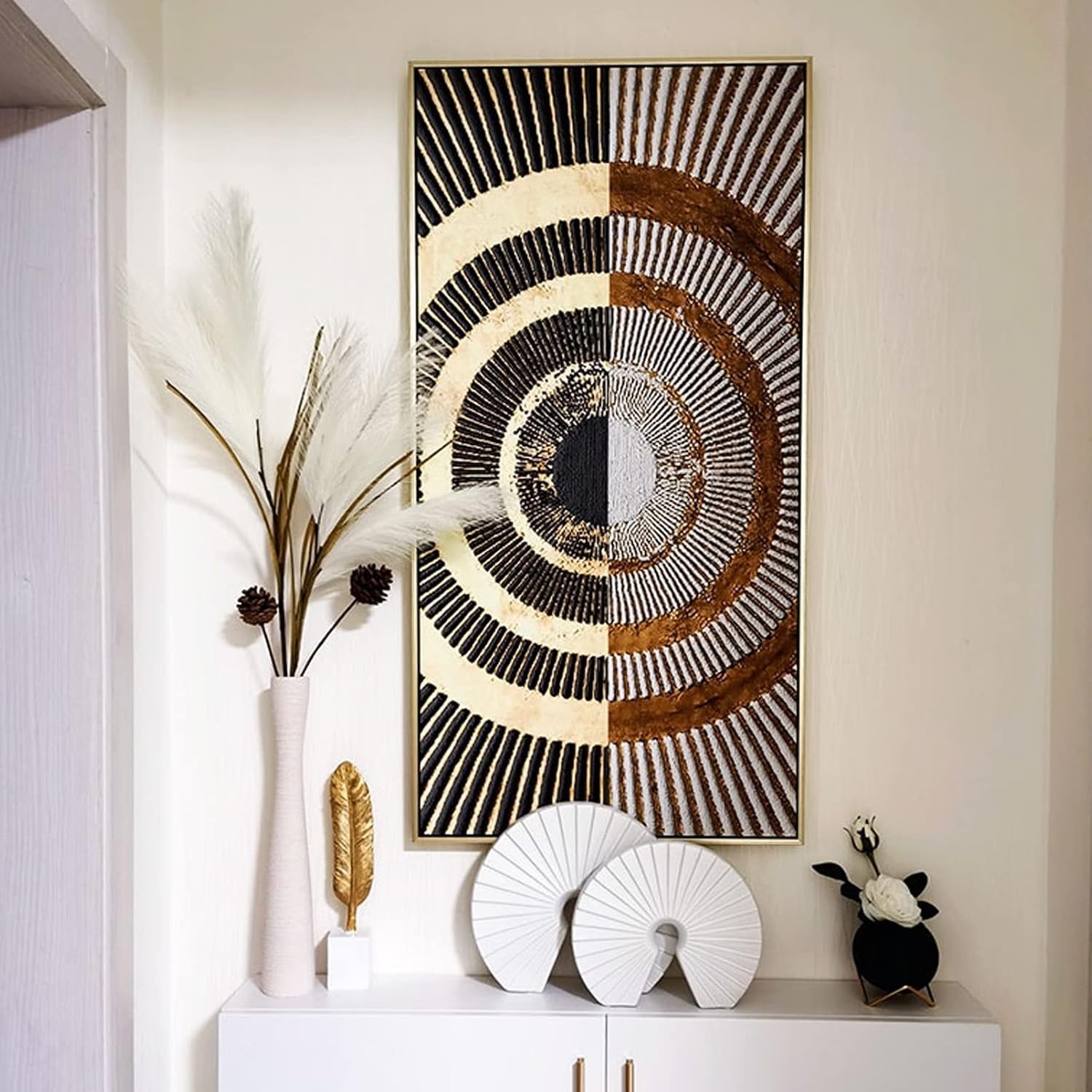
On furniture, pick deep surfaces. A sideboard, a wide console or a sturdy shelf will hold it comfortably. A narrow hall table or a small side table will look overwhelmed and is more likely to be bumped.
What to avoid is simple. Walkways, the edges of rugs where the floor level changes, behind doors that swing open, and anywhere children or dogs charge through at speed.
Looking after it
Cleaning is mostly wiping. A soft dry cloth for dust, or a slightly damp one if something has marked it. Skip the abrasive pads, bleach and scouring powders, because all of those can take the softness out of a brushed surface and leave shiny patches you cannot undo.
For the inside, half fill with warm water and a drop of washing-up liquid, swirl it around, then tip it out and rinse. A long soft bottle brush helps if you have had fresh flowers in there and some residue has built up on the walls. Leave it upside down to drain before you store it or refill it.
Hand washing is better than a dishwasher. It is gentler on the finish and avoids the vase knocking against anything in the rack.
Keep it indoors. Frost, rain and wind are hard on ceramic, and a tall piece on a balcony is one gust away from a bad afternoon.
The short version
This is a 51 cm tall white ceramic vase with a brushed finish, an 8 cm base and a narrow 5 cm opening. The maker states it has a non-slip sticker underneath, and that the white version is waterproof and suitable for fresh flowers.
It is for filling awkward vertical space. Corners, hallways, the gap beside a sofa. It holds long stems upright instead of letting them splay, and plain white means it does not need to match anything.
Buy it if you have a corner that has been bothering you, or if you have a bundle of pampas grass sitting in a cupboard with nowhere sensible to go. Buy two if you want symmetry. And if you are not sure the height is right, measure the gap first and ask us before you order.