
The complete guide
Choosing Crochet Edged Linen Napkins: A Practical Buyer's Guide
The detail that changes a table
You can lay a table with good plates, decent glasses and a jug of flowers, and it can still look a bit bare. Often the missing piece is small. A paper napkin folded beside the fork does the job of a napkin and nothing else. A plain cloth one is better. A cloth one with a worked edge is the thing people pick up and turn over in their hands.
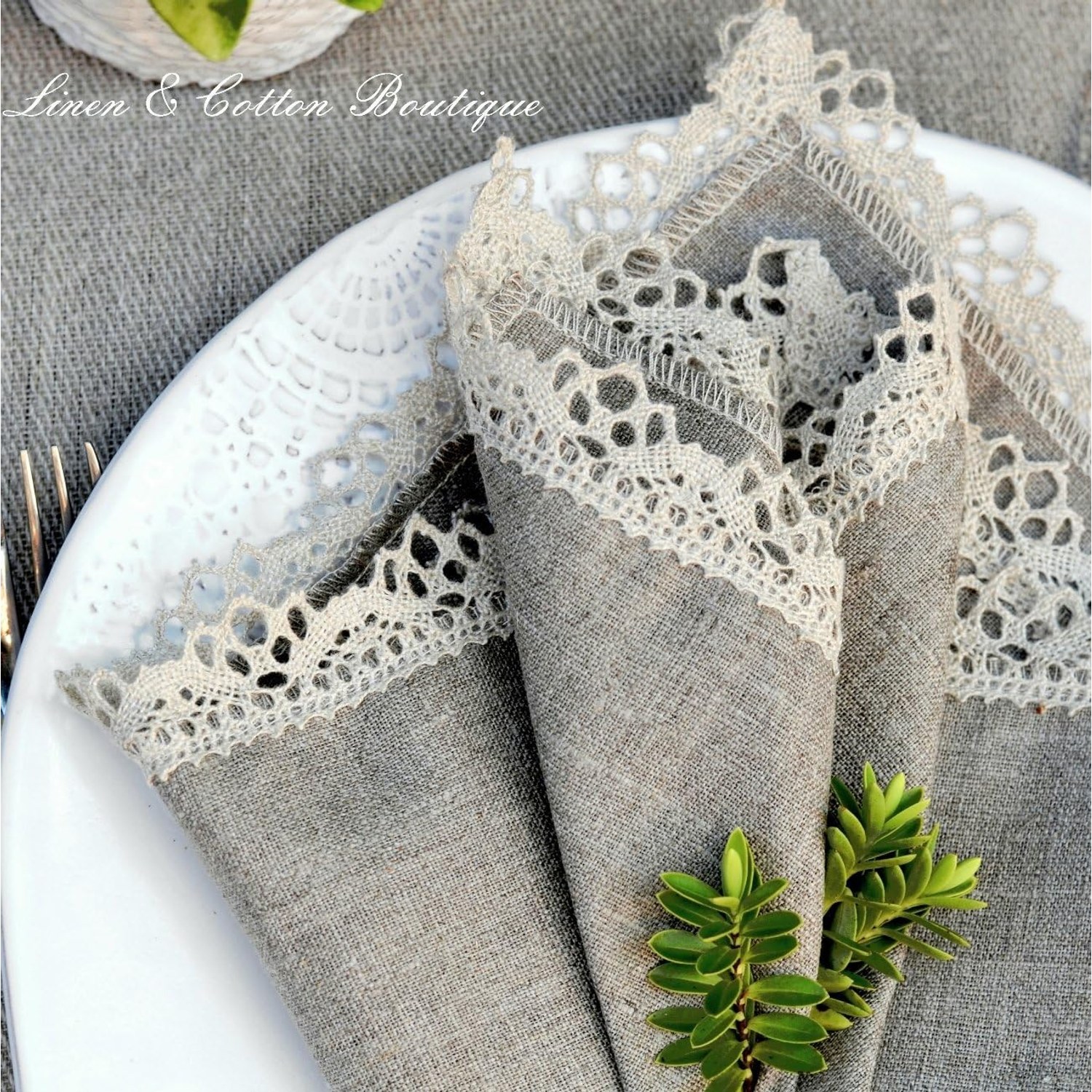
That is what a crochet edge does. It adds a line of pattern at the border of each place setting without adding colour or fuss. The table looks cared for, and you have not had to buy new china to get there.
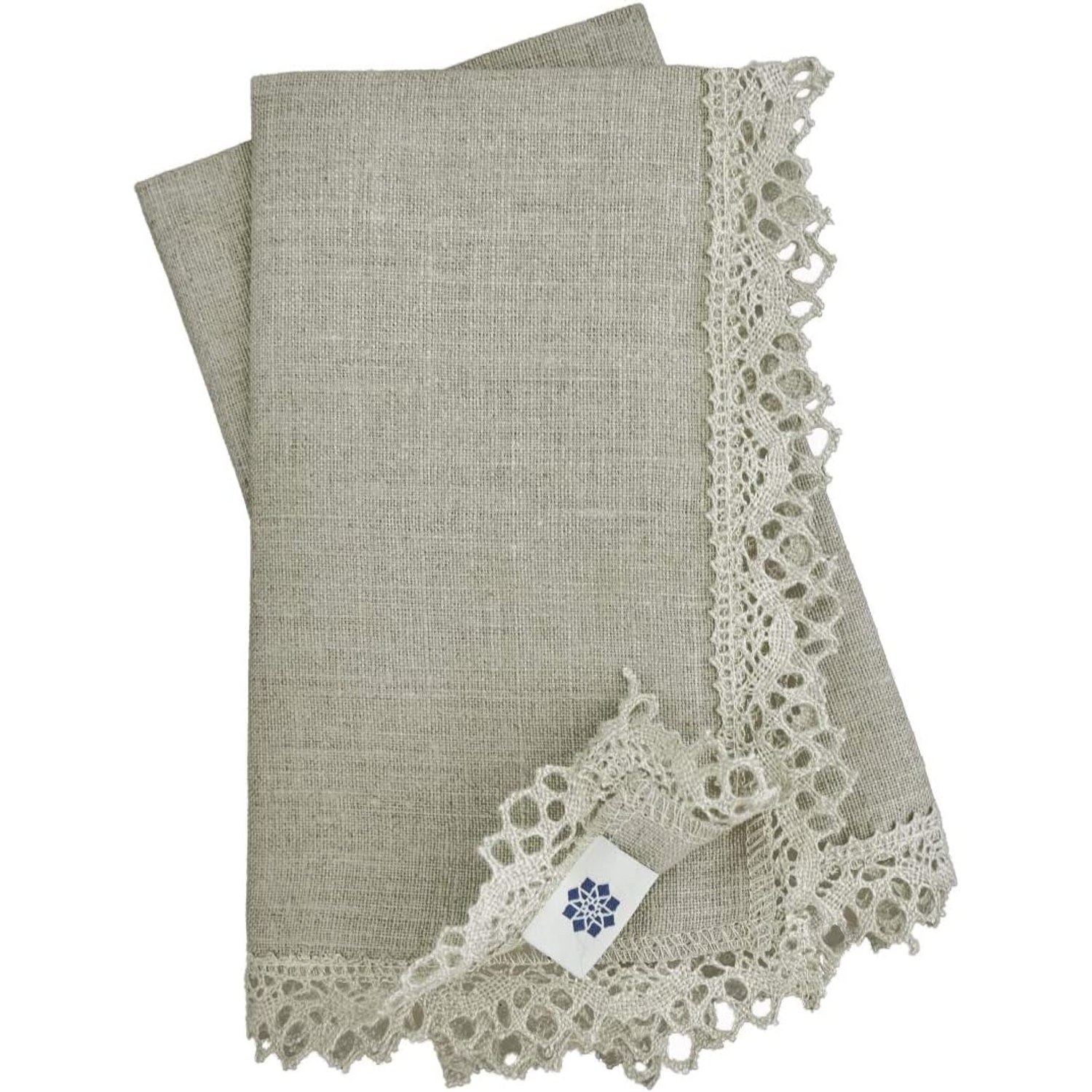
This set is four square napkins in 100% linen with a crochet edge, in natural beige. This guide covers what to expect from the fabric, the size and the trim, and how to keep them looking good.
Why linen for napkins
Linen is woven from flax. The fibres are long and strong, and they suit a napkin for a few practical reasons.
Linen takes up moisture well, which matters for something that deals with damp fingers and spills. It lets that moisture go again quickly, so the napkins dry fast on a line and do not sit damp in the laundry basket.
The feel is different from cotton. Linen is drier and more textured, with a slight unevenness in the yarn. New linen can feel a little crisp. That eases with washing, and many people like the cloth more after a few months of use than on the first day.
These napkins are 100% linen, as stated by the maker.
About the crochet edge
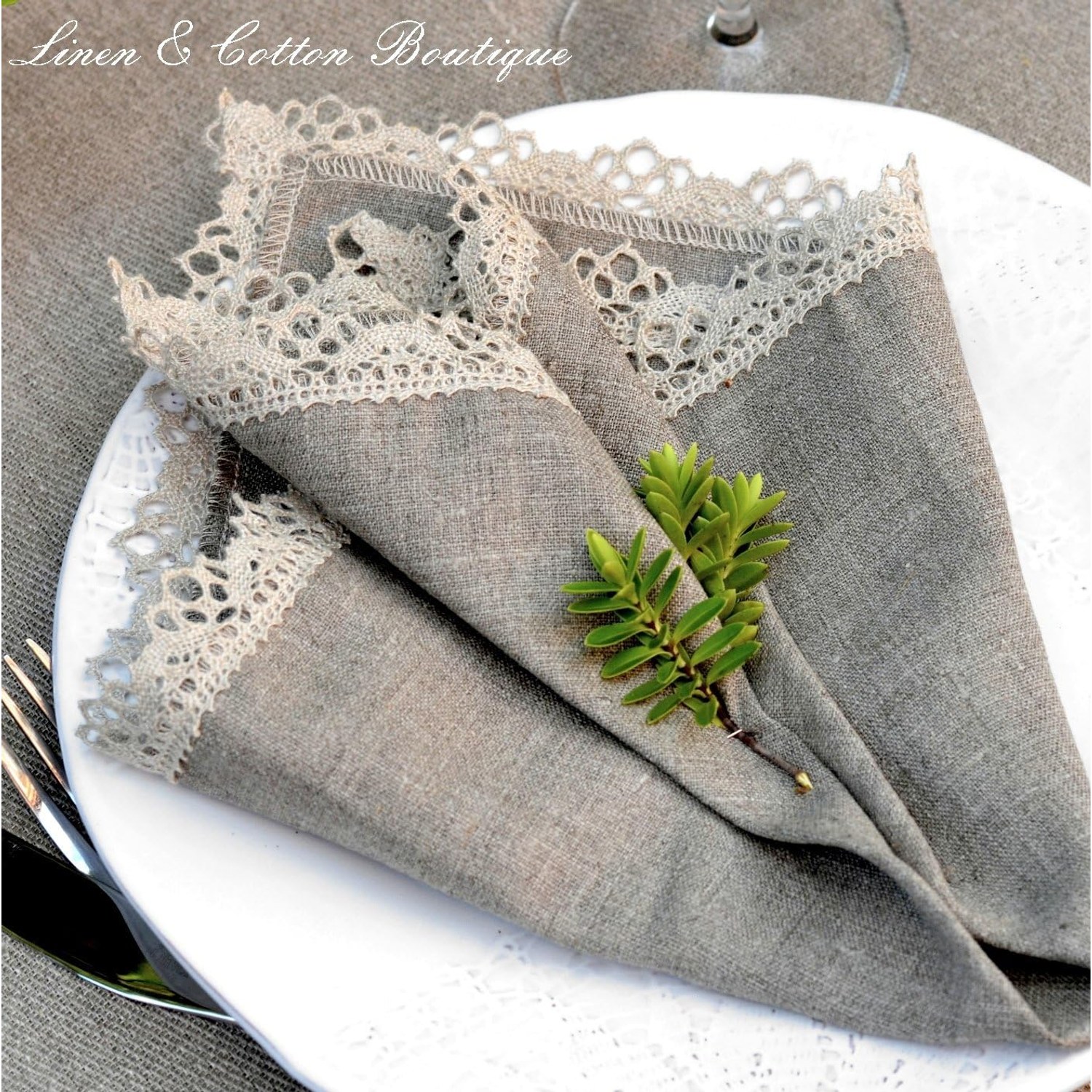
The crochet edge is an openwork trim that runs around the border of each napkin. The maker describes it as crochet lace. The middle of the napkin is plain linen, so the trim frames the cloth.
It changes how the napkin behaves in a few small ways. The edge has loops and gaps, so it can catch on things a plain hem would slide past. Fork tines, a ring or a rough wicker basket are the usual culprits. This is not a reason to worry at the table. It is a reason to take a little care in the wash, which is covered below.
It also changes how you fold. With a plain napkin the fold is the decoration. With a crochet edge, the trim is the decoration, so the simplest folds look right.
Getting the size right
Each napkin is 39 x 39 cm, about 15.6 inches square.
Napkins come in a wide range of sizes. Small cocktail squares are around 25 cm. Large dinner napkins run to 45 or 50 cm. At 39 cm, these sit in the middle, a little under the usual dinner size.
In practice that makes them very good for lunch, breakfast, afternoon tea and ordinary weeknight meals. They fold neatly, they do not swamp a small table, and four of them fit in a drawer without a fight.
For a long dinner with several courses, or a meal eaten with your hands, a bigger napkin covers more of your lap. If that is mostly how you eat, look at a 45 cm napkin as well. If you want one set that looks lovely and handles most meals, 39 cm is a sound choice.
Natural beige on the table
The maker lists the colour as natural beige. It is a soft, warm neutral in a solid finish.
Beige is the easy option, and that is a good thing here. The trim already adds detail, so a quiet colour keeps the napkin from looking busy. It works with white and cream china, clear glass, coloured glass, silver and bare wood.
A mid-tone is forgiving too. Bright white napkins show every faint mark that the wash did not quite shift. A natural beige hides those small shadows much better.
If you own older, patterned plates, these napkins suit them well. The crochet edge has a traditional look, and the plain cloth does not fight the pattern on the china.
How many to buy
Four napkins cover a table of four. Think about how you use your table before you settle on one set.
Two people who eat at the table most nights will use two napkins a day. One set gives two days between washes. Two sets is more comfortable.
For guests, count the largest group you really host and add two spare. Someone always needs a second napkin, and a spare is handy for lining a bread basket. Two sets cover eight people.
Looking after them
The maker's care instruction is a machine wash at 40°C, and the maker recommends a gentle or linen cycle.
Wash the napkins before you first use them. After that, wash them with similar colours. A mesh laundry bag is a good habit with any crochet trim, because it keeps the edge away from zips and hooks on other items.
Leave out the fabric softener. It coats the fibres and makes linen less absorbent. Avoid bleach as well, since it weakens linen and can leave pale patches.
Dry them flat or on a line if you can. Ease the edge into shape with your fingers while the napkin is damp. If you use a dryer, keep the heat low and take them out before they are bone dry.
To iron, lay the damp napkin face down on a towel and press from the back. The towel lets the crochet pattern sink in, so it keeps its raised shape. Pressing straight onto the trim from the front flattens it.
For stains, speed and cold water are what count. Blot, do not rub. Rinse from the back of the cloth so the stain is pushed out the way it came in. Treat it before the wash, and check it has gone before any heat touches it.
Store the napkins folded in a dry drawer. Keep them away from anything with hooks or rough edges that could pull a loop.
Folding to show the edge
A flat rectangle is the simplest fold. Fold the napkin in half, then in half again, and lay it beside the plate with the crochet edge facing out.
A triangle works well on the plate. Fold the napkin corner to corner and place it with the point towards the guest. Two sides of the trim show at once.
For a relaxed table, gather the napkin loosely at its centre and pull it through a ring. The edge fans out at both ends. Choose a ring that is smooth inside.
The short version
Four square napkins, 39 x 39 cm, in 100% linen with a crochet edge, natural beige, made in the EU as stated by the maker. Machine wash at 40°C, with a gentle or linen cycle recommended.
The size suits lunch, tea and everyday dinners, and is a little small for a long formal meal. The colour goes with almost any plate you own. The trim is the detail people notice.
Wash them in a laundry bag, iron them from the back, and use them often.